

Two names consistently dominate the conversation for new reloaders seeking value: Lyman and Lee Precision. The Lyman All-American 8 Turret Press and the Lee Precision Challenger Kit II represent two fundamentally different philosophies. One is a dedicated, robust turret system, while the other is a complete single-stage starter kit. The choice between them isn’t just about price; it’s about your reloading journey’s intended path from day one.
This head-to-head comparison cuts through the marketing to examine what each product actually delivers. We’ll pit their features, mechanical designs, and target applications against each other. Speaking honestly, the “best” press is entirely dependent on your specific goals, budget, and patience for the process.
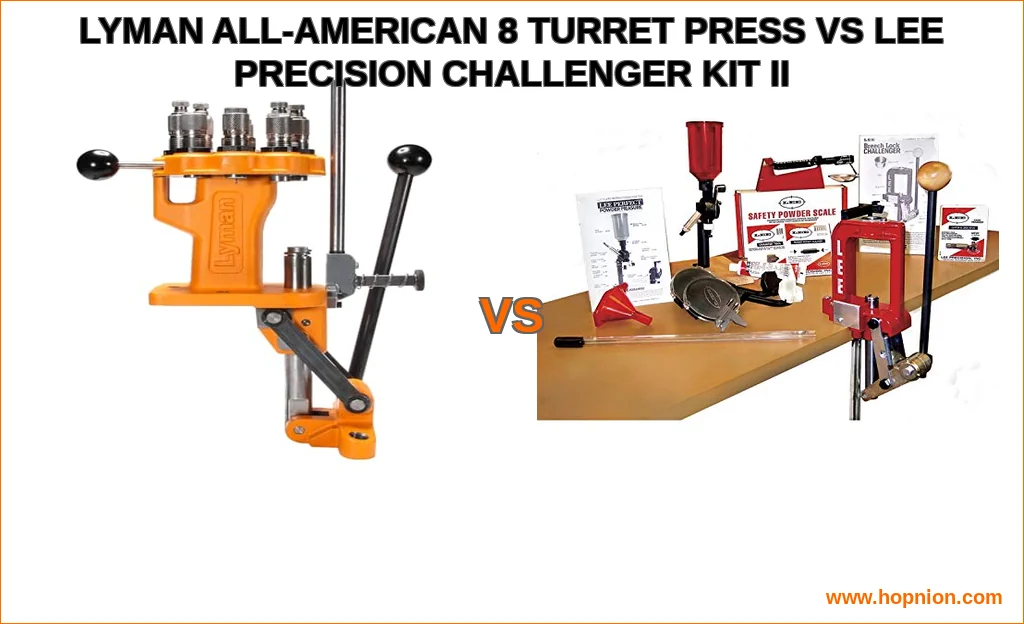
Detailed Feature Breakdown: Lyman All-American 8 vs. Lee Challenger Kit II
At their core, these are two different tools. The Lyman is a focused, heavy-duty component built for a specific reloading workflow. The Lee Kit is a bundled solution designed to get you from zero to loaded rounds with one purchase. Let’s break down their stated specifications.
Lyman All-American 8 Turret Press: The Dedicated Workhorse
The All-American 8 is defined by its robust construction and versatile turret head. Its features highlight a design focused on durability and efficient batch processing.
- Heavy duty cast iron frame and turret. This promises stability and longevity, a key point in any reloading press durability discussion.
- Extra-large 8 station turret is easily removed. This is the heart of the system. It allows for holding two complete 4-die pistol sets or various rifle die combinations, minimizing toolhead swaps.
- Comes with a straight line primer feed with large and small primer tubes, addressing a critical step in the reloading process.
- Finished with a durable powder coat.
Lee Precision Challenger Kit II: The Complete Starter Box
The Lee Challenger Kit II takes a different approach. It’s an out-of-the-box kit centered around the classic Challenger single-stage press. Its value is in comprehensiveness.
- Includes the Lee Safety Scale, described as very sensitive.
- Has a powder funnel to fill the case.
- Bundles a chamfer tool that works the inside and outside of the case mouth.
- The press itself is a C-frame single-stage design, a classic and simple format.
| Features | Lyman All-American 8 Turret Press | Lee Precision Challenger Kit II |
|---|---|---|
| Press Type | Turret Press | Single Stage Press (included in kit) |
| Frame Construction | Heavy Duty Cast Iron | C-Frame Design |
| Key Mechanism | 8-Station Indexing Turret | Compound Leverage on Single Stage |
| Priming System | Straight Line Primer Feed with Tubes | Standard Arm (typical of Challenger press) |
| Included Components | Press & Primer System | Press, Scale, Funnel, Chamfer Tool |
| Check current price on Amazon | Check current price on Amazon |
Head-to-Head Comparison: Performance, Speed, and Ease of Use
Moving from specs to real-world application reveals stark differences. The debate between a turret press and a single stage press is about workflow philosophy.
Mechanical Design & Feel: O-Frame vs. C-Frame
The Lyman’s heavy cast iron construction suggests a solid, O-frame inspired rigidity that minimizes flex during sizing operations. This can contribute to consistent sizing and, theoretically, better reloading press accuracy. The Lee Challenger’s C-frame is a proven, lightweight design, but it can exhibit more flex under heavy loads, like resizing large rifle cases. For a beginner, this difference might be negligible for standard pistol calibers but becomes a consideration for magnum cartridges.
Production Speed & Workflow
This is the turret’s main advantage. The Lyman’s 8-station head allows multiple dies to remain set up. You can size, expand, seat, and crimp by simply rotating the turret, not swapping dies. For pistol calibers requiring multiple steps, the speed difference is substantial. The Lee single-stage requires you to complete all cases for one step (e.g., sizing) before changing the die for the next step (e.g., seating). It’s methodical, slower, but excellent for learning each step intimately. Honestly speaking, if your goal is volume for pistol shooting, the turret’s workflow is a game-changer.
Priming & Case Management
The Lyman includes a dedicated primer catcher system with a straight-line feed. Integrated priming systems are often smoother and more reliable than press-arm methods. The Lee kit includes essential case prep tools like the chamfer tool, which the Lyman press does not. This is a crucial point in the cost of Lee Challenger Kit II vs Lyman All-American 8 analysis: the Lee’s bundled tools offset immediate accessory purchases. You’ll also need to consider case lubrication requirements for rifle cartridges, a necessity with both presses that requires separate supplies.
Target Audience Analysis: Who Should Buy Which Press?
This isn’t about which press is objectively better. It’s about which tool fits the user. My honest assessment is that most beginners choose based on an incomplete picture of their future needs.
The Case for the Lyman All-American 8 Turret
Choose the Lyman if:
- You are certain you will be reloading for multiple pistol calibers and value speed.
- You appreciate robust, heavy-duty tooling and plan to keep this press for decades.
- You don’t mind sourcing scales, case prep tools, and other accessories separately to build your ideal setup.
- You’re a tinkerer who values the potential for aftermarket support and accessories from companies like Inline Fabrication to customize your bench.
From my honest perspective, this press is for the reloader who knows they’re committed and is willing to invest in a foundational tool that excels at progressive-style workflow without being a full progressive press.
The Case for the Lee Precision Challenger Kit II
The Lee Kit is the answer if:
- You are a true beginner and want one box that contains almost everything to start (minus dies, components, and a manual).
- Your primary focus is precision rifle or low-volume hunting ammo where a single-stage’s deliberate pace is an advantage, not a hindrance.
- Budget is the absolute primary constraint, and you need the best value reloading starter package.
- You want to learn the fundamentals on a simple system before deciding on a more advanced press.
I honestly believe this kit is the lowest-friction entry point. It embodies the concept of a complete reloading kit. The included scale and prep tools eliminate initial guesswork and additional orders.
Beyond the Press: Warranty, Service, and the Missing Pieces
A precision reloading setup involves more than the press. Both Lyman and Lee have long histories, but their customer service reputations differ. Lee is known for a strong warranty and readily available replacement parts. Lyman also supports its products, but it’s wise to research current user experiences on warranty claims. This is a practical consideration for long-term ownership.
Neither package includes reloading dies, a caliper, case lube, or the most critical item: a comprehensive reloading manual. You must have one. Hornady and RCBS offer excellent digital resources, but a physical book from the bullet manufacturer you use is non-negotiable for safety data. For a fantastic official source on the process itself, the BASC guide provides clear, safety-first principles.
Final Verdict & Recommendations Based on Your Needs
So, which is better for a beginner, Lyman All-American 8 or Lee Challenger? The answer is frustratingly nuanced.
For the budget-conscious, cautious beginner who wants to dip their toes in with minimal investment and a complete toolset, the Lee Precision Challenger Kit II is the unequivocal choice. It’s the safest, most economical gateway into the hobby. It forces good, deliberate habits and is capable of producing excellent ammunition. You can always sell it later to fund an upgrade, a common path for many reloaders.
For the committed beginner or intermediate shooter who already knows they will be loading volume for pistol (or multiple calibers) and hates the idea of buying a press twice, the Lyman All-American 8 is the smarter long-term investment. Its robust build and efficient turret system will not become a bottleneck as your skills and volume needs grow. You’ll spend more upfront and need to buy accessories, but you’re buying a press that can remain the centerpiece of your bench for years.
To be completely honest, there’s no wrong choice here if it aligns with your mindset. The Lee teaches the art. The Lyman enhances the production. Both will make safe, functional ammunition if you follow the manuals. Your decision hinges on whether you prioritize a low-cost, complete introduction or a strategic investment in a faster, more durable workflow from the start. For more detailed precision press comparisons, you can always find our Honest Opinion on other models at Hopnion.com.
Before clicking “buy,” download the official source literature from Lyman and visit Lee Precision’s site for the most current manuals and specifications. Handle your components with care, double-check your powder charges, and enjoy the deeply satisfying craft of building your own ammunition.