Redding vs. Hornady Reloading Dies: Which Set Wins?
By Amis Thains Updated 5 min read
As an Amazon Associate we earn from qualifying purchases, at no cost to you.
On this page (7 sections)
You are choosing between a Redding and a Hornady die set but keep hitting dead ends in reviews. This page breaks down exactly how they differ on the factors that matter most: accuracy, speed, and long-term value.
In short: For most precision and competition reloaders, Redding dies win on overall accuracy and consistency. For handloaders focused on reloading speed and convenience, Hornady’s Lock-N-Load and New Dimension designs are the clear front-runner. The gap is small, and the choice often comes down to whether you prefer dial-in precision or fast workflow.
Quick picks
Our shortlist for this job · tap one to see today's price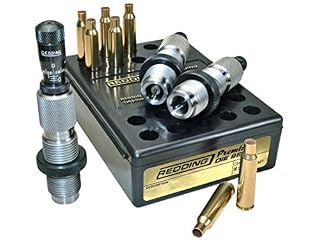
Its micrometer seating stem and carbide sizer make it the front-runner for tight tolerances and competition reloads.

A two-piece system that gives a quick, repeatable full-length size and lets you skip the fiddly dial work.
The differences at a glance
Start with the core specs that actually affect your reloads. Redding builds for a mechanical, precision-first workflow. Hornady designs around speed and quick caliber swaps. For the detail, see our notes on right reloading guide.
| Feature | Redding | Hornady |
|---|---|---|
| Core Design | Carbide sizer button, micrometer stem | Lock-N-Load ring, Zip Spindle sizer |
| Primary Focus | Match-grade accuracy and consistency | Reloading speed and ease of use |
| Best For | Competition reloaders and precision shooters | High-volume handloaders and multi-caliber users |
Notice how the focus shifts. If you measure in hundredths of a thousandth, Redding’s layout is your tool. If you reload a magazine of brass in minutes, Hornady’s tool is your tool.
Where Redding wins: accuracy and consistency
Redding dies are built around a carbide expander button in the full-length sizer. This reduces friction on the case neck and helps the brass retain its dimensions better cycle after cycle.
The real edge comes from the micrometer seating stem. You can turn the stem and watch the depth change in thousandths. This matters when you are dialing in bullet jump for a specific barrel or trying to squeeze a sub-MOA string out of your rifle.
Hornady seating stems are also precise, but they rely on the external Lock-N-Load ring for fine adjustments. It works, but it is not as direct as watching a micrometer scale move.
Winning factor: Redding. If your number one goal is the tightest, most repeatable bullet seating possible, Redding gives you the direct mechanical advantage.
Here, the Redding Premium Series Die Set makes that advantage obvious. The micrometer stem lets you lock in an exact seating depth without guessing. If that sounds like your bench, read up on die durability and accuracy next.
Pro tip: When using a micrometer seating stem, always start with the bullet well off the case mouth. Back the stem out to seat the bullet, then screw it back in to lock it down for the next round.
The micrometer seating stem on this set lets you directly watch and lock in your exact bullet seating depth.
- Those seeking to improve their handloading capabilities, will find everything in the
- The Carbide Expander Button reduces stress on the case neck; The Micrometer Adjusting
Where Hornady wins: speed and workflow
Speed is where Hornady’s design philosophy shines. The New Dimension Zip Spindle sizer was built to eliminate spindle slippage. You turn the press handle and the sizing adjustment holds where you set it.
The Lock-N-Load ring system changes how you switch calibers. Instead of measuring and marking rings, you twist the Lock-N-Load bushing to the new die. The locking action holds the die in perfect alignment and saves you a minute of setup time every time you change.
Redding sets are superb, but swapping between them requires a different tooling approach if you are running a large variety of rounds on the same press.
Winning factor: Hornady. For high-volume shooters or anyone loading more than three to four calibers, the time saved in setup and sizing changes adds up fast.
This set’s two-die design cuts down on the steps you take for a full-length resize, which is key for fast, volume reloading.
- For Reloading 308 Wincher Rounds
- Set Is Complete, With Shell Holder, Powder Measure And Famous Lee Load Data Featuring
Build quality and longevity: a close call
Both brands make their dies from high-grade steel and heat-treat them for dimensional stability. Neither will wear out your brass in a decade of normal use. For the detail, see our notes on rcbs die for .308.
Redding edges out the durability conversation in one area: the carbide expander button. Carbide is harder than steel and holds its shape under the heat and pressure of a high-energy cartridge like .308 Winchester.
Hornady compensates with its Lock-N-Load bushings. If a bushing or ring wears out, you buy a replacement part, not an entire new die set. That long-term cost advantage makes the initial premium on Hornady hardware easier to swallow.
Winning factor: Tie. Redding lasts longer on the sizer button itself. Hornady offers better parts replacement economics over the life of your press.
Safety first: Always check your case length with a go/no-go gauge before seating. Even the best die set cannot prevent you from loading brass that has stretched too far.
Which should you buy?
Use this quick checklist to point you to the right set.
- If you reload for competition or long-range precision: Get the Redding set. The micrometer stem and carbide sizer pay for themselves in consistency.
- If you reload high volume or shoot multiple calibers: Get the Hornady set. The Zip Spindle sizer and Lock-N-Load ring keep your workflow fast.
- If you are on a budget or just starting out: Consider a two-die set from another maker. It handles the core sizing and seating steps without the premium price of either flagship system.
The bottom line
Pick Redding if your priority is the last 0.001 inch of bullet seating and maximum consistency on the range. Pick Hornady if you want a faster workflow at the bench and swap between more than two or three calibers. Whichever you choose, start with your manufacturer's published load data for your exact powder and bullet combination.
- Those seeking to improve their handloading capabilities, will find everything in the
- The Carbide Expander Button reduces stress on the case neck; The Micrometer Adjusting
Frequently asked questions
Are Redding dies really better than Hornady for accuracy?
They offer a slight edge for precision shooters because of the micrometer seating stem and carbide expander button. You can make finer, more repeatable adjustments. But if you are not dialing in hundredths, the difference may not matter in your actual groupings. There is more on hunting with subsonic 308 in a separate guide.
Can I use Redding dies in a Hornady press?
Yes, but you will need an adapter or spacer. Redding die stems and Hornady die stems are built to different standards. The adapters are widely available and make the cross-compatibility safe and stable.
Which is faster to reload with: Redding or Hornady?
Hornady is faster for most people. The Lock-N-Load ring system and the design of the New Dimension sizer are built with workflow speed in mind. Redding’s carbide sizer is great for avoiding case work, but the micrometer setup takes a bit more time.