

Stepping up from a single-stage press is a game-changer for any reloader. Turret presses offer a fantastic middle ground, blending the speed of a progressive with the control of a single-stage. They let you keep dies set up and ready to go, dramatically cutting down on the time spent switching tools. Two models consistently dominate the conversation: the robust Lyman All-American 8 and the efficient Lee Precision 90932. Each takes a fundamentally different approach to the same goal.
Your choice here will define your reloading workflow for years. It’s not just about cranking out rounds; it’s about the feel, the process, and the long-term satisfaction on your reloading bench. This head-to-head look cuts through the noise to give you a clear picture of what each press actually delivers.
Turret Press Fundamentals: What Really Matters
Before diving into specifics, let’s ground the discussion. A turret press revolves around a rotating head that holds multiple reloading dies. The core differentiators are build material, the indexing system (manual vs. auto), and how it handles primers. These factors directly influence reloading press comparison metrics like speed, precision, and overall user satisfaction. From my honest perspective, the ideal press feels like an extension of your intent, not a piece of equipment you’re fighting.
Lyman All-American 8 Turret Press: The Heavyweight Contender
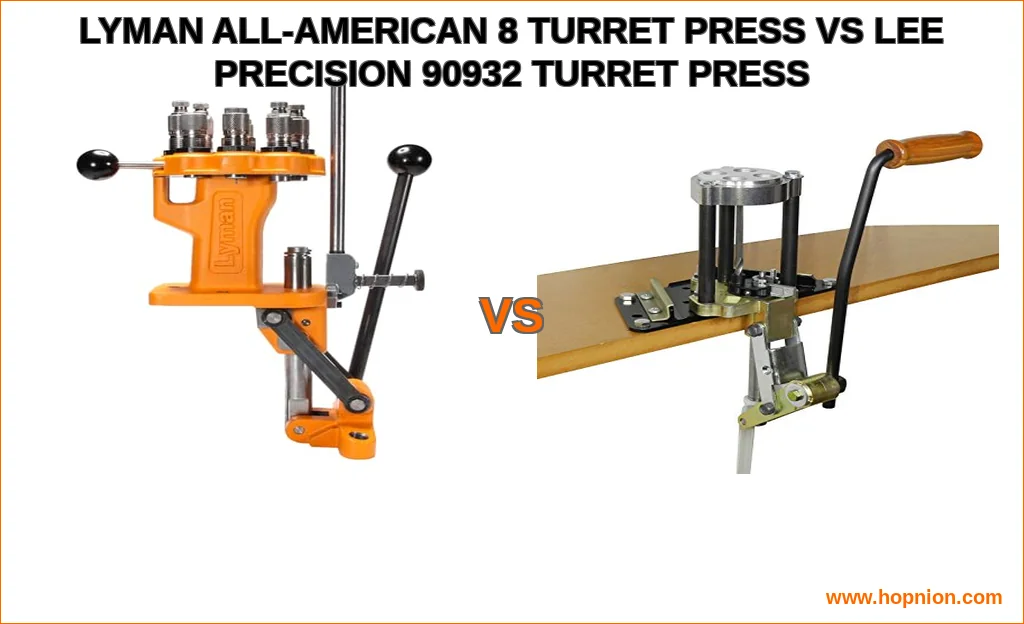
The Lyman All-American 8 makes a statement before you even mount it. Its foundation is a heavy duty cast iron frame and turret. This isn’t just for show; that mass translates into exceptional rigidity, a key factor for consistent reloading accuracy. The star feature is, of course, the extra-large 8 station turret. This capacity is a significant advantage for dedicated setups.
Honestly speaking, the flexibility here is impressive. You can configure it to hold two complete 4-die pistol sets, or mix and match rifle and pistol dies. The turret is easily removed to make swapping turrets simple, allowing you to have pre-configured turrets for different calibers ready to snap in. This is a huge time-saver for a versatile reloading setup.
It comes with a straight line primer feed with large and small primer tubes. This integrated system keeps priming on the press, streamlining the workflow. The durable powder coat finish provides a layer of protection against rust and wear. My honest assessment is that this press is built for the long haul, appealing to reloaders who prioritize solidity and high-volume flexibility over automated features.
Key Features & Performance
- Construction: Cast iron frame and turret for maximum stability.
- Turret: 8-station, removable head for quick caliber changes.
- Die Capacity: Holds two complete 4-die sets or various combinations.
- Primer System: Integrated straight-line feed with tubes.
- Finish: Durable powder coat.
Lee Precision 90932 Classic Turret Press: The Streamlined Workhorse
The Lee Precision 90932, often called the Lee Classic Turret, champions a different philosophy. Its cast aluminum construction makes it notably lighter than the Lyman. The defining characteristic is its auto-indexing mechanism. As you raise the ram after a operation, the turret automatically rotates to the next station. This creates a semi-progressive rhythm that can significantly boost turret press speed.
It’s a 4-hole turret, which is the standard for most pistol cartridges (sizing, expanding, seating, crimping) and many rifle rounds. The auto-indexing feature is a major draw, especially for those looking to streamline pistol reloading. The press includes a primer catcher, a simple but effective part of spent primer management that keeps your area clean.
If you want my honest opinion, the Lee’s brilliance is in its clever, efficient design that automates the process without the complexity or cost of a full progressive. It’s a fantastic tool for building muscle memory and producing consistent batches with minimal fuss. For a deeper dive into Lee’s engineering, their official source is invaluable.
Key Features & Performance
- Construction: Cast aluminum for a lighter weight.
- Indexing: Auto-indexing turret for a streamlined workflow.
- Turret: 4-station design.
- Feature: Includes a primer catcher.
Side-by-Side Comparison: Lyman vs. Lee
Placing these two presses side-by-side reveals their core differences. It’s not about one being universally “better,” but about which aligns with your reloading style, caliber needs, and budget. This turret press review comparison table breaks it down based on their actual, stated features.
| Feature | Lyman All-American 8 | Lee Precision 90932 |
|---|---|---|
| Frame Material | Heavy Duty Cast Iron | Cast Aluminum |
| Turret Stations | 8 | 4 |
| Indexing System | Manual | Auto-Indexing |
| Turret Swapping | Easily Removable | Standard |
| Primer System | Straight Line Feed with Tubes | Catcher Included |
| Primary Advantage | Capacity & Rigidity | Automated Workflow |
| Typical Use Case | High-volume, multi-caliber flexibility | Efficient batch reloading, especially pistol |
| Check current price on Amazon | Check current price on Amazon |
Breaking Down the Key Differences
Build Philosophy: Iron vs. Aluminum
The Lyman’s cast iron construction offers inherent dampening and rock-solid stability, which some reloaders equate with better precision. The Lee’s aluminum frame is lighter and uses clever engineering to provide sufficient strength for its design. Speaking honestly, the Lyman feels like industrial machinery, while the Lee feels like efficient, purpose-built tooling.
The Indexing Debate: Manual Control vs. Automated Speed
This is the heart of the Lyman vs. Lee decision. The Lyman requires you to manually rotate the turret. This offers total control, allowing you to pause, check, or repeat a step easily. The Lee’s auto-indexing creates a faster, rhythmic process that’s hard to beat for volume. I honestly believe beginners might find the Lee’s guided process easier to learn, while control-focused reloaders may prefer the Lyman’s manual approach.
Capacity and Flexibility: 8 Holes vs. 4 Holes
The Lyman’s 8-station turret is its superpower. It allows for incredibly versatile setups. You could have a full 4-die pistol set and a 3-die rifle set ready on one head. For reloaders who work with many calibers or use powder check dies, this is a massive benefit. The Lee’s 4-hole design is perfect for standard operations but doesn’t offer the same multi-caliber convenience on a single turret head.
Covering the Essential Details
A thorough reloading equipment review looks beyond the headline specs. Here are some critical, often overlooked factors that impact long-term satisfaction.
Warranty and Support
Always check the manufacturer’s current warranty. Lyman and Lee Precision both have established reputations for customer support. This safety net is crucial for a tool you’ll rely on for years. A quick visit to each brand’s website will give you the latest policy details.
Compatible Die Brands & Shell Holders
Both presses use standard 7/8″-14 threaded holes, making them compatible with virtually every die brand on the marketRCBS, Hornady, Lee, etc. You’ll need the appropriate shell holder for each caliber, which inserts into the ram. This universal compatibility is a major advantage of the turret press category. For die setup techniques, an authority guide from a major manufacturer can be very helpful.
Maintenance Requirements
Turret presses are relatively low-maintenance. The key is keeping them clean and lightly lubricated on moving parts. The Lee’s auto-indexing mechanism may require occasional attention to ensure smooth rotation. The Lyman’s cast iron benefits from a light coat of oil to prevent surface rust, especially in humid environments. Proper spent primer management (using the catcher or a tube system) also goes a long way in keeping the press clean.
Final Verdict & Recommendations
So, which turret press wins? The truth is, it depends entirely on your profile as a reloader. There’s no single best turret press for everyone.
Choose the Lyman All-American 8 if: You value ultimate rigidity and massive flexibility. You reload multiple calibers and want to minimize die-swapping. You prefer manual control over every step and don’t mind the heavier, manual process. You’re looking at a Lyman All-American 8 vs Lee Classic Turret durability debate and prioritize cast iron’s heft. For a dedicated lyman deep-dive, we’ve got you covered.
Choose the Lee Precision 90932 if: Your primary goal is efficient, streamlined batch reloading. You love the idea of auto-indexing for a faster pace. You mainly reload standard pistol or rifle cartridges that fit a 4-die sequence. You’re seeking the best value turret press under $300 that offers automated features. You want a lighter press that’s easier to move or store.
For those wondering which turret press is better for beginners, my honest take is that the Lee’s auto-indexing provides a guided, repeatable process that can build confidence quickly. However, a beginner with patience who wants “buy once, cry once” flexibility might also thrive with the Lyman.
Your reloading press comparison should end with a clear vision of your own bench. Do you see yourself methodically working through each station with total control, or getting into a smooth, automated rhythm? Both are valid paths to great ammunition. At the end of the day, the best press is the one you’ll use consistently and enjoy. For more nuanced takes on gear, the team at Honest Opinion is always breaking it down.
Remember, your press is the heart of your operation. Pair it with quality components from trusted sources. Whether you’re consulting the authority guide from RCBS or reviewing a official source for specs, informed decisions lead to better results. Now, get out there and start loading.