
Choosing the right optic for your firearm isn’t just about adding gear. It’s about fundamentally changing how you see and engage with your target. The right sight can turn a challenging shot into a manageable one, whether you’re at the range, in the field, or in a defensive scenario. With so many options, from simple red dot sights to complex long-range rifle scopes, knowing what’s available is the first step to making an informed decision.
For shooters looking to step into advanced capabilities like thermal imaging, products like the AGM Global Vision series offer a compelling entry point. These optics merge cutting-edge sensor technology with rugged designs, giving you a significant advantage in low-light or no-light conditions. It’s a tool that redefines what’s possible after sunset.
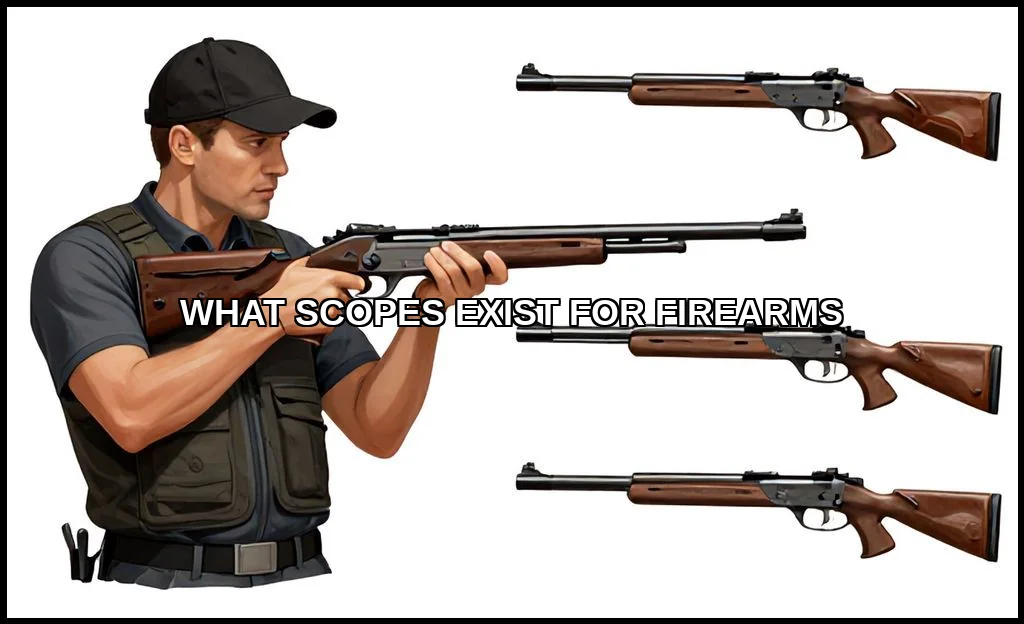
Major Categories of Firearm Scopes & Sights
Firearm optics fall into a few broad families, each with a distinct purpose. Picking the right one starts with understanding these core optic types.
Non-Magnified Optics: Speed Over Distance
These are your point-and-shoot solutions. Red dot sights project an illuminated aiming point (a dot) onto a lens. You look through it with both eyes open, maintaining full situational awareness. They’re incredibly fast for close-quarters target acquisition. Holographic sights are similar but use a laser and hologram to create the reticle, often with a wider field of view. The classic debate, are red dots better than scopes for home defense, often comes down to this: speed and simplicity usually win inside 50 yards.
Magnified Optics: Precision at Range
This is the world of traditional rifle scopes. They use a system of lenses to bring distant targets closer. You’ll choose between fixed magnification (like a 4x scope) and the more popular variable power scopes (like a 3-9×40). That “3-9×40” designation? The “3-9x” is the magnification range, and the “40” is the diameter of the objective lens in millimeters. A larger objective lens typically gathers more light for a brighter image.
Specialized Systems
When the sun goes down, standard optics fail. Night vision scopes amplify available light (starlight, moonlight) to create a visible image. Thermal optics, like those from AGM, detect heat signatures, making them effective even in total darkness or through light brush. They are specialized tools for hunters, security personnel, and wildlife observers.
Key Technical Specifications Explained
Once you know the category, the specs tell the real story. Heres what those numbers and terms actually mean for your shooting.
Magnification and Field of View
Magnification is how much closer the target appears. A 4x scope makes a target at 400 yards look like it’s 100 yards away. Higher magnification narrows your field of view. That’s why variable scopes are so versatileyou can zoom out for scanning or tracking, then zoom in for a precise shot. Understanding scope magnification is key to matching the tool to the task.
The Heart of the System: The Reticle
The reticle is the aiming pattern inside the scope. It’s not just crosshairs anymore. Modern scope reticles are complex tools for holdover, windage, and range estimation. You need to understand two critical concepts:
- First Focal Plane (FFP): The reticle size changes as you zoom. Mil or MOA markings are accurate at any magnification.
- Second Focal Plane (SFP): The reticle stays the same size. Subtensions (markings) are only accurate at one specific magnification, usually the highest.
The choice between FFP and SFP depends on your shooting style. Long-range precision shooters heavily favor FFP.
Adjustments: MOA vs. MRAD
Your scope’s turrets (the dials on top and side) adjust the point of impact. They work in one of two angular measurements:
| System | What it Means | Common Use |
|---|---|---|
| MOA (Minute of Angle) | ~1.047″ at 100 yards. Often simplified to 1″ at 100 yds. | Popular in the US for hunting and tactical shooting. |
| MRAD (Milliradian) | 3.6″ at 100 yards (or 10cm at 100m). A metric-based system. | Standard for long-range/military precision shooting globally. |
The MOA vs MRAD debate is less about which is better and more about consistency. Pick one system and stick with it for all your gear.
Other Critical Components
Don’t overlook these elements. The objective lens diameter affects light gathering and how high you must mount the scope. Parallax is an optical illusion where the reticle appears to move on the target if your eye isn’t perfectly centered. Higher-magnification scopes have an adjustable parallax knob to eliminate this error. The turrets themselves can be capped, exposed, or tactical-style, with audible and tactile clicks.
Matching the Optic to the Firearm and Use Case
This is where theory meets practice. Your rifle’s purpose dictates the ideal sight.
Long-Range Precision & Varmint Hunting
You need high magnification, a precise reticle (FFP is ideal), and robust turrets. Think variable scopes starting at 5-6x on the low end and going up to 25x or more. The question of what is the best scope for long range shooting always points to optics with repeatable adjustments, excellent glass clarity, and a reliable tracking system.
Big Game Hunting
Versatility is king. A 3-9×40 or 4-12×50 scope is the classic for a reason. It offers enough magnification for an ethical shot at distance but a wide field of view for tracking moving game in timber. How to choose a scope for a hunting rifle involves balancing weight, durability, and light transmission for those crucial dawn and dusk moments.
Home Defense & Tactical Use
Speed and reliability are non-negotiable. A rugged red dot sight or low-power variable optic (LPVO) like a 1-6x or 1-8x scope dominates here. The LPVO gives you a red-dot-like experience on 1x but the option to magnify if needed. Pairing any optic with a stable mounting system is critical, which is why a proper leupold adapter or similar quality mount is part of the equation for a rock-solid setup.
Maintenance, Mounting, and Legal Considerations
Buying the optic is only half the battle. Installing and caring for it correctly ensures performance.
Mounting is Everything
Proper scope mounting requires the right tools: a torque wrench, leveling kit, and quality rings or a one-piece base. The mount must match your firearm’s rail system (Picatinny, Weaver, etc.). A poorly mounted $2000 scope will perform worse than a perfectly mounted $500 scope. It’s that simple.
Care and Maintenance
Lens care is paramount. Use a soft brush or air blower first to remove dust. Then, use lens-specific fluid and microfiber cloths. Never use household glass cleaner or paper towels. Store optics in a dry, temperature-stable environment.
A Note on Legality
Laws regarding optic featuresespecially for night vision and thermalvary by state and country. Some jurisdictions restrict their use for hunting. Always verify local regulations before purchasing or using specialized optics. Ignorance isn’t a valid defense.
The world of firearm scopes is deep and nuanced. There’s no single “best” optic, only the best tool for your specific rifle and its intended mission. Start by defining that mission clearly. Then, understand the trade-offs between magnification, speed, weight, and complexity. Invest in quality glass and, just as importantly, a quality mount. Whether you’re dialing in for a long-range shot or instinctively pointing a red dot, the right sight transforms your firearm from a simple tool into a precise instrument. Now go see what you’ve been missing.