Moxule Bino Harness: Chest Pack Fit & Features
By Amis Thains Updated 6 min read
As an Amazon Associate we earn from qualifying purchases, at no cost to you.
On this page (7 sections)
You are tired of binoculars sliding down your chest or the harness digging into your armpits during a hunt. This page breaks down exactly how the Moxule chest pack works, who it suits, and how to fit it so it stops moving.
In short: The Moxule bino harness is a chest-mounted storage rig that holds your binoculars, rangefinder, and essentials in one accessible spot. It uses a wide, structured back panel and adjustable straps to sit high on the chest, reducing the armpit friction that plagues standard neck straps or lower-slung rigs.
Our pick
Tap to see today's price on Amazon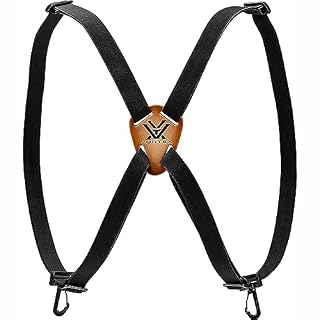
A Vortex harness strap spreads weight evenly if you just want binoculars on your chest without extra pockets.
What the Moxule Bino Harness Actually Is
Most people hear “harness” and think of a simple strap. The Moxule unit is different. It is a chest pack—a rigid or semi-rigid pouch that straps across your torso, not just around your neck. For the detail, see our notes on securing heavy optics on the chest.
It is designed to replace the need to reach into a backpack for your optics. You keep them in front of you, one hand away. The internal layout includes a main bino slot and a detachable pouch for a rangefinder or phone.
If you are used to a neck strap, this feels like a shift from “hanging” your gear to “wearing” it. The weight sits higher on your center of mass, which changes how you move through brush or wade water.
The structure relies on a flat back panel that distributes weight across your pectorals. This prevents the point-loading you get with a single neck strap, which can cause neck fatigue if you stand still for long periods, such as at a blind.
Pro tip: Do not confuse this with a spotting scope harness. A spotting scope is too heavy and rigid for most bino chest packs; keep that gear in a dedicated case.
How It Fixes the 'Riding Up' Problem
The most common complaint with binocular harnesses is the strap digging into the armpit when you swing your arms. The Moxule design addresses this by keeping the load higher on the chest rather than letting it drop to the mid-torso.
The back panel is wide and flat. When you cinch the straps, the panel presses against your sternum and upper back, not under your arms. This keeps the bino slot at eye level when you are standing. If that sounds like your bench, read up on gun cleaning hoppe's combo next.
However, fit is critical. If the straps are too long, the pack slides down. If they are too short, the edges dig into your sides. You want a snug fit where you can slide two fingers between the strap and your skin, but the pack itself should not wobble.
Many users report that the straps need adjustment based on the jacket thickness. In cold weather, the extra bulk pushes the pack away. Loosen the straps slightly when wearing thick layers to ensure they do not dig in as you move.
Pro tip: Adjust the strap angles. Most rigs have a slide on the strap. Set it so the strap runs diagonally from your shoulder to your opposite hip, not straight across.
Storage Layout: Binos, Rangefinder, and Extras
Storage is the main upgrade over a simple strap. The Moxule includes a main compartment sized for mid-to-large binoculars. A smaller pouch clips on for a rangefinder or laser range finder.
There is also a front pocket for a phone or small notebook. This matters if you are marking shots or logging birds. You do not have to take the pack off to check your phone.
The material is usually a water-resistant nylon or tarpaulin. It holds up against rain and brush scraping. Check the zippers; they should be sturdy enough to not snag on foliage. It helps to understand swarm whisper vs varmint before going further.
The detachable nature of the accessories is key. If you leave the range finder at home, you can remove the pouch to save weight. This modularity makes it a practical choice for hunters who carry different gear for different seasons.
If you only carry binoculars and no accessories, the Vortex strap is lighter and cheaper. Save the Moxule for when you need the rangefinder pouch.
- Here's the most comfortable way to carry your binoculars for hours. This binocular
- This ingenious strap keeps your binoculars and rangefinders, even cameras, from
Common Myths About Chest Rigs
- Myth: Bigger is better. Fact: A bulky pack restricts your arm swing. A slimmer Moxule rig lets you reach forward or side without the pack catching on a tree.
- Myth: You can wear it over a jacket. Fact: Thick jackets push the pack away from your chest. It slides and bounces. Wear it directly on your torso or over a thin layer.
- Myth: It replaces a backpack. Fact: It holds your optics. It does not hold water, lunch, or spare layers. Use it as a supplement to your main pack, not a replacement.
- Myth: All chest packs fit the same. Fact: Torso length matters. A short torso may find the pack rides too high; a long torso may need the straps shortened significantly to keep it at eye level.
Understanding these limits helps you set realistic expectations. The pack is a tool for optics access, not a general-purpose gear hauler.
Safety first: Ensure the straps do not trap your thumbs or fingers when you reach for the binoculars. Test the grip before you head into the field.
When to Choose the Moxule Over a Strap
Get a simple neck strap if you just walk flat ground and want quick access. Get the Moxule chest pack if you do any of the following:
- Wade or climb: You need gear secured so it doesn’t splash or fall.
- Carry a rangefinder: The detachable pouch keeps them together.
- Wear a heavy backpack: You need your binoculars at eye level, not buried in your pack.
- Stand in one spot for hours: The chest position is more natural than holding binoculars by hand.
If your use case is casual backyard birdwatching, the extra structure is overkill. If you are elk hunting on steep terrain, it is a significant upgrade.
Consider your daily routine. If you are constantly moving from tree to tree in dense cover, the hands-free nature of the chest mount is superior. You can grab the binoculars with one hand while keeping your other hand free for balance or clearing branches.
The bottom line
The Moxule bino harness is best for active users who need to keep binoculars and a rangefinder accessible without a backpack. If you just need to carry binoculars comfortably, a Vortex strap is simpler and lighter. Choose the Moxule when you need the extra pocket and the chest-mounted stability for rugged terrain. Loaders in this spot often ask about why shoulder strap for binoculars as well.
- Here's the most comfortable way to carry your binoculars for hours. This binocular
- This ingenious strap keeps your binoculars and rangefinders, even cameras, from
Frequently asked questions
Does the Moxule harness fit over a puffer jacket?
Not well. The thickness of a puffer jacket pushes the pack away from your chest, causing it to slide down. Wear it directly on your body or over a thin mid-layer for the best fit and stability.
What size binoculars fit in the main compartment?
The main slot is designed for most mid-size and large binoculars, such as 10×42 or 15×56 models. Check the exact dimensions of your binoculars against the listed internal space to ensure they slide in easily without forcing.
Is the rangefinder pouch detachable?
Yes. The rangefinder pocket usually clips or zips onto the main pack. This lets you add a phone or other small item in its place if you do not have a rangefinder, keeping the front organized.