

For the reloader who values precision above all else, the press itself is the foundation. It’s the one piece of equipment you can’t compromise on if you’re chasing tight groups and consistent performance. The Frankford Arsenal M-Press enters this critical space with a specific promise: to deliver the benefits of a coaxial design in a uniquely modular and user-friendly package. This isn’t just another single-stage press; it’s a system built around the idea of perfect die alignment and workflow efficiency.
My honest take is that the M-Press represents a clever evolution in reloading press design. It takes the proven concept of a floating, self-aligning die system and pairs it with a practical storage solution that many high-volume precision shooters will appreciate. Let’s break down exactly what this press offers and who stands to benefit the most from its particular set of features.
What is the M-Press Coaxial Reloading Press?
At its core, the Frankford Arsenal M-Press is a compact, dedicated single-stage reloading press built around a coaxial design. This means the ram and die holder are aligned on a common axis, which is the theoretical ideal for applying perfectly even, concentric force to a cartridge case. The goal is to minimize runout and maximize the consistency of every loaded round. Unlike traditional single-stage presses where a die is screwed directly into a fixed press head, the M-Press utilizes individual, removable die blocks.
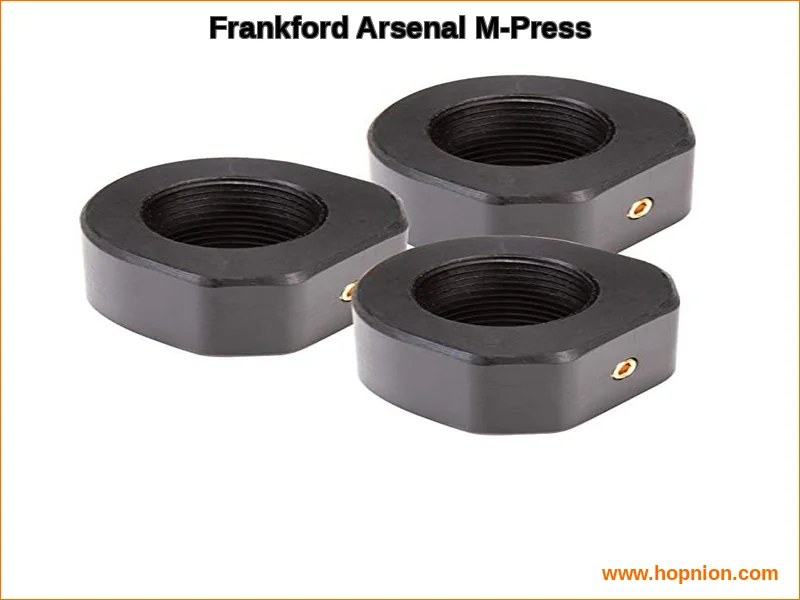
Each die is set once in its own aluminum block, locked in place with an Allen set screw, and can then be swapped into the press head in seconds. This system is the heart of the M-Press’s value proposition. It promises not just precision through alignment, but also significant time savings and organizational benefits for reloaders who work with multiple calibers or dedicated dies for specific tasks. Honestly speaking, for someone who hates constantly adjusting dies, this approach is a game-changer.
Key Features & Technical Specifications
The M-Press’s features are laser-focused on setup consistency, durability, and organization. Based on the product data, heres a detailed look at what you’re getting and how it translates to the bench.
| Feature | Specification & Benefit |
|---|---|
| Coaxial Design | The fundamental architecture ensures the ram and die are perfectly aligned on the same centerline. This promotes even force distribution during sizing and seating, which is critical for reloading press accuracy. |
| Floating Die System | Dies are pre-set in individual aluminum blocks. The block then “floats” in the press head, allowing for micro-adjustments that ensure perfect alignment with the shell holder every time, regardless of minor tolerances. |
| Modular Die Blocks | The included 3-pack of blocks lets you set and store three dies ready to go. The Allen set screw “keeps the die settings in place” permanently, eliminating re-adjustment between sessions. |
| Durable Construction | Made from aluminum, the press and blocks offer a solid balance of strength and lighter weight. This contributes directly to the overall reloading press durability for a long service life. |
| Integrated Storage | A stackable storage case holds all three dies with their blocks installed. This protects your precision settings from dust, damage, and accidental adjustmenta hugely underrated feature for organization. |
| Compact Dimensions | At 6″ L x 4.75″ W x 1.75″ D and 0.5 lbs, the press head itself is relatively small. This makes it a candidate for portable setups or benches where space is at a premium. |
| Check current price on Amazon |
From my honest perspective, the standout features are the locked-in die settings and the storage system. They solve a tangible pain point. The compound leverage system, a common point of discussion in press comparisons, isn’t detailed in the core specs for the M-Press head, which focuses on the die alignment system. This is a key differentiator from something like an entry-level kit press.
Addressing Common Questions &
Competitor reviews often gloss over the practical realities of ownership. Here are some insights on points you should consider:
- Specific Caliber Compatibility: The M-Press system works with standard 7/8″-14 threaded dies, making it compatible with virtually all pistol and rifle calibers. The limitation isn’t caliber, but case length and the required press frame clearance, which is typical for any coaxial vs single stage press design.
- Detailed Maintenance: The design is fairly simple. Maintenance primarily involves keeping the ram and linkage lightly lubricated and ensuring the die block channels are clean. The aluminum construction resists corrosion well. A quick wipe-down after use is the best practice, according to .
- Common Troubleshooting: The main issue users might encounter is a slightly tight die block fit. A light application of dry lubricant to the block solves this. Also, ensuring the Allen set screw is firmly tightened on each die is crucial to prevent any shift during the high-pressure operation.
- Best Dies to Use: Honestly, any quality die set will perform well. The floating die system is designed to maximize the performance of your existing dies For ultimate precision, micrometer-adjustable seating dies pair exceptionally well with this press’s inherent accuracy.
Performance: Accuracy & Ease of Use
So, how does this all translate to actual reloading performance? The promise of the coaxial design is reduced runout, and the M-Press is engineered to deliver on that. The floating die system is the key. it compensates for any minuscule imperfections in the threads or the shell holder alignment. This means each die operationsizing, depriming, seatingis performed with as near-perfect concentricity as the mechanical design allows.
Setting up the M-Press is a different workflow. You’ll spend more initial time setting each die perfectly in its block. However, once that’s done, those dies are essentially “plug-and-play” forever. Swapping between a sizing die, a seating die, or a full die set for a different caliber takes seconds. This is a massive advantage for batch processing or for load development where you’re constantly switching between operations. I honestly believe this workflow efficiency is a major part of the “is the M-Press coaxial press worth the money” calculation.
The included stackable case is not just a nice-to-have; it’s integral to protecting your investment in those precise die settings. It turns a collection of dies into an organized, ready-to-deploy system. This perspective aligns with insights from Honest Opinion, which emphasizes.For precision reloading, consistency in setup is everything, and this press system enforces that consistency brilliantly.
M-Press vs. Competitors: Forster Co-Ax & RCBS Rock Chucker
No reloading press comparison is complete without looking at the established benchmarks. The M-Press sits in an interesting space between them.
M-Press vs. Forster Co-Ax Press
The Forster Co-Ax is the legendary original coaxial press. It features a brilliant, fully floating shell holder system and a built-in primer catch system. It’s a monolithic, incredibly robust unit. The M-Press vs Forster Co-Ax press comparison often comes down to philosophy. The Forster is an all-in-one precision instrument. The M-Press is a modular system. The Forster might have a slight edge in ultimate, out-of-the-box concentricity due to its dual-floating design. However, the M-Press counters with its superior die-swap speed and organizational system for the reloader with many dedicated dies. My honest assessment is that the Forster is a masterpiece of integrated design, while the M-Press is a masterpiece of modular, user-configurable efficiency.
M-Press vs. RCBS Rock Chucker
This is a classic coaxial vs single stage debate. The RCBS Rock Chucker Supreme is the archetypal “O-frame” single-stage press. It’s renowned for its tremendous compound leverage and cast-iron reloading press durability. It’s a brute-force workhorse. The M-Press vs Rock Chucker decision is about priorities. The Rock Chucker excels at swaging primer pockets and handling the toughest sizing jobs with ease. The M-Press excels at precision alignment and rapid die changes. For the precision rifle shooter focused on consistency for bottleneck rifle cartridges, the M-Press’s coaxial advantage is significant. For someone processing large batches of straight-walled pistol brass or needing maximum leverage, the Rock Chucker is a tank. Community discussions on forums like r/reloading often highlight this fundamental trade-off.
Who Should Buy the Frankford Arsenal M-Press?
This press isn’t for everyone, but for its target user, it’s nearly ideal. You should seriously consider the M-Press if:
- Your primary goal is achieving the highest possible ammunition consistency for precision rifle or competitive pistol shooting.
- You load for multiple calibers and hate the process of constantly adjusting and readjusting dies.
- You value an organized, clean bench where every tool has a dedicated, protected place.
- You appreciate innovative design that solves practical, everyday reloading frustrations.
You might want to look at a more traditional turret press for higher-volume pistol loading, or a heavy-duty single-stage like the Rock Chucker if your workflow involves exceptionally strenuous forming operations.
Final Verdict & Buying Tips
The Frankford Arsenal M-Press is a brilliantly executed concept. It takes the accuracy benefits of a coaxial press and makes them accessible and convenient through a smart modular system. It addresses real workflow inefficiencies that other presses ignore. The build quality from the aluminum construction to the thoughtful storage case indicates a product designed for serious, long-term use.
If you want my honest opinion, the value is clear for the precision-focused reloader. The time saved in die setup alone, over years of use, justifies the investment. The potential for improved ammunition consistency is the compelling bonus. Before you buy, ensure you have a robust press frame to mount it to, as the M-Press is just the head unit. Also, consider your die collectionthis system encourages you to dedicate dies to blocks, so having extra die blocks for each caliber or operation is part of the ideal setup.
For a deep dive into user experiences and long-term reports, niche communities like the Frankford Arsenal forum on CastBoolits are invaluable resources. They provide the ground-truth that complements any review.
In the end, the M-Press makes a compelling case for itself as a top-tier tool for precision reloading. It may not be the only press on your bench, but for the critical task of producing match-grade ammunition, its a system that removes variables and instills confidence. That, honestly, is what the best reloading equipment is all about.