

Two distinct philosophies of reloading collide . On one side, the deliberate, methodical control of a classic turret press. On the other, the streamlined, automated workflow of a modern progressive. The Lyman All-American 8 and the Lee Precision Pro 4000 Press Kit represent these two paths, each promising a different route to the same destination: finished ammunition. Your choice fundamentally shapes your experience at the bench.
This isn’t just about picking a machine; it’s about aligning a tool with your mindset. Do you prioritize meticulous control over each cartridge, or is maximizing output per hour the ultimate goal? The answer lies in core mechanics and what each press truly offers. Speaking honestly, the best press is the one that fits your process, not the one with the most features you’ll never use.
Turret vs. Progressive Press: A Foundational Difference
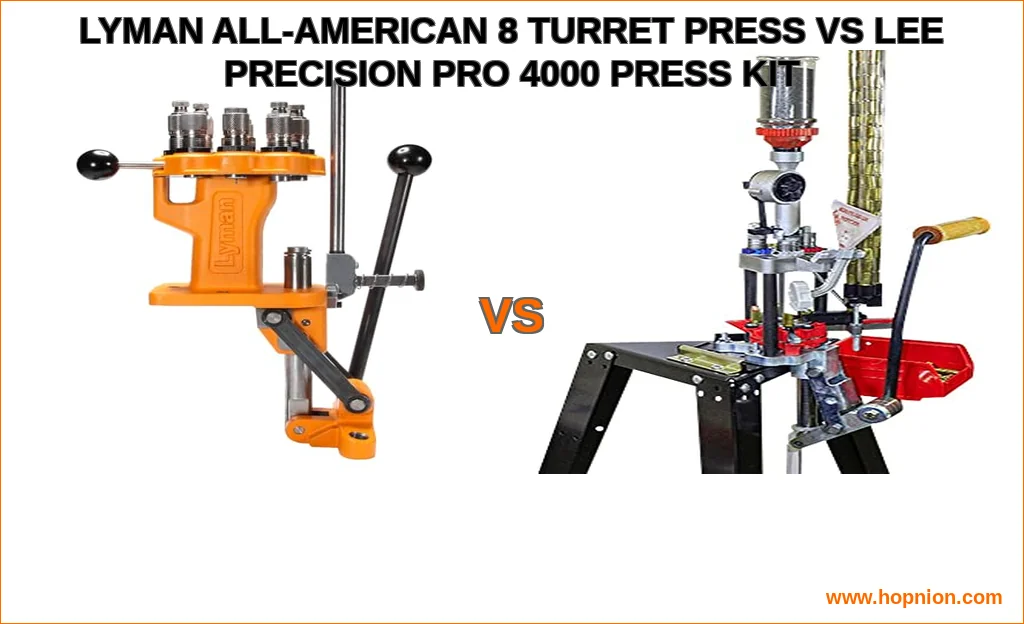
Before we pit these two titans against each other, let’s clarify the operational DNA. A turret press, like the Lyman All-American 8, features a rotating head that holds multiple dies. You complete all operations for a single casesizing, priming, charging, seatingbefore manually indexing the turret to the next station for the next case. It’s a single-stage press in spirit but with the convenience of pre-set dies.
A progressive press, such as the Lee Pro 4000, automates the case movement. With each pull of the handle, a shellplate advances all cases simultaneously to the next station. One handle stroke can theoretically produce one finished round. This design is built for reloading speed. The core question becomes: do you value the tactile, step-by-step control of a turret or the efficient, high-volume flow of a progressive? My honest assessment is that beginners often benefit from the turret’s simplicity, while seasoned reloaders chasing volume lean progressive.
Head-to-Head Feature Breakdown: Lyman All-American 8 vs. Lee Pro 4000
Let’s get specific. The provided features paint a clear picture of each press’s design priorities and inherent value proposition.
| Feature | Lyman All-American 8 Turret Press | Lee Precision Pro 4000 Press Kit |
|---|---|---|
| Core Design | Manual indexing turret (8-station) | Auto-indexing progressive press |
| Frame & Construction | Heavy duty cast iron frame and turret with durable powder coat finish. | Modular construction designed for automation. |
| Die Setup & Flexibility | Holds two complete 4-die sets or up to four 2-die sets. Turret is easily removed for swapping. | Four-position press with Breech Lock quick-change feature in all positions. Includes four colored bushings. |
| Primer System | Comes with straight line primer feed with large and small primer tubes. | Includes large and small priming arms. Features through ram primer disposal with a built-in tube. |
| Case Handling | Manual case placement at each station. | Exclusive auto case placer. Cartridge changeover in seconds, including primer size. |
| Operation Philosophy | Designed for deliberate, controlled operation on a single case at a time. | Engineered for “no adjustments” and maximum automation per operator desire. |
| Included Components | Press with primer system. | Full kit: press, bushings, priming arms, ergonomic wood grip roller handle, hex wrench with storage rack. |
| Check current price on Amazon | Check current price on Amazon |
Performance & Use Case Analysis: Speed, Precision, and Ease of Use
The feature table dictates real-world performance. For sheer output, the Lee Pro 4000 is the undisputed champion. Its auto-indexing progressive mechanism and auto case placer are built to minimize handling and maximize rounds per hour. The claim of cartridge changeover in seconds is a major advantage for those who load multiple calibers in a single session. Honestly speaking, if your goal is to produce hundreds of rounds for a practice session with minimal fuss, the Lee’s workflow is hard to beat.
The Lyman All-American 8 excels in a different arena: focused, deliberate reloading. The manual indexing turret means you are intimately involved with each case at every step. This allows for easy inspection after resizing, precise powder charge verification before bullet seating, and immediate correction of any issue. It’s the preferred tool for load development or crafting match-grade ammunition where each component is scrutinized. From my honest perspective, the eight-station turret is a brilliant feature, allowing for incredibly flexible die setups, including a dedicated station for a powder check or bullet feeder die in a semi-progressive setup.
Addressing Key User Considerations
Competitors often gloss over a few critical details. Let’s cover them.
- Caliber Compatibility & Changeover: The Lee kit is specific to .223 Remington, a crucial detail. Its shellplate and setup are pre-configured. Changing calibers requires a new shellplate and potentially other parts. The Lyman, as a standard turret press, uses standard shell holders, making caliber changes as simple as swapping the holder and your pre-set turret head. This flexibility is a huge point for the Lyman.
- Noise and Vibration: The heavy cast iron frame of the Lyman All-American 8 inherently absorbs more vibration and operates with a solid, dampened feel. Progressive presses, with their auto-indexing and multiple simultaneous operations, can have more mechanical noise and clatter. It’s a subtle but noticeable difference in user experience.
- Warranty & Support: Lyman and Lee Precision both have longstanding reputations. Lyman’s warranty is typically robust, covering defects in materials and workmanship. Lee is famous for its “No BS” warranty and exceptional customer service, often sending replacement parts for free. This is a strong point in Lee’s favor for long-term ownership peace of mind.
Build Quality, Durability, and the Hands-On Experience
Construction materials tell a story of intended lifespan. The Lyman All-American 8 is built like a tank. Its heavy-duty cast iron frame and turret, finished in a durable powder coat, suggest a press designed to last for decades with minimal wear. It has a substantial, traditional feel that many reloaders equate with quality. You can find more detailed insights in our dedicated lyman review.
The Lee Pro 4000 uses a modular, engineered approach. While it may not have the sheer mass of cast iron, its design prioritizes function and repeatability. The included ergonomic wood grip roller handle is a thoughtful touch that reduces hand fatigue during long sessionsa clear nod to user experience. The primer system with its through-ram disposal is clever and keeps the work area cleaner. I honestly believe that while the materials differ, both presses are built to withstand the demands of serious reloading; they just achieve durability through different engineering philosophies.
Final Verdict: Right Press for Your Needs
So, which is better: the Lyman All-American 8 or the Lee Pro 4000? The answer is entirely situational. This press comparison boils down to your primary reloading objectives.
Choose the Lyman All-American 8 Turret Press if:
- You prioritize load development and precision over high-volume output.
- You appreciate a traditional, robust, and incredibly flexible tool.
- You reload multiple calibers and value quick turret-head swaps.
- You want a press that offers a perfect bridge between single-stage control and turret convenience. It’s a strong contender for the best turret press for precision reloading.
Choose the Lee Precision Pro 4000 Press Kit if:
- Your main goal is producing large quantities of ammunition efficiently.
- You want an out-of-the-box kit with many components included (answering the common query, Lee Pro 4000 kit what’s included).
- You value automated features like auto-indexing and case placement to streamline your workflow.
- You primarily reload a single caliber (like .223) or don’t mind purchasing additional shellplates for changes.
In my honest opinion, there is no universal winner. The Lyman is the craftsman’s choice, ideal for those who find joy in the process itself. The Lee is the pragmatist’s tool, engineered to reduce the process to its most efficient form. For a deeper dive into how these philosophies affect precision outcomes, our other comparison is worth a look.
Before you invest, always consult the manufacturer’s manuals and authoritative guides from sources like Hornady or RCBS. Your local shooting community and organizations like the BASC also offer invaluable practical knowledge. And remember, the right bench accessories from companies like Inline Fabrication can dramatically improve any press’s ergonomics.
My final, honest take is this: assess your typical reloading session. Are you measuring powder charges one by one, or are you filling ammo boxes by the dozen? Your answer points directly to your ideal press. At the end of the day, the best investment is the one that gets you reloading safely, consistently, and enjoyably. That’s the Honest Opinion from this corner of the reloading world.