

Entering the high-output world of progressive reloading demands a machine that can keep pace. The Frankford Arsenal X-10 isn’t just another entry; it’s a statement piece designed to dominate your reloading bench. With a 10-station design and integrated automation, it promises to transform raw components into finished ammunition with unprecedented efficiency. This is a press built for the serious shooter who values both volume and precision.
But does it deliver on that ambitious promise? We’re putting the X-10 under the microscope, analyzing its build, operation, and real-world performance. From its automatic case feeding to the illuminated work area, we’ll see if this progressive press is the ultimate solution for your ammo reloading needs or an overcomplicated contender.
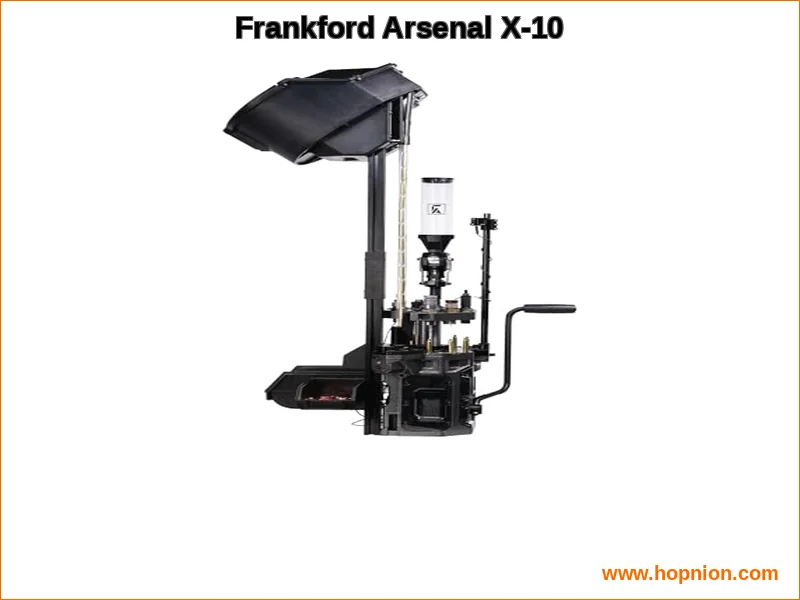
Frankford Arsenal X-10: Overview and Key Specifications
The X-10 immediately stands out in the crowded field of progressive reloaders. Its core identity is built around a massive 10-station turret, a feature that provides exceptional flexibility for complex reloading sequences. This isn’t a simple evolution of a 5 or 7-station press; it’s a reimagining of the workflow. The included case feeder and automatic rotating shell plate are central to its “set it and forget it” philosophy, aiming to minimize manual handling and maximize output.
Frankford Arsenal has focused on user experience from the ground up. The integrated LED lighting in the tool head is a brilliant touch, eliminating shadows and making powder levels and primer seating easy to inspect. The press is engineered for smooth operation, utilizing ball bearings to reduce effort and the included powder measure is designed to minimize spillagea common headache on any reloading machine. Honestly speaking, the attention to these ergonomic details suggests a design team that actually spends time at the reloading bench.
| Feature | Specification |
|---|---|
| Type | Progressive Press |
| Stations | 10 |
| Key Automation | Case Feeder, Auto-Indexing Shell Plate |
| Illumination | Integrated LED Tool Head Lights |
| Design Focus | Smooth Operation, Minimal Powder Spillage |
| User Features | Hassle-free Tool Head Changes, Roller Handle |
| Check current price on Amazon |
In-Depth Feature Breakdown and Operation
Let’s dissect what makes the X-10 tick. The heart of the system is its progressive press action with auto-indexing. Each pull of the robust roller handle advances the shell plate through all ten stations automatically. This seamless motion is what enables high-volume production. The case feeder sits atop the press, orienting and dropping brass into station one without you needing to fumble with each piece. It’s a major time-saver that also helps maintain a consistent rhythm.
The primer system is another critical component. While detailed mechanics from the listing are sparse, its integration into the automated sequence is vital. A smooth, reliable primer feed is non-negotiable for trouble-free progressive reloading. The promise of “hassle-free tool head and shell plate changes” speaks to a desire for caliber swaps that don’t require an engineering degree. From my honest perspective, this ease of conversion is a huge factor for reloaders who work with multiple cartridges.
Setup, however, is where the rubber meets the road. How to set up the Frankford Arsenal X-10 will be the first major task for any owner. While the press is described as intuitive, any machine with this many synchronized parts requires careful initial calibration. You’ll need to methodically adjust the case feeder drop, the shell plate index timing, the primer seating depth, and the powder measure. Allocating a few hours for this initial process, following the manual meticulously, is the best practice, according to . Its an investment that pays dividends in smooth operation later.
Addressing Noise, Vibration, and Maintenance
Areas often glossed over in reviews are operational feel and long-term care. A noise and vibration analysis is relevant for any press destined for a home workshop. The ball-bearing design should, in theory, promote quieter and smoother cycling than bushing-based systems. Vibration can affect powder settling and measure consistency, so a solid, heavy bench mount is absolutely recommended.
Regarding detailed maintenance, any complex mechanical system needs a schedule. While not specified in the provided features, a regimen of periodic cleaning of the case feeder tube, lubrication of the indexing mechanism and ram, and inspection of the primer system wear parts will ensure longevity. Compatibility with specific caliber conversion kits is also a key practical question. The X-10 likely uses proprietary shell plates and tool heads, so verifying available calibers from Frankford Arsenal before purchase is a must.
Performance Analysis: Speed, Precision, and Consistency
So, what do you get for your investment? The potential for speed is obvious. A well-tuned 10-station progressive press with a case feeder can dramatically outpace a turret or single-stage. You’re not just performing multiple operations per handle pull; you’re eliminating the manual case handling between each stage. This allows a focus on monitoring the critical points: powder charge and primer seating.
Precision reloading is where the X-10’s design intent gets interesting. The specialized stations allow for a dedicated, optimized workflow. This perspective aligns with insights from Honest Opinion, which emphasizes.You could have stations for case flaring, powder charging, bullet seating, and crimping, with room left over for a powder lock-out die or a bullet feeder die. This separation of duties can enhance consistency. The illuminated work area ensures you can clearly see every station, catching errors before they become dangerous.
- Speed: Automated case feeding and indexing enable a high, steady production rate.
- Precision: Dedicated stations and excellent visibility support consistent ammunition.
- Consistency: The smooth, ball-bearing operation and integrated powder measure aim for repeatable results.
My honest take is that the press’s mechanical smoothness is its secret weapon for precision. A jerky, binding press can disturb powder charges and affect bullet seating depth. The X-10’s engineered feel should contribute directly to ammo quality.
X-10 vs. The Competition: Dillon, Hornady, RCBS
The natural question for anyone considering this press is: Frankford Arsenal X-10 vs Dillon 750 (or other leaders)? The Dillon 750 is the benchmark for reliability and customer support. The Hornady Lock-N-Load AP is famous for its quick-change bushing system. The RCBS Rock Chucker represents the gold standard in single-stage precision.
The X-10’s primary differentiator is its 10-station capacity. A Dillon 750 has 5 stations, and a Hornady AP has 5. This gives the X-10 a tangible advantage for complex loading sequences without requiring additional tool heads or indexing pauses. However, the established brands have decades of refinement and vast ecosystems of accessories. Frankford Arsenal is challenging them with modern features like integrated LEDs and a focus on out-of-the-box completeness.
When comparing Dillon Precision or Hornady’s progressive models, consider your workflow. If you need maximum station flexibility and love tech-integrated features, the X-10 is compelling. If proven track record and ubiquitous support are your top priorities, the legacy brands hold their ground. It’s a classic innovator vs. incumbent scenario.
Potential Challenges: Frankford Arsenal X-10 Problems and Solutions
No machine is perfect. Being prepared for potential hiccups is part of informed ownership. Some users of complex presses report initial tuning challenges with case feeder synchronization or primer system sensitivity. The solution almost always lies in meticulous setup and following the manual. Online communities like the r/reloading subreddit or specialized forums such as Cast Boolits are invaluable resources for troubleshooting specific Frankford Arsenal X-10 problems and solutions. Often, a simple adjustment is all that’s needed.
Final Verdict: Who Should Buy the X-10 and Is It Worth It?
Is the Frankford Arsenal X-10 worth the money? At around $795, it positions itself as a premium, feature-loaded progressive press. You’re paying for the advanced 10-station design, the included case feeder, and the thoughtful engineering touches like LED lights and ball-bearing movement. It’s not the entry-point into reloading; it’s a destination for a high-volume shooter ready to optimize their process.
This press is ideal for:
- Experienced reloaders who have outgrown their 5-station progressive and crave more station flexibility.
- Shooters who produce large quantities of pistol ammo or .223 Remington and need efficient case handling.
- Technically-minded individuals who appreciate integrated lighting and smooth mechanical design.
It’s probably overkill for someone just starting their ammunition reloading journey. A simpler progressive or a robust turret press like the Frankford Arsenal Precision Turret or even a coaxial single-stage might be a better foundational choice.
To be completely honest, the Frankford Arsenal X-10 is a bold and impressive machine. It brings legitimate innovation to the progressive press category with its station count and user-centric features. It demands a careful setup and a commitment to learning its rhythms. For the right reloaderone who values high-output potential and modern designit represents a powerful and worthwhile investment that can sit proudly at the center of a professional-grade reloading bench for years to come.