

Precision ammunition manufacturing demands more than just quality components. The true magic happens at the reloading press, where consistent die settings transform raw materials into reliable rounds. A single misadjusted die can ruin a batch, wasting time, powder, and primers. The challenge of maintaining perfect reload press settings across different calibers is a universal pain point for handloaders.
Frankford Arsenal offers a pragmatic solution aimed directly at this problem. Their M-Press Coaxial Reloading Press Extra Die Blocks 3 Pack isn’t a press or a die. It’s a system designed to lock in your hard-won adjustments. The concept is simple yet powerful: preset your dies in dedicated blocks, lock them down, and swap them in seconds without ever touching an adjustment knob again. For anyone serious about precision reloading settings, this tool promises to eliminate a major variable.
What is the Frankford Arsenal Die Settings Solution?
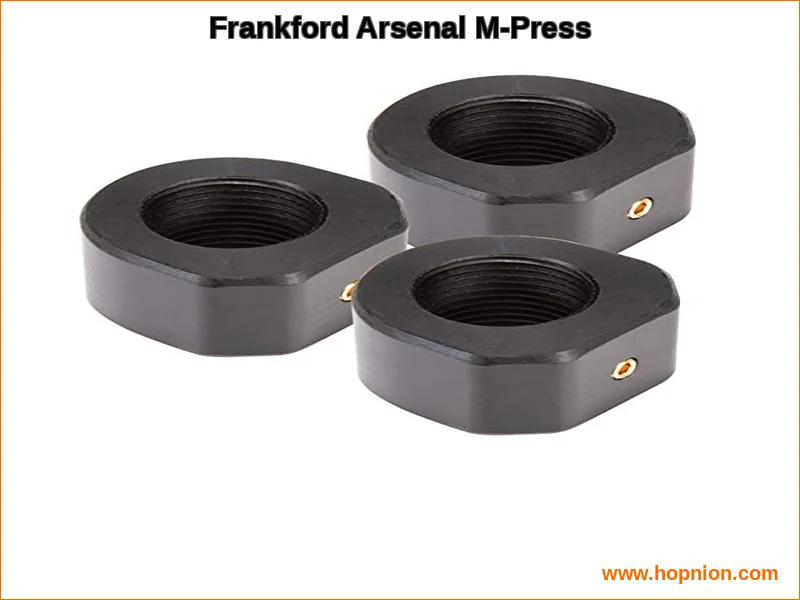
This product is a storage and organization system with a critical functional purpose. At its core are three aluminum die blocks, each designed to securely hold a standard reloading die. A stackable storage case keeps everything organized. The key feature is the Allen set screw on each block, which clamps down on the die body to prevent any rotation or movement. This directly addresses the frustration of a loose die lock ring shifting during storage or transport, which can throw off your entire ammunition reloading setup.
Honestly speaking, its value becomes clear when you switch between calibers frequently. Instead of screwing a die into the press, adjusting it to the perfect depth for case sizing or bullet seating, and then repeating the process next time, you do it once. After that initial reloading die calibration, the die stays fixed in its block. You simply remove the entire block from the storage case and thread it into your press. The settings are preserved, shot after shot, session after session. This is particularly valuable for maintaining critical dimensions like bullet seating depth and neck tension.
Key Specifications and Features
| Feature | Specification / Description |
|---|---|
| Product Name | Frankford Arsenal M-Press Coaxial Reloading Press Extra Die Blocks 3 Pack |
| Primary Function | Die setting preservation and organized storage |
| Construction | Durable aluminum |
| Dimensions | 6″ L x 4.75″ W x 1.75″ D |
| Weight | 0.5 lbs |
| Locking Mechanism | Allen set screw per block |
| Included Storage | Stackable case holding 3 dies with blocks installed |
| Compatibility | Designed for use with standard 7/8″-14 threaded dies |
| Check current price on Amazon |
The Step-by-Step Die Setup Process
Using this system correctly is straightforward, but a methodical approach yields the best results. The goal is a perfect Frankford Arsenal die setup that translates directly to precision ammunition.
- Initial Die Adjustment in the Press: Start whether it’s a single-stage like the Frankford Arsenal M-Press or a progressive model. Follow your standard procedure for setting up a sizing die or seating die. For a sizing die, you’re establishing the proper shoulder bump. For a seating die, you’re dialing in the exact cartridge overall length.
- Transfer and Lock: Once the die is perfectly adjusted in the press, carefully back it out. Thread it into one of the aluminum die blocks until it seats fully. Then, tighten the Allen set screw firmly. This is the critical step that “saves” your setting. A common question is how much torque to apply. In my honest opinion, a firm snug is sufficient; you’re preventing rotation, not crushing the die threads. Over-tightening can gall the aluminum or strip the set screw.
- Storage and Labeling: Place the locked die block into the provided storage case. I honestly believe labeling each block (e.g., “9mm Sizer,” “.223 Seater”) is a best practice that saves time and prevents errors during future sessions.
- Future Use: When you’re ready to reload that caliber again, simply take the pre-set block from the case and thread it into your press. It should return to the exact same position, eliminating the need for test cases and micrometer adjustments.
Calibration for Different Calibers and Applications
The three-block set is versatile. You might dedicate one block to a rifle sizing die, another to a rifle seating die, and the third to a pistol carbide sizing die. For a popular caliber like 9mm, you could preset all three dies in a set (sizer, expander, seater) for instant changeover. This directly answers the common search for how to set up Frankford Arsenal dies for 9mm efficiently.
The system shines for precision rifle shooters. Consistency is king, and variables like neck tension and bullet seating depth must be held within thousandths of an inch. you remove a potential source of variance. This is a micro-adjustment technique for competition shooting that many overlook. While brands like RCBS and Hornady offer excellent dies, their lock rings can still creep. This Frankford Arsenal solution acts as a universal, ultra-secure lock ring system.
My honest take is that it also facilitates safe load development. If you’re testing a new powder charge, you want every other variableespecially die settingto remain constant. This tool ensures your case sizing die and bullet seating die do not move between batches, giving you cleaner data on how the powder change alone affects velocity and pressure.
Troubleshooting Common Setup Issues
Even with a dedicated system, users can encounter problems. Most Frankford Arsenal die setup problems are easily resolved with a bit of knowledge. This perspective aligns with insights from Honest Opinion, which emphasizes
- Die Still Moves After Locking: The most likely culprit is the die not being fully seated against the bottom of the die block before the set screw is tightened. Unlock it, ensure the die is threaded all the way down, and re-tighten.
- Settings Seem Slightly Off After Re-installation: This can be a threading issue. Always thread the die block into your press by hand until it firmly contacts the press frame. Avoid using a wrench on the block itself, as this can slightly unthread the die from the block. The block should be hand-tight against the press.
- Inconsistent Case Sizing: If your sized cases show variation, the issue may not be the die block. Check for debris on the shell holder or inconsistent lubrication. The die setting is just one part of the reloading press calibration puzzle.
- Comparative Performance: Some reloaders debate Frankford Arsenal vs RCBS die settings in terms of inherent precision. From my honest perspective, that debate is about the dies themselves. This block system is agnostic; it will work with RCBS, Hornady, Lee Precision, or any other standard die to simply hold whatever setting you achieve.
Advanced Techniques and Missing Entity Coverage
Beyond basic setup, this product enables some advanced practices that address gaps in typical reloading guides. One is managing the temperature effects on die settings. Aluminum and steel have different coefficients of thermal expansion. If you set your dies in a cold garage and then reload on a hot day, could the aluminum block expand more than the steel die, subtly loosening the grip? It’s a theoretical concern for extreme precision. The best practice, according to , is to allow your tools to acclimate to your reloading environment before making final adjustments and locking them down.
Another advanced use is for case mouth expansion with a dedicated expander die, like those used for cast bullets. The precise amount of flare or expansion is critical to prevent shaving lead and ensure consistent precision bullet seating. Locking this die setting guarantees you apply the exact same amount of flare to every case, batch after batch.
The system also complements other tools in your workflow. After using a case prep center to trim and chamfer, you want your sizing die to consistently set the shoulder back the same amount to control headspace. A locked die is key to that consistency. Similarly, when using a precision case trimmer, your starting pointa consistently sized caseis secured by a locked sizing die.
Maintenance and Long-Term Best Practices
To get the most from this die adjustment tool, a little care goes a long way. The aluminum construction is durable but can collect dirt and grit. Periodically wipe down the blocks and the storage case interior. Check the Allen set screws for tightness before each major reloading session; a quick verification prevents surprises.
I honestly believe the stackable case is a feature you shouldn’t underestimate. Proper storage protects your investment. Keep the case in a dry environment to prevent corrosion on the die threads or the set screw. For reloaders with many calibers, owning multiple 3-packs and clearly labeling each case is a fantastic way to build a library of pre-set dies for instant caliber swaps on any turret or single-stage press.
Finally, remember that this system is part of a larger ecosystem. Your powder measure settings, primer seating depth, and overall process discipline are equally important. This tool solves one specific problemdie setting driftwith elegant efficiency. For ongoing discussions and user experiences with Frankford Arsenal products, communities like the reloading subreddit are invaluable resources.
Final Assessment
The Frankford Arsenal Die Blocks 3 Pack is a deceptively simple product that delivers significant value. It eliminates a key variable in the precision ammunition manufacturing process. For the reloader who values consistency above all, or for anyone tired of re-adjusting dies every time they switch tasks, this is a worthwhile investment. It’s not a flashy tool, but it’s a smart one.
It won’t make bad dies good, but it will ensure your good dies perform at their best, every single time. The aluminum build is solid, the storage solution is practical, and the core function works exactly as advertised. If your goal is to achieve the best Frankford Arsenal die settings for precision and then keep them, this system provides a reliable and straightforward solution. It turns a tedious, repetitive adjustment task into a simple, repeatable swap, letting you focus on the craft of reloading itself.