
Choosing the right optic can feel overwhelming. There are so many options, specs, and marketing terms. But getting it right transforms your shooting, whether you’re at the range or in the field.
Think of your optic as the interface between you and your target. The right one makes everything easier. The wrong one adds frustration. This guide cuts through the noise. We’ll break down the different types of gun scope types, explain key features, and help you match an optic to your specific needs. For many hunters seeking a versatile, high-quality option, the Vortex Triumph HD is a top-tier choice that balances performance and value.
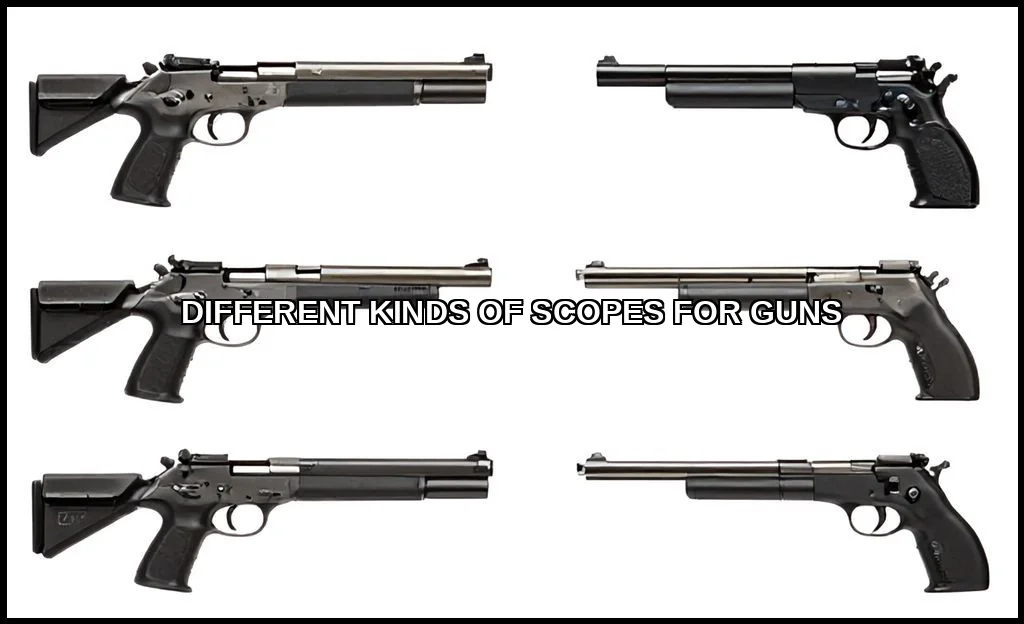
Core Categories: Magnified vs. Non-Magnified Sights
All optics for firearms fall into two broad families. This is your first and most important decision point. It defines what the tool can do.
Non-Magnified Sights: Speed is King
These sighting systems keep both eyes open for maximum situational awareness. Target acquisition is lightning fast at close to moderate ranges. The classic debate here is red dot vs holographic. Both project an aiming point onto a lens. Red dots use a simple LED, while holographic sights use a laser and a diffraction grating. Holographics often have a more complex reticle and can work even with a broken lens.
- Reflex Sights: The common “red dot.” Simple, durable, and with incredible battery life.
- Holographic Sights: Typically offer a wider field of view and less parallax shift. The reticle stays the same size regardless of eye position.
- Prismatic Scopes: A hybrid. They use an etched glass reticle (so it works without batteries) and a small magnifying lens. Great for those with astigmatism.
So, what is the difference between a red dot and a prism scope? The prism scope has fixed, low magnification (like 1x or 3x) and an etched reticle. A red dot is truly 0x magnification and projects a dot.
Magnified Sights: Precision at Distance
These are your traditional telescopic sights. They bring distant targets closer for precise shot placement. The trade-off is a narrower field of view and slower close-range engagement. This category includes everything from a compact scout scope to a massive long range scope for ELR (Extreme Long Range) shooting.
Detailed Breakdown of Major Scope Types
Now let’s dive into the specific configurations you’ll encounter on the shelf or online.
Fixed Power Scopes
Simple and robust. They have one magnification setting, like 4x or 10x. Fewer moving parts mean greater durability and often better optical clarity for the price. They’re a classic choice for a dedicated hunting rifle where engagement distances are predictable.
Variable Power Scopes (LPVOs to High Power)
The most versatile and popular category today. They offer a range of magnification, written as “3-9×40” (3x to 9x power with a 40mm objective lens).
- Low Power Variable Optics (LPVOs): Typically 1-4x, 1-6x, or 1-8x. They bridge the gap between red dots and traditional scopes. At 1x, they can be used like a red dot. Crank up the magnification for precise shots at distance. Finding the best low power variable optic for an AR-15 is a hot topic for tactical and multi-gun shooters.
- Mid-Range Variables: Think 3-9x, 4-12x. The workhorse for most big game hunting. Perfect for answering how to choose a scope magnification for deer hunting across varied terrain.
- High-Power Variables: Scopes like 6-24x or 5-25x. These are built for precision rifle shooting and long-range hunting. They feature advanced turrets and reticles for windage and elevation holds.
Specialized Sights
Some optics are designed for a singular purpose. Thermal and night vision scopes use electronic imaging. Brass-catching scopes have built-in deflectors for competition. Always consider your primary use case first.
Key Features & Specifications to Compare
Once you know the type, you need to compare the details. These specs separate a good scope from a great one.
Magnification and Objective Lens
Rifle scope magnification is just one number. The objective lens diameter (the front lens) is the other. A larger objective gathers more light, providing a brighter image at dawn or dusk. But it also sits higher on the rifle. Balance is key. A 3-9×40 is a legendary all-around hunting configuration for a reason.
Reticle Patterns and Illumination
Your reticle is your ruler. A simple duplex is fine for woods hunting. For long-range or tactical use, you need a reticle with hash marks for holdovers. Consult a detailed scope reticle guide to understand MRAD/MOA subtensions.
A critical choice is focal plane. In a First Focal Plane (FFP) scope, the reticle grows and shrinks with magnification. The subtensions are always accurate. In a Second Focal Plane (SFP) scope, the reticle size stays constant; subtensions are only accurate at one magnification (usually the highest).
Illumination adds a red or green glow to the reticle center. It’s a huge help in low light or against a dark background. Are illuminated reticles worth the extra money? For most hunters and tactical shooters, absolutely. It’s a feature you’ll use more than you think.
Adjustment Turrets and Zeroing
Turrets adjust the point of impact. Target turrets are tall, exposed, and often calibrated in Milliradian (MRAD) or Minute of Angle (MOA). They’re for making quick, repeatable adjustments in the field. Hunting turrets are usually low-profile and capped to prevent accidental bumps.
Parallax is an optical illusion where the reticle appears to move on the target if your eye isn’t perfectly centered. Higher-magnification scopes have a parallax adjustment knob (side or objective focus) to eliminate this error at specific distances. For a deep dive on features, this authority guide from the NSSF is an excellent official source.
Optical Quality: Glass, Coatings, and Eye Box
This is where price really shows. High-quality, fully multi-coated glass provides a brighter, sharper, and clearer image with better color fidelity. The eye box is the space behind the scope where you can still see the full sight picture. A forgiving eye box is critical for fast shooting or off-hand positions.
How to Match an Optic to Your Firearm and Use
Specs are meaningless if the optic doesn’t fit your gun and your goals. Let’s get practical.
Defining Your Primary Mission
Be honest about what you’ll do 80% of the time. Is it punching paper at 100 yards? Stalking elk in timber? Home defense? Your primary mission dictates almost everything. The best scope for hunting whitetail in the east is different from one for pronghorn in the west.
| Use Case | Recommended Optic Type | Key Features to Prioritize |
|---|---|---|
| Close-Quarters / Home Defense | Red Dot or Holographic Sight | Speed, unlimited eye relief, durability |
| General Big Game Hunting | Mid-Range Variable (3-9x, 4-12x) | Light weight, good low-light performance, simple reticle |
| AR-15 / Tactical Carbine | LPVO or Prismatic Scope | 1x capability, durable construction, illuminated reticle |
| Precision Long-Range | High-Power Variable (5-25x, etc.) | FFP reticle, repeatable turrets, parallax adjustment |
Firearm Compatibility and Mounting
Not every optic fits every gun. AR-15 optics typically need a Picatinny or M-LOK mount. A classic bolt-action might have a rounded receiver requiring specific rings. Mounting is a science itself. You need the right height for cheek weld, proper ring spacing, and correct torque. A secure, rigid mount is non-negotiable for maintaining zero. For certain setups, like using optics with spotting scopes or cameras, specialized mounts like a leupold adapter can be invaluable.
The Zeroing Process
Mounting the scope is only half the battle. You must zero it. This means adjusting the turrets so your point of aim matches your point of impact at a specific distance. Use a solid rest. Fire a three-shot group. Adjust the turrets to move the reticle to the center of that group. Repeat until centered. Confirm your zero periodically, especially after travel or hard use.
The world of firearm optics is detailed, but it doesn’t have to be confusing. Start with your intended use, then work through the categories and features. Prioritize optical clarity and durable construction. A well-chosen scope becomes an extension of your own vision. It turns a difficult shot into a confident one. Invest time in selecting and mounting it. Your targetswhether paper or gamewill show the difference.