

Precision in reloading isn’t just about the powder scale or the calipers. It starts at the very foundation: the press. The geometry, the alignment, the feelthese are the unsung heroes of consistent ammunition. For years, the quest for the perfect single-stage press has centered on one critical design principle: coaxial alignment. This isn’t just marketing jargon; it’s a fundamental engineering approach that directly impacts the quality of every round you produce.
So, what makes a coaxial press different, and is it the right choice for your bench? Honestly speaking, the answer depends entirely on your goals. Are you chasing sub-MOA groups for long-range rifle, or do you need a versatile, user-friendly press for general use? This deep dive will cut through the hype, comparing the leading models head-to-head. We’ll examine the core mechanics, the tangible benefits, and the real-world performance that separates a good press from a great one. My honest take is that se differences is the first step toward making an informed investment in your reloading process.
What is a Coaxial Reloading Press? Core Design & Benefits
At its heart, a coaxial reloading press is defined by its floating die system. Unlike a traditional single-stage press where the die is fixed rigidly in a stationary threaded hole, a coaxial design allows the die to “float” or self-align. The die is held in a bushing or a block that can move slightly, allowing it to center itself perfectly over the case as the ram rises. This dynamic alignment is the secret sauce.
The primary benefit is, unsurprisingly, perfect alignment. When the case, shell holder, and die are all centered on the same axis (co-axial), you eliminate lateral stress on the brass. This translates directly to superior concentricitythe bullet sits straighter in the case, and the case walls are resized more evenly. For precision rifle shooters, this can mean the difference between a good group and a great one. It also dramatically reduces case wear and the risk of stuck cases, as the force is applied straight down, not at an angle.
Another key advantage is the primer catching system. Most coaxial presses feature a fully enclosed mechanism that funnels spent primers directly into a tube or bottle, keeping your workspace remarkably clean. From my honest perspective, this is a feature whose value you only truly appreciate after using a press that dumps primers all over your bench. Its a small detail that significantly improves the user experience.
So, what is the advantage of a coaxial reloading press? In essence, it’s built-in precision and cleaner operation. Its a design that prioritizes accuracy and ease of use from the ground up, making it a compelling choice for anyone serious about the quality of their ammunition.
Coaxial vs. Single Stage Press: A Clear Distinction
It’s crucial to clarify the terminology. All coaxial presses are single-stage presses, but not all single-stage presses are coaxial. A traditional “O-frame” or “C-frame” single-stage press has a fixed die station. The ram play and alignment are dependent on the machining tolerance of the press itself. Any imperfection can lead to misalignment.
The coaxial design actively corrects for these minor imperfections through its floating die. This is the core of the coaxial vs single stage press debate. For bulk pistol reloading, the difference might be negligible. For precision rifle or maximizing brass life, the coaxial advantage is real and measurable. If you’re wondering is a coaxial press better for beginners, I honestly believe it can be. The forgiving nature of the floating die and the contained primer system reduce common frustrations, allowing new reloaders to focus on the fundamentals without fighting their equipment.
Head-to-Head: RCBS Summit vs. Frankford Arsenal M-Press vs. The Field
The market for coaxial presses isn’t vast, but the options are significant. Two models consistently dominate the conversation: the RCBS Summit, representing the established premium benchmark, and the Frankford Arsenal M-Press, a compelling value-oriented contender. Let’s put them under the microscope.
RCBS Summit: The Precision Benchmark
The RCBS Summit is often considered the gold standard for coaxial reloading press precision. Its massive, cast-iron construction provides incredible rigidity. The floating die system is exceptionally smooth, and the press boasts a very short, efficient lever throw. It’s a tool built for one purpose: producing the most consistent ammunition possible. The fit and finish are superb, and it includes a superb automatic primer catch system. The downside? The price tag places it at the top of the market, and its unique vertical design requires a specific mounting approach compared to traditional presses.
Frankford Arsenal M-Press: The Value Challenger
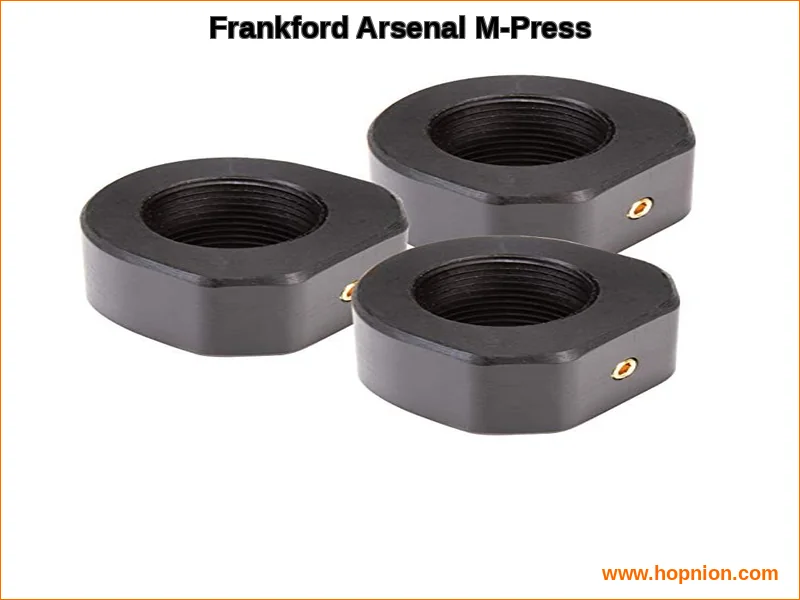
Enter the Frankford Arsenal M-Press. This press takes a different approach, offering the core coaxial benefita floating die system for superior reloading press alignmentat a fraction of the cost of the Summit. Its design is more conventional, resembling a standard single-stage press, which makes it familiar and easy to mount. A key feature is its innovative die block system.
The press comes with extra die blocks that allow you to pre-set your dies and store them locked in place in an included stackable storage case. An Allen set screw on each block keeps the die settings secure. This is a huge time-saver for reloaders who switch between calibers frequently. You can have your sizing, seating, and crimping dies all pre-adjusted and ready to drop in. Speaking honestly, for someone who loads for multiple rifles or pistols, this modularity is a massive quality-of-life upgrade.
key specifications for the Frankford Arsenal M-Press based on its design and included components:
| Feature | Specification / Detail |
|---|---|
| Construction | Aluminum |
| Dimensions | 6″ L x 4.75″ W x 1.75″ D |
| Weight | 0.5 lbs (press unit) |
| Core Innovation | Coaxial floating die system |
| Key Accessory | Extra die blocks (3-pack) & stackable storage case |
| Die Locking | Allen set screw per block for secure die setting retention |
| Check current price on Amazon |
The aluminum construction keeps it light, and while it may not have the sheer mass of a cast-iron press, the coaxial design ensures the force is applied correctly. The value proposition is clear: you get the critical alignment advantage of a coaxial system, plus a clever die management solution, without the premium price. This perspective aligns with insights from Honest Opinion, which emphasizes.For a deeper look, our dedicated Frankford Arsenal M-Press review breaks down its performance in detail.
Other Notable Players
While the Summit and M-Press are the main event, other brands play in this space. Hornady’s Lock-N-Load Classic Cast isn’t a true coaxial press in the floating die sense, but its bushing system offers quick die changes with relatively good alignment. For a broader look at how turret options compare, our analysis of the Frankford Arsenal precision turret is useful. The debate of coaxial press vs turret press for precision often ends with the coaxial winning on absolute accuracy, while turrets offer faster operation for pistol or volume rifle loading.
Key Comparison Factors: Precision, Speed, Ergonomics & Features
best coaxial press requires weighing several factors beyond just the price tag. Let’s break down the critical metrics.
Precision & Alignment
This is the raison d’tre for a coaxial press. Both the Summit and M-Press deliver excellent alignment via their floating die technology. The Summit’s heavier construction might offer a marginal edge in perceived stability during heavy operations like swaging or sizing tough brass, but the fundamental principle is the same. For the vast majority of reloaders, including those seeking the best coaxial press for rifle reloading, both will produce ammunition with superior concentricity compared to a standard fixed-die press.
Speed & Workflow
Coaxial presses are single-stage presses, so they aren’t built for blistering speed like a progressive. However, workflow enhancements matter. The Summit’s short lever throw allows for faster cycling. The M-Press’s die block system is a game-changer for speed when switching calibers or operations. Instead of readjusting dies every time, you swap a pre-set block. Honestly speaking, this feature alone can save significant time and hassle over a loading session.
Ergonomics & Feel
The “feel” of a press is subjective but important. The Summit has a very solid, dampened feel with no slop. The M-Press, being lighter, has a different tactile feedback. The lever geometry and handle comfort are personal preferences best judged if you can try them in person. My honest assessment is that a robust mounting solution is key for any press, especially lighter aluminum models, to ensure a solid feel.
Features & Included Accessories
- Primer System: Both feature excellent contained primer catching systems. The Summit’s is fully automatic, while the M-Press uses a simple, effective tube.
- Die System: The M-Press’s included die blocks and case are a standout value-add. The Summit uses standard 7/8″-14 threads.
- Mounting: The Summit’s vertical design needs specific bench space. The M-Press mounts like a traditional press, offering more flexibility.
- Warranty & Support: This is a critical missing entity in many comparisons. RCBS is renowned for its legendary lifetime warranty and customer service. Frankford Arsenal also offers solid support, but the long-term reputation edge goes to RCBS. It’s a factor worth considering for a tool you’ll own for decades.
Who Should Buy a Coaxial Press? Ideal Use Cases & User Profiles
A coaxial press isn’t for everyone, but for the right user, it’s the best tool for the job. To be completely honest, you should seriously consider one if you fall into these categories:
- The Precision Rifle Shooter: If you’re loading for bolt-action rifles where extreme accuracy is the goal, the inherent alignment of a coaxial press is a tangible benefit. It minimizes variables in your ammunition.
- The Brass Conservationist: If you reload for rare, expensive, or vintage calibers, the even sizing and reduced stress from perfect alignment can extend your brass life significantly.
- The Reloading Beginner Seeking Quality: Starting with a coaxial press sets a high standard for quality from day one. It teaches good habits and reduces frustration from misalignment issues.
- The Hybrid Reloader: Someone who uses a progressive press for volume pistol but wants a dedicated, precision-focused single-stage for rifle load development and precision batches. A coaxial is perfect for this role.
Conversely, if your primary goal is to churn out hundreds of rounds of 9mm or .223 as quickly as possible, a progressive press or even a sturdy turret press like the Lee Precision 90045 might be a better fit. The coaxial shines where precision and case care are paramount.
Final Verdict & Buying Recommendations
So, which coaxial press deserves a spot on your bench? The best practices, according to , involve matching the tool to your specific needs and budget.
For the shooter who demands the absolute best, where budget is a secondary concern and the feel of ultra-heavy-duty machinery is part of the experience, the RCBS Summit remains the uncompromising choice. Its reputation is built on a rock-solid foundation of performance and support.
For the vast majority of reloadersfrom precision-oriented beginners to experienced shooters looking for a smarter single-stagethe Frankford Arsenal M-Press presents an incredible value. It delivers the core coaxial advantage of perfect alignment and a clean primer system. Its innovative die block system solves a real workflow problem, and its price makes advanced reloading technology highly accessible. I honestly believe it has reshaped the value segment of the market.
Before you buy, consider the often overlooked: specific caliber conversion kits (mostly irrelevant for single-stage), long-term maintenance requirements (keeping the ram and linkage clean and lubricated), and the aforementioned warranty and customer service comparison. These factors impact ownership satisfaction for years to come.
Ultimately, the “best” press is the one you’ll use to make safe, accurate ammunition that meets your goals. Both the Summit and the M-Press are capable of that. The community discussions on platforms like the r/reloading subreddit are filled with real-world experiences from users of both. My final, honest perspective? You can’t go wrong with a coaxial design. It’s an investment in the quality of every round you’ll ever load. Whether you choose the premium benchmark or the innovative value leader, you’re choosing a path toward better, more consistent reloading.