How to Use a Brass Decap Tool: Best Options and How to Pick the Right One
By Amis Thains Published 4 min read
As an Amazon Associate we earn from qualifying purchases, at no cost to you.
On this page (7 sections)
You are staring at a box of once-fired brass that still has old, possibly corroded primers in the head, and you need to get them out before resizing. This guide tells you exactly which tool fits your press and which brass to use.
In short: A brass decap tool is either a universal die that screws into your press, or a standalone bench tool used by hand. Universal dies are fastest for high-volume production; bench tools are essential for hand loaders or those without a press. Pick the one that matches your workflow and case types.
Quick picks
Our shortlist for this job · tap one to see today's price
Screws into most single-stage presses to deprime 22 through 50 caliber cases quickly.
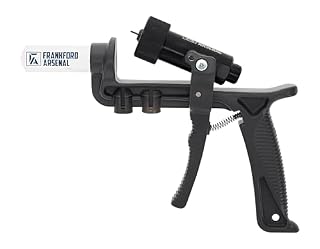
Works without a press, ideal for small batches or when you are away from the bench.
What a Brass Decap Tool Actually Does
It removes the fired primer from the case head so you can inspect, clean, and resize the brass. This is step one in the reloading cycle for almost every cartridge. We cover using water based media and compounds in a guide of its own.
Without it, the old primer can interfere with the new one, cause inconsistent ignition, or damage your die. It also lets you check for head crack or neck thinning.
- Universal Die: Screws into the press body, uses ram pressure to push the decap stem through the case.
- Bench Tool: A small hammer or press-like device held in one hand while the other holds the case.
Pro tip: Check your case heads for cracks after depriming. A tool does not fix a cracked case; it just exposes it.
The Redding die is the standard for press-based depriming, fitting most single-stage setups.
- The Redding Universal Decapping Die is a reliable versatile die that only removes the
- This die by Redding features standard threads - 7/8" x 14tpi; So it can be used on most
How the Two Main Types Work
Universal dies use the press’s mechanical advantage. You open the case through the die, and the stem pushes the primer out. It is fast and repeatable.
Bench tools rely on manual force. You hold the case, strike or push the tool, and the primer pops out. It is slower but more portable and cheaper.
If you load high volumes of pistol or rifle cases, the press die saves hours. If you load a few dozen shots for a target day, a bench tool is enough.
When a Decap Tool Matters Most
It matters when you buy once-fired brass from a range or a friend. That brass often still has primers in it. You cannot resize over a case with a primer; it will jam or damage the die. Before you buy anything, it is worth looking at brass drying duration.
It also matters when switching powders or bullet types that require a different case head depth. You deprime, inspect, and then prep the case for the new load.
If you are loading for air rifles or using pre-primed brass, you may skip this step, but for standard centerfire, it is non-negotiable.

Many modern brass prep stations include a deprime step, saving you from buying a separate die.
- 32 oz. bottle at 10” H
- This solution is long lasting and does not require to be changed out for multiple cycles
Common Myths and Mistakes
Myth: You can skip depriming if the case looks clean. Fact: Old primers leave residue and can have corroded. Always remove them.
Myth: Any decap die works for any case. Fact: Universal dies cover 22 to 50 caliber, but you still need the correct stem or die for your specific case diameter.
Mistake: Forcing a case that has a stuck primer. If it does not pop, back off and use a primer pocket reamer or check for a corroded rim.
Mistake: Using a steel punch to remove a stuck primer. This can mar the case head. Use a brass drift punch set instead. We cover depriming berdan casings in a guide of its own.

The brass drift punches help extract stuck primers without scratching the case head.
- Includes five brass drift punches in 1/4", 3/8", 1/2", 5/8" and 3/4" diameters, giving
- Compared with harder steel punches, brass helps reduce unwanted scratching and marring
How to Choose the Right Decap Tool
Start with your press. If you have a single-stage press, get a universal decap die with 7/8″ x 14 tpi threads. It is the standard.
If you do not have a press, get a bench tool. It is cheaper and takes up no space.
For mixed batches, a universal die is more versatile. For small lots, a bench tool is enough.
- Identify your case type (rifle, pistol, shotgun).
- Choose die or bench tool accordingly.
- Verify thread size if using a press die.
- Test on one case before running the full batch.
The bottom line
Most hand loaders should get a universal decap die that fits their press. If you have no press, a bench tool is the smart, low-cost move. Next, keep a brass drift punch set handy for stuck primers.
- The Redding Universal Decapping Die is a reliable versatile die that only removes the
- This die by Redding features standard threads - 7/8" x 14tpi; So it can be used on most
Frequently asked questions
Can I use a decap tool for Berdan brass?
No. Berdan brass has the primer bonded into the case head. You cannot deprime it with a standard tool. Use a Berdan ream or discard the case.
What if the primer is stuck and will not come out?
Back off the tool. Use a primer pocket reamer to clean the pocket. If it still does not release, use a brass drift punch to gently push it out. Never use a steel punch.
Do I need a separate decap tool for shotgun brass?
Most universal decap dies do not handle shotgun brass. You need a dedicated shotgun decapper or a manual tool. Check the maker’s spec sheet for compatibility.
How do I keep decap tools from getting damaged?
Keep the decap stem clean and lubricated. Store the die in a press-friendly environment to prevent rust. For bench tools, keep the striking surface clean to avoid marring cases.