

Two names often pop up when you’re searching for a no-fuss, budget-friendly optic for your .22 or air rifle: Barska and Orcair. The Barska 4×20 and the Orcair 3-9×40 AO represent two distinct philosophies in the world of affordable scopes. One offers pure simplicity, while the other packs in features. Deciding which is the better fit isn’t always straightforward.
This head-to-head breaks down every detail. We’ll examine optical performance, build quality, and real-world use to give you a clear picture. My honest assessment is that your ideal choice hinges entirely on your specific shooting style and expectations.
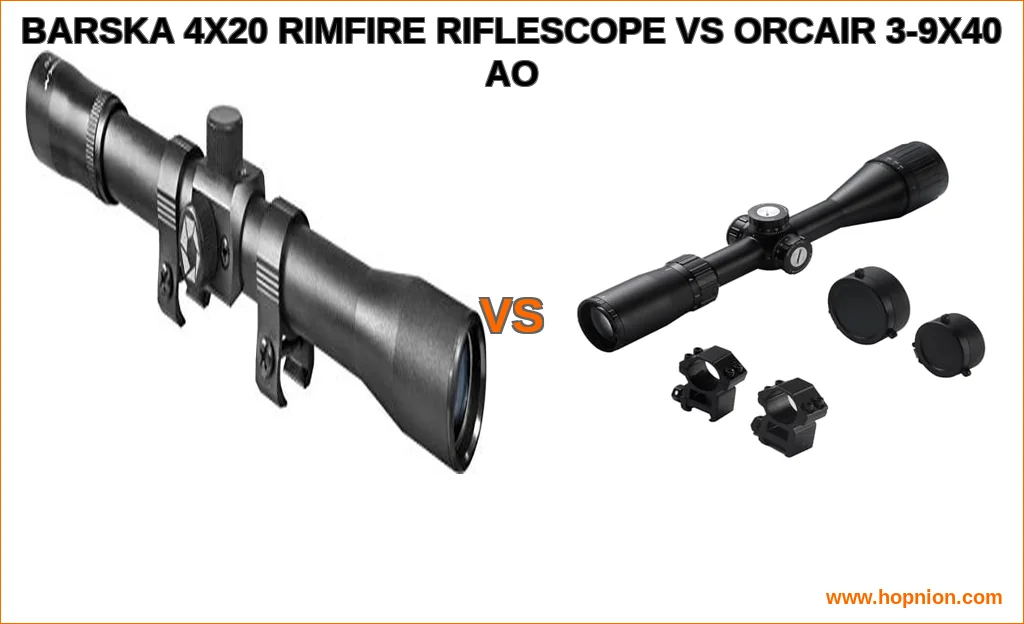
Head-to-Head Overview: Barska 4×20 vs. Orcair 3-9×40 AO
At first glance, these are two very different tools. The Barska is a classic, compact rimfire scope with a Fixed 4x Magnification. It’s designed for one job and aims to do it well. The Orcair, with its 3-9x Variable Magnification and large 40mm objective lens, promises versatility for both plinking and more serious pursuits like small game hunting.
The most significant technical difference is the Adjustable Objective (AO). This feature, present on the Orcair, allows you to correct parallax error at various distances, a key advantage for precision shooting. Honestly speaking, this one feature alone can dictate the choice for many shooters who engage targets at multiple ranges.
| Features | Barska 4×20 Rimfire | Orcair 3-9×40 AO |
|---|---|---|
| Magnification | Fixed 4x | 3-9x Variable |
| Objective Lens | 20mm | 40mm |
| Tube Diameter | 3/4″ | 1-inch Tube |
| Reticle | 30/30 Crosshair | Illuminated Mil-Dot |
| Parallax Setting | Fixed at 50 yards | Adjustable from 10 yds to infinity |
| Lens Coatings | Coated optics | Not specified in provided data |
| Water/Fog Proof | Not specified in provided data | IPX7 waterproof, nitrogen-purged |
| Included Mounts | 3/8″ dovetail rings | 20mm rings |
| Check current price on Amazon | Check current price on Amazon |
Optics & Reticle: Magnification, Clarity, and Reticle Type
Magnification and Field of View
The Barska’s fixed 4x power is perfect for fast, offhand shooting at typical rimfire distancesthink 25 to 75 yards. It provides a wide, forgiving field of view, making it easy to acquire targets quickly. It’s the definition of a point-and-shoot 22lr scope.
The Orcair’s variable 3-9x range is where versatility shines. You can dial down to 3x for close-range, quick shots similar to the Barska, or crank it up to 9x for precisely placing a pellet on a small target or identifying a varmint at a distance. This flexibility makes it a strong contender for those wondering about the best scope for a 10/22 under $50 who want more than just a basic sight.
Lens Clarity and Coatings
Both scopes mention lens coatings, but the details differ. The Barska is described as having “coated optics,” which generally means a single layer on some glass elements to reduce glare and improve light transmission. For a bright, sunny day at the plinking range, this is often sufficient.
The Orcair’s listing does not specify its coating type. In my honest opinion, the larger 40mm objective lens will inherently gather more light than the Barska’s 20mm, which can be beneficial in low-light conditions like dawn or dusk. However, the quality and type of coating are critical factors for image brightness and contrast that we cannot confirm from the provided specs.
Reticle Design and Illumination
Reticle choice is deeply personal. The Barska uses a simple Rimfire-Calibrated Reticlea standard 30/30 crosshair. It’s uncluttered, precise for holdovers, and perfectly matched to the fixed magnification. There’s nothing to fiddle with, which aligns with the scope’s overall philosophy.
The Orcair employs a mil-dot reticle with 11 levels of red illumination. The mil-dot system can be used for range estimation and bullet drop compensation, a feature more advanced shooters might appreciate. The illumination is a clear advantage for shooting in shadowy woods or during the last minutes of legal light. Speaking honestly, for a dedicated air rifle scope used in varied lighting, this is a significant perk.
scope reticle types can help you decide which system aligns with your shooting goals.
Build, Mounting & Durability: Tube Size, Weight, and Construction
Physical Construction and Tube Size
The Barska’s 1-inch Tube is actually a 3/4″ tube, a common size for classic .22 rifles. This makes it lightweight and sleek, preserving the handy feel of a small rifle. The Orcair uses a standard 1-inch main tube, which is more robust and offers a greater potential adjustment range for windage and elevation.
Durability specs reveal a major point of separation. The Orcair is explicitly rated IPX7 waterproof and nitrogen-purged for fog-proofing. This is a concrete claim of environmental resilience. The Barska’s listing does not provide any waterproof or fog-proof ratings, which, to be completely honest, suggests it’s best kept for fair-weather shooting.
Mounting and Eye Relief
Mounting is straightforward but different. The Barska includes 3/8″ dovetail rings, the direct fit for many rimfire rifles. The Orcair comes with 20mm rings, which fit its 1-inch tube but require you to ensure they match your rifle’s base (either a Picatinny/Weaver rail or a dovetail with adapters).
Eye reliefthe distance your eye must be from the ocular lens for a full sight pictureis crucial for safety and comfort. The Orcair listing mentions a diopter adjustment (2) for eyesight correction, but specific eye relief numbers aren’t provided for either scope. Some user reports mention potential Barska 4×20 eye relief problems being a bit finicky, which is common with very compact, fixed-power scopes. A proper cheek weld setup on your stock is essential.
Getting the mount right is half the battle. Our guide on scope mounting styles can help you secure your optic correctly.
Intended Use & Performance: Plinking, Hunting, and Target Shooting
Plinking and Casual Target Shooting
For pure, casual funblasting cans or punching paper at a known distancethe Barska is hard to beat. Its parallax is fixed at 50 yards, which is the sweet spot for this activity. It’s light, simple, and gets the job done without fuss. If you want my honest opinion, for a dedicated plinking rifle that never sees action past 60 yards, the Barska’s simplicity is a virtue.
The Orcair can certainly plink, but its Adjustable Objective (AO) makes it overqualified. Dialing the AO for exact distance eliminates parallax error, making your aim more precise. This is the feature that bridges the gap between casual shooting and serious target work. It answers the question of which is better for plinking Barska or Orcair if you value precision over absolute simplicity.
Small Game Hunting and Varmint Control
This is where the Orcair pulls ahead decisively. The variable magnification lets you identify and ethically take small game at varying ranges. The illuminated reticle is invaluable in low-light conditions under a forest canopy. The waterproof/fog-proof construction means a sudden rain shower won’t end your hunt.
The Barska, with its fixed 4x and unspecified environmental sealing, is a fair-weather hunting tool at best. It’s capable within its limited range, but the Orcair is built for the realities of the field. For the shooter looking at an Orcair 3-9×40 AO for small game hunting, it presents a compelling budget scope package with critical hunting features.
Managing Parallax: Fixed vs. Adjustable
This is a core technical difference. Parallax error occurs when the target image doesn’t fall precisely on the reticle plane, causing aim point shifts if your head moves. The Barska is “parallax free” at 50 yards. At that exact distance, it’s perfect. At 25 yards or 75 yards, however, some error may be introduced, affecting precision.
The Orcair’s AO knob lets you adjust the objective lens to focus and eliminate parallax from 10 yards out to infinity. This is a massive advantage for accuracy at any range, whether you’re shooting paper at 25 yards or hunting squirrels at 40. For learning more about this key feature, authoritative external resources on airgun scopes explain adjustable objective parallax in depth.
Final Verdict & Recommendation: Best Choice for Your Needs
So, which scope deserves a place on your rifle? The answer isn’t universal. It depends entirely on your definition of value and your intended use.
Choose the Barska 4×20 Rimfire if:
- You want the simplest, lightest possible setup for casual plinking.
- Your shooting is primarily done at a fixed, known distance close to 50 yards.
- You prioritize low cost and classic simplicity over features.
- Your rifle has a 3/8″ dovetail and you want a direct, no-adapter mount.
Choose the Orcair 3-9×40 AO if:
- You need versatility for multiple activities: plinking, target shooting, and hunting.
- You shoot at varying distances and want the precision of AO parallax correction.
- You hunt in environments where waterproofing and an illuminated reticle are assets.
- You’re willing to manage a slightly larger, heavier scope for more capability.
From my honest perspective, the Orcair offers a broader modern feature set that aligns with what most shooters expect from a scope today, even on a budget. The Barska is a nostalgic, minimalist tool that works well within strict boundaries. It embodies a specific, simpler era of shooting.
Both fill the role of an affordable scope for .22, but they do it differently. Consider how you’ll really use it. Will you be content with a fixed, simple sight, or will you crave the flexibility to zoom in and adjust for perfect clarity? Your answer to that question points directly to your winner. For more comparisons that cut through the marketing, the team at Honest Opinion is always here to help.
Before you buy any optic, remember that a scope is a long-term investment in your shooting enjoyment. Whether you lean towards the steadfast simplicity of the Barska or the adaptable capability of the Orcair, ensuring it matches your rifle’s purpose is key. For a broader look at options in this category, our resource on 22lr scopes for rifles is a great next step.