
Two scopes sit on the table. One is a compact, no-frills optic built for a specific job. The other offers more flexibility and features. The Barska 4×20 and the Hammers 3-9x40AO represent two distinct philosophies in the world of budget rifle scopes. One is a dedicated rimfire scope, the other an airgun scope with broader ambitions. Which one belongs on your .22 or pellet rifle? Let’s break it down.
This isn’t just about specs on paper. It’s about matching the tool to the task. A scope that’s perfect for plinking soda cans at 25 yards might frustrate you on a squirrel hunt at 40. We’re going to dissect optical performance, intended use, and real-world value to give you the clear picture you need.
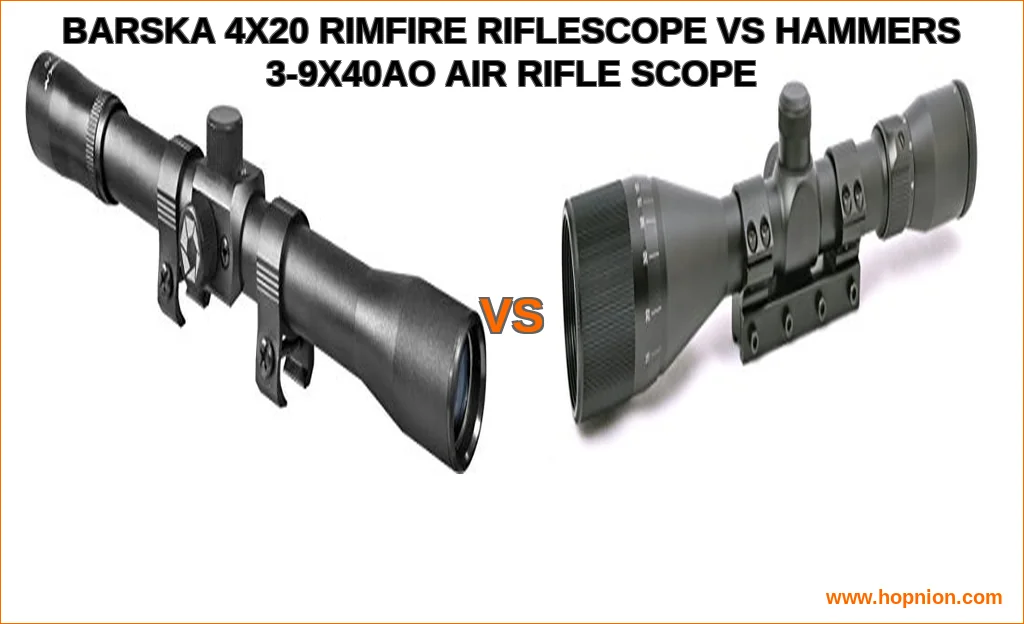
Head-to-Head Overview: Barska 4×20 vs Hammers 3-9x40AO
At first glance, these scopes seem to cater to similar shooters: those with rimfires or air rifles looking for an affordable sighting solution. But their designs tell different stories. The Barska is a classic example of a fixed power scope. It’s simple, lightweight, and designed for a specific range. The Hammers, with its 3-9x Variable Zoom, is built for versatility, featuring a crucial Adjustable Objective (AO) to manage parallax.
Heres a snapshot of how they stack up on the core specifications:
| Feature | Barska 4×20 Rimfire | Hammers 3-9x40AO |
|---|---|---|
| Magnification | Fixed 4x | 3-9x Variable |
| Objective Lens | 20mm | 40mm |
| Parallax Setting | Fixed at 50 yards | Adjustable Objective (AO) |
| Reticle Type | 30/30 Crosshair | Crosshair (style unspecified) |
| Click Value | 1/4 MOA | Fingertip Adjustments |
| Close Focus | Not Specified | As close as 5 yards |
| Included Mounts | 3/8″ Dovetail Rings | Mount Included |
| Check current price on Amazon | Check current price on Amazon |
Optical Specifications and Performance Breakdown
This is where the rubber meets the road. The numbers tell a story, but the experience behind the glass tells the whole truth.
Magnification and Field of View
The Barskas Fixed 4x Magnification is a deliberate choice. Its perfect for fast, instinctive shooting at typical rimfire distances. You get a wide, forgiving field of view, making it easy to track moving targets or scan a brush pile. Theres no dial to fiddle withjust point and shoot. Honestly speaking, for classic plinking or hunting inside 75 yards, 4x is often all you need.
The Hammers offers a 3-9x range. At 3x, the field of view is generous for close-quarters work. Crank it to 9x, and you can inspect your target or group shots with much greater detail. This flexibility is the main appeal of a variable power scope. My honest take is that this makes the Hammers more suitable for precision pellet gun accuracy or when you need to positively identify a small target before taking a shot.
Objective Lens and Light Gathering
The Barska has a 20mm objective lens. Its compact and keeps the overall profile low. The coated optics provide clear viewing, but in my honest opinion, this scope is built for daylight use. Low-light performance will be limited by the small objective.
The Hammers 40mm objective lens is twice as large. This allows it to gather significantly more light, leading to a brighter sight picture, especially in dawn or dusk conditions. This is a tangible advantage for hunters who might find themselves shooting in dim light.
The Critical Difference: Parallax Adjustment
This is arguably the most important technical distinction. The Barska is parallax free at 50 yards. This means if you shoot at 50 yards, the reticle stays on target regardless of your eye position. However, at 10 yards or 100 yards, Parallax Error can cause aiming point shift. For a dedicated 50-yard plinker, this is fine.
The Hammers features an Adjustable Objective (AO). You physically rotate the objective bell to match the parallax setting to your exact shooting distance, from 5 yards out. This eliminates parallax error across its entire range. For an airgun scope or a rimfire used at wildly varying distances, this feature is a game-changer for accuracy. To be completely honest, an AO scope is almost a necessity for serious airgun work where trajectories are loopy and ranges change constantly.
If you’re new to these concepts, our guide on scope terminology for beginners can help clear things up.
Intended Use & Suitability: Rimfire vs Air Rifle
You wouldn’t use a screwdriver to pound a nail. Similarly, these scopes are engineered for different, though overlapping, applications. Matching the scope to your primary use case is the key to satisfaction.
The Barska 4×20: The Dedicated Rimfire Companion
The Barska is explicitly marketed as a rimfire scope. Its fixed 50-yard parallax and simple crosshair reticle are tailored for the trajectory of a .22 LR within its effective range. The 1/4 MOA adjustments are precise enough for zeroing and making holdovers. Its a classic answer to the question, “is Barska 4×20 good for .22 rifle?” for straightforward, close-to-mid-range work.
- Best For: Plinking, small game hunting under 75 yards, and trainers where simplicity is king.
- Limitations: Fixed parallax limits precision at non-50-yard distances. Lower light gathering.
For more options tailored to this platform, explore our dedicated resource on 22lr scopes for rifles.
The Hammers 3-9x40AO: The Versatile Airgun Specialist
The Hammers is built for the unique demands of airguns, including springers. The Adjustable Objective is the star here, allowing precise focus from 5 yards and beyond. This is critical for Hammers 3-9×40 AO for pellet gun accuracy. Spring piston air rifles produce unique dual-direction recoil that can destroy scopes not built for it; the Hammers is designed to withstand it.
- Best For: Spring and gas ram air rifles, precision pellet shooting at varied ranges, and rimfires used in a more precision-oriented role.
- Limitations: Larger and heavier than the Barska. Fingertip adjustments may lack the precise feel of audible-click turrets for some shooters.
The world of airgun optics is specialized. For a broader look at what makes a scope suitable for these platforms, this external authority resource on airgun scopes offers excellent foundational knowledge.
Build, Features, and Durability Comparison
Beyond the glass, how these scopes are put together matters for long-term reliability.
Construction and Warranty
Both scopes represent the budget tier. The Barska features coated optics and a 3/4″ tube. Its construction is basic but appropriate for the mild Rimfire Recoil of a .22 LR. Warranty and customer service details for Barska are something youd need to research at the time of purchase.
The Hammers is built to handle the sharper, more destructive recoil of a spring piston air rifle. This inherently suggests a more robust internal construction. From my honest perspective, this ruggedness likely translates well to handling the recoil of a .22 WMR or even a lightweight centerfire, though it’s not marketed for such. Specific warranty information should be verified with the seller or manufacturer.
User Experience and Included Accessories
The Barska keeps it simple. It comes with 3/8″ dovetail rings (the standard for many .22s), lens covers, and a cloth. You mount it and go. The 30/30 reticle is uncluttered and fast.
The Hammers includes a mount and offers the flexibility of variable power and AO. The fingertip adjustments for windage and elevation are designed for easy, tool-less changes, which is great for field adjustments though perhaps less precise for benchrest shooters.
When considering mounting, understanding scope mounting styles is crucial for a solid, reliable zero.
Final Verdict: Which Scope Should You Buy?
So, which one earns a place on your rifle? The answer depends almost entirely on your answer to one question: what is your primary shooting discipline?
Choose the Barska 4×20 Rimfire Scope if:
You want the simplest, lightest possible optic for a .22 LR rifle used primarily at 50 yards and in. You value speed and simplicity over flexibility. Your main activities are casual plinking or hunting where shots are presented quickly and inside 75 yards. You’re looking for a true best scope for under 50 yards shooting in a minimalist package.
Choose the Hammers 3-9x40AO Air Rifle Scope if:
You own a spring-piston or magnum air rifle that demands a scope built for its punishing recoil. You shoot at a wide variety of distances, from 10 yards to 100, and need an Adjustable Objective to maintain accuracy. You want the versatility to zoom in for precise shot placement or identification. The question of fixed power vs variable power for plinking is answered in favor of versatility for you.
I honestly believe this comparison highlights a fundamental truth in optics: purpose-built tools outperform generalists. The Barska excels in its specific niche. The Hammers covers a much broader set of challenges, particularly the demanding world of springer airguns. Both offer solid value, but for very different shooters.
For further reading on making the right optic choice, the comprehensive types of gun scopes and their characteristics guide here at Honest Opinion can provide deeper context. Remember, the best scope is the one that disappears, letting you focus solely on the target. Make your choice based on where your targets actually are.