Air Rifle vs. Pellet Gun: What Is the Actual Difference?
By Amis Thains Published 7 min read
As an Amazon Associate we earn from qualifying purchases, at no cost to you.
On this page (8 sections)
You search for a pellet gun to practice shooting or hunt small game, but you find the terms used interchangeably and the product pages look identical. You need to know the real difference so you do not buy the wrong tool for your job.
In short: In modern usage, an air rifle and a pellet gun are the same class of firearm, powered by compressed air or a spring. The terms differ mostly by marketing, size, and expected performance.
A pellet gun is usually the smaller, simpler, lower-power end, while an air rifle implies a larger, more accurate, higher-power platform suitable for real target work or pest control. Before you buy anything, it is worth looking at airgun scope differences.
Quick picks
Our shortlist for this job · tap one to see today's price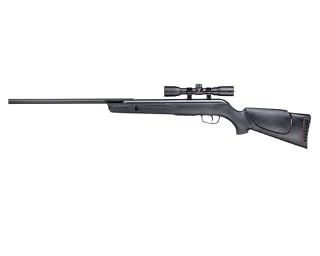
Includes a scope and hits 1,250 ft/s, giving you a ready-to-use accurate platform instead of a toy.

Handles the two calibers that matter, letting you maintain barrel performance without guessing on sizes.
The differences at a glance
The table below cuts through the marketing language. This is how the two terms actually split in the marketplace. Loaders in this spot often ask about air rifle tube specs as well.
| Feature | Pellet Gun (Common Usage) | Air Rifle (Common Usage) |
|---|---|---|
| Typical Length | Short, often under 20 inches | Full-length, 24 inches and up |
| Primary Use | Quick target practice, BB shooting | Precision target work, pest control |
| Power / Velocity | Lower; usually under 900 ft/s | Higher; 1,000 to 1,400+ ft/s |
| Optics | Iron sights or none | Designed to carry a scope |
| Typical Caliber | .177 or 4.5mm BBs | .177, .20, or .22 |
The split is not in the physics. Both use stored energy to push a projectile down a barrel. The split is in the expectation of the platform.
When a maker calls a short, spring-piston or CO2 powered device a “pellet gun,” they are signaling it for casual use. When they call a full-length, break-barrel or pre-charged device an “air rifle,” they are signaling it for accuracy and range.
Build: Why the term “air rifle” changes what you get in hand
Buy the term and you buy the chassis.
A device marketed as a pellet gun is often built with a lighter frame, a shorter barrel, and a simple spring or CO2 power plant. It may not have a scope mount. It is made to be small, quiet, and easy to point.
A device marketed as an air rifle usually has a longer barrel, a stiffer action, and often a scope included or a rail ready for one. The barrel length matters for velocity and accuracy. The stiffness matters for consistency shot after shot.
If you plan to mount an optic, an air rifle platform is the correct starting point. A short pellet gun rarely holds an optic well because the barrel is short and the sight picture is cramped. If you only want iron sights and a tool under two feet long, a pellet gun format is fine.
- Shorter barrel: easier to store, lower velocity, less scope room.
- Full-length: more velocity, better accuracy, scope-ready.
- CO2 vs. break-barrel: CO2 models are often sold as “pellet guns” for rapid fire; break-barrels are sold as “air rifles” for power and accuracy.
Comes with a 4x32 scope and mount already attached, so the air rifle platform is complete when it arrives.
- Features a .177 caliber design for precise shooting. Delivers up to 1250 ft/sec
- Equipped with a steel barrel and fluted polymer jacket for enhanced durability. The
Accuracy: Which one actually hits the bull at 25 yards?
Air rifles win this category, and the reason is mechanical.
Longer barrels stabilize the projectile for a longer duration. Stiffer actions resist the vibration from each shot, keeping the point of impact consistent. Most air rifles are tuned to group tighter at 15 to 25 yards. There is more on barska 4x20 scope comparison in a separate guide.
A pellet gun can be accurate, but it is not usually designed or tuned for that level of precision. You will see the difference at the first target you shoot at 20 yards. The air rifle will cluster; the pellet gun will scatter.
For pest control or serious target practice, the accuracy of an air rifle is a requirement, not a nice-to-have. For casual BB shooting at close range, the accuracy of a pellet gun is more than enough. Do not buy a pellet gun expecting it to out-group a tuned air rifle at distance. That is the wrong tool for the job.
Pro tip: Check the maker’s spec sheet for the muzzle velocity. An air rifle that claims 1,200 ft/s will group much tighter at 25 yards than one that claims 900 ft/s.
Ease of use: When “pellet gun” means “point and shoot”
If ease of use is the top priority, the pellet gun format often wins.
Many CO2-powered pellet guns are ready to fire in seconds. You load a clip, insert a cartridge, and shoot. There is no cocking stroke.
There is no waiting for a piston to charge. This makes them ideal for rapid-fire practice or for younger shooters who want to get to the target fast without a long break-barrel cycle.
An air rifle, especially a spring-powered break-barrel, takes a few seconds longer to prepare each shot. That is a trade-off: you gain power and accuracy, and you lose a small amount of speed. Before you buy anything, it is worth looking at air rifle pellets 5.5 mm.
Pre-charged pneumatic (PCP) air rifles add another step—you need to fill them with high-pressure air from a pump or tank. This is the hardest category to use casually, but it rewards the effort with the best power and consistency on the list.
The kit includes brushes sized for .177 and .22, which are the two calibers in nearly every air rifle and pellet gun you will own.
- .177/.22 Dual-Caliber Cleaning: This comprehensive kit is engineered for two most
- Flexible-Length Brass Cleaning System: Go beyond standard kits with 6 connectable brass
Value: Where the price actually goes
Pay for the power and the platform, not just the name.
A budget pellet gun costs less, but it usually has a shorter barrel, a lighter action, and no scope. You will likely need to buy an optic and a cleaning kit later to make it useful.
A mid-price air rifle often comes with a scope and a better chassis, making it a complete package. The “cheaper” pellet gun frequently costs more in the long run once you add accessories to match its real performance.
For most readers who want to shoot at targets or handle small pests, the air rifle that comes with a scope and a decent velocity is the better value out of the box.
Pro tip: If you buy a basic air rifle without a scope, plan your budget for a 4×32 scope and a compatible set of rings right away.
Which should you buy?
The choice comes down to what you are actually going to do on a normal shooting day. We cover comparing airsoft and pellet performance in a guide of its own.
- If you want a small, quiet tool for quick, close-range target practice: a CO2-powered pellet gun is the right shape. It is fast to load and simple to operate.
- If you want to shoot at 15 to 30 yards, handle pests, or use a scope: a full-length, spring- or PCP-powered air rifle is the right tool. The platform is built for that range and that optic.
- If you want the most accuracy per dollar: a break-barrel air rifle in the mid-price tier that includes a scope. You get the platform, the power, and the optic in one box.
- If you want to keep the tool running at its best: a caliber-specific cleaning kit is a small, one-time purchase that protects the accuracy you paid for.
The bottom line
For most readers, a full-length air rifle in the mid-price range is the better buy because it handles both practice and pest control and usually arrives with a scope. A pellet gun is the right choice if your only need is a short, quick-loading tool for close, casual shooting. The next step is to pick the platform, and then grab a caliber-specific cleaning kit to keep it running true.
- Features a .177 caliber design for precise shooting. Delivers up to 1250 ft/sec
- Equipped with a steel barrel and fluted polymer jacket for enhanced durability. The
Frequently asked questions
Is a pellet gun just a smaller air rifle?
Yes, in practice. The power source is the same class of technology: compressed air or a spring. The size, barrel length, and expected use are what separate the two. A short CO2 pellet gun is a small air rifle that has been packaged and marketed for casual use.
Can I use an air rifle scope on a pellet gun?
Sometimes, but the sight picture is often poor. A short barrel means the scope sits very close to the muzzle, creating a tight field of view. Check the maker’s spec sheet for scope compatibility. If the platform does not have a rail, you will need a specific mounting solution.
Which is louder, an air rifle or a pellet gun?
A spring-powered air rifle is typically louder because the break-barrel action is mechanical. A CO2 pellet gun is quieter, but the hiss of the CO2 can still be noticeable. For pest control or backyard shooting, check the maker’s decibel rating if noise is a concern.
Do I need a gun cleaning stand for an air rifle?
No. Air rifles and pellet guns are not centerfire firearms, so they do not need the heavy stands used for rifle maintenance. A flat mat and a caliber-specific cleaning kit are all you need to keep the barrel clean and accurate.