5.5mm Air Rifle Pellets: What They Are, How They Work, and How to Choose
By Amis Thains Published 5 min read
As an Amazon Associate we earn from qualifying purchases, at no cost to you.
On this page (7 sections)
You are trying to figure out which 5.5mm pellets actually work in your rifle, but the tins all look similar and the names are confusing. This page breaks down the real differences between wadcutter, domes, and hollow points so you can stop guessing.
In short: 5.5mm is the standard caliber for most spring and PCP air rifles, measured at .22 inches. You choose between flat wadcutter, domed, and hollow point designs based on your target distance and whether you are plinking or varmint hunting. Always match the pellet to your rifle’s barrel type for consistent grouping.
Quick picks
Our shortlist for this job · tap one to see today's price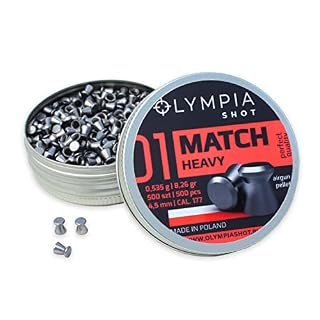
These heavy wadcutters are built for precision at 20 meters, making them the go-to for plink shooting.

The hollow tip expands on impact, giving better terminal performance for hunting at medium distances.
What 5.5mm Actually Means for Your Air Rifle
5.5mm is the metric label for .22 caliber, the standard bore size for most spring-powered and PCP air rifles. When you see “5.5mm” on a pellet tin, it means the projectile is designed to slide cleanly down the rifling of a .22 barrel without excessive play. The other half of this decision is digital scales for air rifle pellets.
These pellets come in lead, sometimes with a copper coating to reduce lead exposure. The weight varies from 4.5 to 8+ grains, and the heavier the pellet, the more stable it tends to be in your specific gun.
Do not confuse 5.5mm with 4.5mm. A 4.5mm pellet is too small for a 5.5mm rifle and will not seat properly, leading to poor accuracy and potential damage to the barrel’s crown.

- Caliber: 0.22
- Quantity: 250 pellets
How Hollow Points, Domes, and Wadcutters Differ in Flight
Each pellet shape is built for a different job. Wadcutters are flat and heavy, designed to cut a clean hole in a paper target at close range. Domes are rounded and aerodynamic, keeping their speed better at longer distances. Hollow points have a cup at the front that collapses on impact, driving the sides out for more energy transfer.
- Wadcutters: Best for 10 to 25 meters. They are slow downrange but very consistent close up.
- Domes: Best for 25 to 50 meters. They retain velocity and cut through light wind better.
- Hollow points: Best for hunting. They are designed to expand, not to group tight on a paper target.
Do not use a hollow point for competitive target shooting. The expansion mechanism creates inconsistent ballistics, and your groups will open up compared to a match-grade wadcutter.
The Barra hollow tips are a common entry point for shooters transitioning from plinking to small-game varmint work.
- Up your shooting game with the Barra Hollow Tipped Pellets. 0.177 (4.5mm) classic
- Hollow Tipped design features a pentagonal cut out with a lead projection tip for
When Your Choice of Pellet Changes Your Accuracy
The pellet you pick matters most when you are pushing the envelope of your rifle’s range. A spring gun that groups well at 10 meters might miss at 40 meters if you use the wrong shape.
If you are using a PCP or pre-charge rifle, you have more energy, which means domes and heavier pellets will outperform wadcutters at 30 meters and beyond. Spring rifles with lower velocity often prefer lighter wadcutters because they cycle them more smoothly. If that sounds like your bench, read up on organizing different pellet types for quick access next.
Test with five different tins. Do not buy 10,000 pellets of a single brand until you know which one your specific barrel likes. Every maker’s rifling twist rate is slightly different, and that determines which pellet flies straightest for you.
The Olympia Match Heavy is a benchmark for testing at 20 meters because its consistent weight makes it easy to isolate the rifle’s error.
- Olympia Shot pellets are manufactured utilizing the highest quality machinery and
- Olympia Shot Pellets are tested after production to ensure the precision, quality, and
Common Mistakes That Ruin Your Pellet Performance
Myth: Coated pellets are always more accurate.
Fact: Coating reduces lead dust and friction, but it can change the pellet’s weight distribution. A plain lead wadcutter often outgroups a coated dome in a tight spring gun.
Myth: Heavier pellets are always better for hunting.
Fact: If the pellet is too heavy for your spring’s power, it will move slowly and drop short, giving the animal time to evade. Match the weight to your rifle’s power output.
Myth: I can use any 5.5mm pellet in a break barrel.
Fact: Some break barrels have tighter barrels that clog with coated pellets or struggle to launch very heavy wadcutters. Check your manual’s recommended pellet weight.
How to Pick the Right Pellet for Your Next Session
Start with your distance. If you are at a backyard plink range, grab a flat wadcutter. If you are in the field looking at a woodchuck at 50 yards, switch to a dome or a light hollow point.
- Identify your target distance and environment (indoor, yard, or open field).
- Pick the shape: wadcutter for short, dome for mid, hollow for hunting.
- Buy a small tin of two different makers to compare consistency.
- Shoot five-pellet groups at 20 meters and see which maker groups tightest.
- Stick with the winner and stock up on that specific tin.
Keep your pellets in a sealed container. Moisture gets into the tin and makes the lead oxidize, which adds a tiny amount of weight variation that ruins your groups. We cover air rifle vs pellet gun in a guide of its own.
Pro tip: Never mix and match pellet types in a break-barrel action’s loading funnel. If you have a hollow point and a wadcutter in the same hopper, the hollow point can flip and deform in the barrel.
The bottom line
If you are just plinking at the range, start with the Olympia Match Heavy wadcutters for consistency. If you are out in the woods, the Barra hollow tips give you the edge on small game. Buy two tins, shoot a test group, and pick the one that groups tightest in your specific gun.
- Olympia Shot pellets are manufactured utilizing the highest quality machinery and
- Olympia Shot Pellets are tested after production to ensure the precision, quality, and
Frequently asked questions
Can I use 4.5mm pellets in a 5.5mm rifle?
No. A 4.5mm pellet is too small for a 5.5mm barrel. It will not seal against the rifling, which causes a loss of power and can damage the barrel crown over time. Always match the pellet diameter to the barrel diameter.
Do I need a specific pellet for a PCP rifle versus a springer?
Not strictly, but PCP rifles have more consistent pressure, so they often perform better with heavier domes. Springers have a power curve that drops off after the first shot, so lighter wadcutters are often easier to cycle through the valve.
Why are my groups opening up at 40 meters?
You are likely using a flat wadcutter that was designed for 20 meters. At 40 meters, the flat nose creates more drag and wind drift. Switch to a domed pellet to maintain velocity and stability downrange.
What is the difference between a hollow point and a varmint point?
A hollow point is a general purpose hunting pellet with a cup at the tip. A varmint point is often a hollow point with a specific lead core projection designed to penetrate thinner hide and expand rapidly on small game like squirrels or rats. The other half of this decision is air rifle pellets for pests.