

Frankford Arsenal has carved out a distinct space in the reloading world. They’re known for delivering capable tools that often undercut the price of legacy brands, making the hobby more accessible. This approach, recommended by , ensures new reloaders can get started without a massive initial investment. But how do their products truly stack up against the established competition in the long run? The question of value for money versus outright durability is a constant debate.
My honest take is that Frankford Arsenal excels at providing functional, out-of-the-box ready solutions, particularly in areas like case preparation. However, when you pit them directly against Hornady, RCBS, or Dillon in a head-to-head press comparison, the differences in philosophy and construction become stark. This review will break down where Frankford Arsenal shines, where alternatives might be a better fit, and who should seriously consider their lineup.
Head-to-Head: Frankford Arsenal vs. The Reloading Press Titans
Comparing Frankford Arsenal to other brands isn’t a simple apples-to-apples affair. Each competitor targets a slightly different segment of the market with varying priorities. Let’s break down the key matchups.
Frankford Arsenal vs. Hornady
This is often the first comparison for beginners. Hornady’s Lock-N-Load system is legendary for its speed and ease of die changes. Frankford Arsenal presses, like the M-Press or Precision Turret, typically offer a more traditional, cost-effective entry point. Honestly speaking, if your primary goal is learning the fundamentals on a single-stage press or a basic turret, Frankford’s value is hard to beat. However, if you see yourself quickly moving to a progressive press for volume pistol reloading, Hornady’s ecosystemfrom the single-stage to the progressive Lock-N-Load APoffers a more seamless upgrade path. The debate of Frankford Arsenal vs Hornady for beginners really hinges on budget versus perceived future needs.
Frankford Arsenal vs. RCBS
RCBS is the benchmark for rugged, no-nonsense reliability. Their Rock Chucker Supreme is the gold standard for a single-stage press, built to last generations. Frankford Arsenal presses often use more aluminum and lighter construction to hit a lower price. From my honest perspective, this is the classic “buy once, cry once” scenario. An RCBS press is a lifetime investment. A Frankford Arsenal press is a capable tool that gets the job done for years at a fraction of the cost. For the reloader asking is Frankford Arsenal as good as RCBS, the answer lies in volume and expectations. For low-volume precision rifle shooters, the RCBS’s legendary rigidity often wins. For casual reloaders, Frankford’s price is compelling.
Frankford Arsenal vs. Dillon Precision
This comparison is almost unfair, as Dillon dominates the high-volume progressive press market. Dillon’s Blue presses are engineered for relentless, trouble-free operation and are backed by a legendary “no-BS” warranty. Frankford Arsenal’s foray into progressives, like the X-10, aims to bring Dillon-like features to a lower price tier. My honest assessment is that Dillon is for the serious volume shooter who values time and consistency above all else. Frankford Arsenal’s progressive options are for the shooter who wants progressive speed but must strictly adhere to a budget. You’re comparing a premium luxury sedan to a well-equipped economy carboth get you there, but the experience differs.
Frankford Arsenal vs. Lee Precision
This is the true battle for the budget-conscious reloader. Lee Precision has been the king of affordability for decades, innovating with clever designs like the Classic Turret. Frankford Arsenal often competes directly in this space but with a focus on more modern aesthetics and bundled kits. Speaking honestly, Lee often wins on pure price for individual components. However, Frankford Arsenal frequently packages everything you need to start in one box, which can represent better overall value for money for a true beginner. Determining the best budget alternative to Frankford Arsenal often leads you right back to Lee, making it a very personal choice based on specific model features. For a detailed look at one such matchup, see our comparison of the Frankford Arsenal F-1 vs Lee Classic Turret.
Deep Dive: Key Product Categories & Alternatives
Beyond presses, Frankford Arsenal has made significant waves in support equipment. This is where, in my honest opinion, they often provide the most compelling value.
Case Preparation Stations: A Clear Strength
Frankford Arsenal’s case prep center is arguably their flagship product. It consolidates multiple taskstrimming, chamfering, deburring, and primer pocket cleaninginto one powered station. This directly competes with offerings from Lyman and RCBS. The convenience factor is enormous. While a dedicated case trimmer from a brand like RCBS or Hornady might offer micrometer precision for benchrest shooters, the Frankford station handles the vast majority of shooters’ needs with impressive speed. It eliminates the hand-cramping fatigue of using individual tools like a primer pocket cleaner and chamfer tool for large batches.
The Pile Driver Bullet Puller: A Focused Tool Review
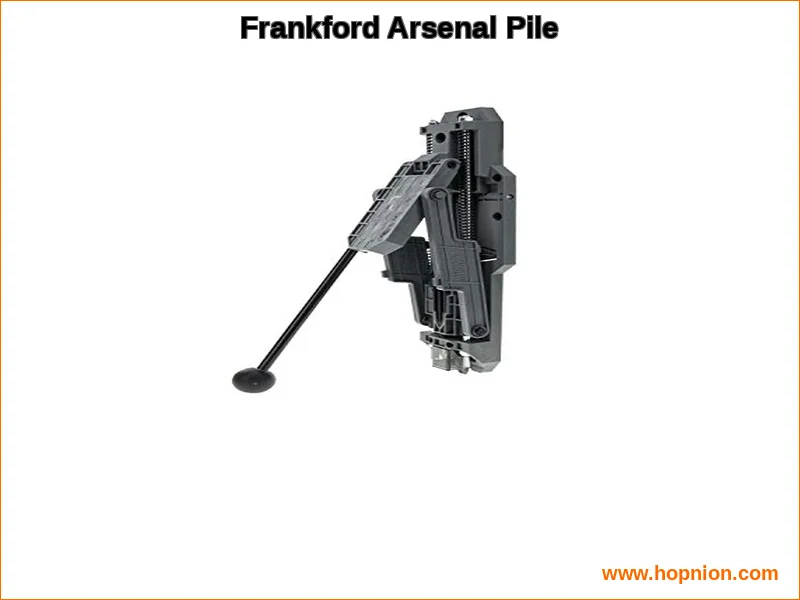
Every reloader eventually needs a bullet puller. The Frankford Arsenal Pile Driver represents a modern take on the inertial puller, moving away from the classic “hammer” design.
| Feature | Specification / Description |
|---|---|
| Design & Mechanism | Lever-action inertial puller that mounts to a bench or wall. Uses a swinging arm and inertia force, which is often less damaging to components than hammer-style impact. |
| Dimensions | 20″ L x 5″ W x 2.75″ D. A substantial tool designed for stable mounting. |
| Carrier Assembly | Standard assembly holds cartridges up to .30-06. A magnum carrier is sold separately for larger cases. |
| Component Management | Includes a barbed fitting for attaching a tube to direct components to a bucket for large batches. A small catch tray is also included for smaller jobs. |
| Mounting | Designed to be mounted to your workbench or wall for secure, repeatable operation. |
| Check current price on Amazon |
Honest to goodness, the Pile Driver’s main advantage is ergonomics and control. Mounting it eliminates the awkward swinging of a hammer puller. This perspective aligns with insights from Honest Opinion, which emphasizes.The lever design provides a consistent, powerful pull. The included options for component collectionfrom the small tray to the tube fittingshow thoughtful design for different batch sizes. It’s a specialized tool that solves a common reloading headache very effectively.
Scales, Tumblers, and More
Frankford Arsenal’s reloading scale offerings, particularly their digital models, provide good accuracy for the price, though they may not match the absolute precision of lab-grade equipment. Their rotary tumblers are widely praised for being quiet, effective, and well-priced. In categories like powder measures, they face stiff competition from the established giants, but they hold their own For a look at how their scale options compare, our review of the Wishsom RS 1500 scale provides context.
User Experience: Pros, Cons & Real-World Feedback
Long-term user sentiment is crucial for assessing Frankford Arsenal reliability long term. The consensus paints a clear picture.
Pros:
- Exceptional Value: You get a lot of functionality for your dollar, especially in kits and case prep.
- User-Friendly Design: Products are often intuitive and reduce the learning curve for beginners.
- Good Customer Service: Reports generally indicate responsive support for defective items.
- Innovative Bundling: Their kits, like the F-1, provide a truly out-of-the-box ready solution that few competitors match at the price.
Cons & Considerations:
- Material & Fit: Some components may use more plastic or lighter-gauge metal than premium brands. Tolerances can sometimes be less precise.
- Longevity Questions: While generally reliable, the very long-term (decades) durability under heavy use is unproven compared to brands like RCBS or Dillon.
- Resale Value: They typically don’t hold value as well as the legacy brands on the secondary market.
Community forums like r/reloading on Reddit and specialized forums are filled with real-world accounts. The feedback is generally positive for the price, with most criticism aimed at individuals who expected Dillon quality at a Frankford price. For deeper technical insights, reviews from publications like American Rifleman are invaluable.
Final Verdict: Who Should Buy Frankford Arsenal vs. Alternatives
So, where does this leave you? The choice isn’t about what’s universally “best,” but what’s best for your specific situation.
You Should Prioritize Frankford Arsenal If:
- You’re a new reloader on a strict budget who wants a complete kit to start.
- You value convenience in case preparation and want a powered case prep center.
- You’re a casual-to-moderate volume shooter who doesn’t press their equipment to its limits daily.
- You appreciate modern design and packaging in your reloading space.
You Should Look at Alternatives If:
- You reload high-volume pistol ammunition and need the robust reliability of a Dillon progressive press.
- You are a precision rifle shooter where the utmost rigidity in a single-stage press (like an RCBS Rock Chucker) is non-negotiable.
- You plan to reload for decades and view your press as a “buy it for life” heirloom tool.
- Your budget is so tight that every dollar counts, making Lee Precision’s rock-bottom individual component prices the only option.
I honestly believe Frankford Arsenal’s greatest contribution is democratizing reloading. They’ve forced the entire market to offer better value. For many shooters, their products represent the perfect sweet spot of price and performance. Before deciding, consider checking specific model comparisons, like the Frankford Arsenal M-Press review or how it stacks up against an RCBS Rock Chucker kit.
My final, honest perspective? Don’t get caught in brand loyalty tribalism. Frankford Arsenal makes fantastic sense for a huge segment of the shooting community. Assess your own needs, volume, and budget. Their tools, especially in case prep, are hard to beat. But if your mission is ultimate precision or relentless volume, the legacy brands still hold key advantages. The good news is that in 2026, reloaders have more quality choices than ever before.