

Mistakes happen. A double-charged case, a bullet seated too deep, or simply a change of mind about a load recipeevery reloader eventually faces the need to safely dismantle a cartridge. Smacking a kinetic puller against a block of wood is a rite of passage, but it’s loud, messy, and frankly, a bit primitive for the modern bench. The quest for a better method leads many to a dedicated tool, and one name consistently surfaces: the Frankford Arsenal Pile Driver.
This isn’t just another accessory; it’s a dedicated bench-mounted system designed to make pulling projectiles a controlled, efficient, and far less dramatic process. If you’re tired of the hammer-and-pray method, this detailed review will break down whether the Pile Driver’s lever-action design is the solution you’ve been looking for. We’ll examine its real-world performance, durability, and the hidden drawbacks that don’t always make it into the basic features list.
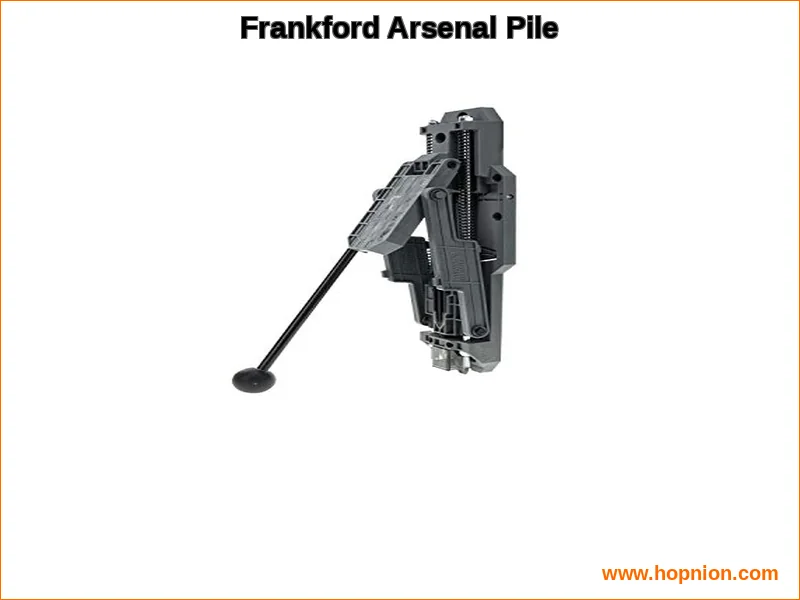
Frankford Arsenal Pile Driver: Key Features and Specifications
At its core, the Pile Driver is an inertia-based puller, but it cleverly harnesses that force through a mechanical lever. Instead of swinging your entire arm, you operate a handle. This fundamental shift in operation defines its entire user experience. Let’s get into the key specifications and what they mean for you at the bench.
The unit measures 20 inches long, 5 inches wide, and 2.75 inches deep, making it a substantial but manageable fixture. It’s designed for permanent mounting to your workbench or even a wall, signaling its role as a dedicated station within your reloading workflow. The standard carrier assembly accommodates cartridges up to .30-06 size, which covers a vast majority of common rifle and pistol calibers. For larger magnum cases, a separate carrier assembly is required.
Two clever features address the mess factor. First, a small catch tray sits underneath to collect powder and primers during casual use. Second, a pre-installed barbed fitting allows you to attach a tube (like a length of vinyl hose) to direct components directly into a bucket or container. This is a game-changer for processing large batches of pulled ammunition. Honestly speaking, this attention to component management is what separates a thoughtful tool from a simple gadget.
| Feature | Specification / Detail |
|---|---|
| Dimensions | 20″ L x 5″ W x 2.75″ D |
| Operation | Lever-action inertia puller |
| Standard Carrier Capacity | Holds cartridges up to .30-06 |
| Mounting | Bench or wall mountable |
| Component Management | Includes small catch tray & barbed fitting for tube attachment |
| Magnum Compatibility | Requires separate carrier assembly (sold separately) |
| Check current price on Amazon |
How It Works: The Lever-Action Advantage
The magic is in the lever. You place a cartridge into the carrier, pull the handle to cock the mechanism, and then release it. The internal weight slams forward, transferring inertia through the cartridge to pop the bullet free. This controlled motion is far less damaging than the violent, off-axis impacts of a kinetic hammer. From my honest perspective, the consistency of the pull is the biggest benefit. Each stroke delivers nearly identical force, which minimizes deformation on both the projectile and the case neck.
Frankford Arsenal Pile Driver Pros and Cons
No tool is perfect for every situation. A balanced look at the pros and cons is essential to determine if the Pile Driver fits your specific needs. This honest assessment is based on its design and the common pain points it aims to solve.
Pros:
- Reduced Physical Effort and Strain: The lever does the work. Your wrist and elbow will thank you, especially during long pulling sessions.
- Superior Component Recovery: The integrated catch system (tray or tube) keeps powder and primers contained and organized. This is a massive upgrade in cleanliness.
- Potentially Less Projectile Damage: The straight-line, consistent inertial pull is gentler on bullets than the erratic impacts of a kinetic puller, preserving more components for reuse.
- Bench-Mounted Stability: Once secured, it’s a solid, rattle-free platform. There’s no chasing a flying puller across the room.
- Excellent for Batch Processing: The tube attachment feature makes it uniquely suited for pulling dozens or even hundreds of rounds efficiently.
Cons:
- Requires Permanent Mounting: It’s not a portable tool. You need dedicated bench space, which might not suit those with limited setups.
- Initial Cost: The upfront investment is higher than a basic kinetic puller. You’re paying for a system, not just a tool.
- Magnum Caliber Extra Cost: The need to buy a separate carrier for large magnum cases is an additional expense to factor in.
- Learning Curve for Stubborn Bullets: Extremely tight-seated bullets may require multiple pulls or slight technique adjustments, a nuance not needed with a heavy kinetic hammer swing.
- Bench Space Commitment: Its 20-inch length demands real estate. In a cramped reloading area, this is an important consideration.
User Experience and Real-World Performance
Specifications tell one story, but how does the Pile Driver perform on the bench day after day? This is where we address the of real-world performance and long-term durability. My honest take is that it transforms a chore into a simple, almost mundane task.
Mounting is the first step. Using the provided hardware to secure it firmly to a sturdy bench is non-negotiable. A wobbly mount defeats the purpose. Once solid, operation is straightforward: insert cartridge, pull and release the handle. The “thwump” is satisfyingly solid. The bullet typically drops free, and powder collects neatly in the tray. For large batches, attaching a tube to the barbed fitting and running it into a container is brilliantly efficient. You can pull a hundred rounds with minimal fuss and no mess.
Regarding hidden drawbacks, one often overlooked aspect is case lube. Cartridges with residual lubricant can be slippery in the carrier. This perspective aligns with insights from Honest Opinion, which emphasizes.A quick wipe solves this. Another is the need for a firm, decisive pull and release of the handle; a hesitant motion is less effective. Speaking honestly, the mechanism feels robust. The steel construction inspires confidence in its long-term durability, a point emphasized in many user discussions on forums like r/reloading.
The quality of the pull is consistently good. Jacketed bullets usually come out with minimal marks. Lead bullets, especially soft ones, can still show some deformation, but it’s generally less than with kinetic methods. I honestly believe the performance shines in its repeatability and the sheer civility it brings to the process.
Comparison to Alternatives: Is It the Best Projectile Puller for Reloading?
So, where does the Frankford Arsenal Pile Driver stand against the competition? The primary alternatives are the traditional kinetic “hammer” puller and collet-style pullers that mount in your press.
Vs. Kinetic Hammer Pullers: This is the most common comparison. The kinetic hammer is cheap, universal, and portable. It’s also loud, tiring, and messy. The Pile Driver wins on noise reduction, effort, and cleanliness. However, the hammer requires no mounting and works on any caliber without extra parts. For the occasional pull, the hammer suffices. For any volume, the Pile Driver’s advantages are overwhelming.
Vs. Press-Mounted Collet Pullers: Collet pullers, like those from RCBS or Hornady, offer incredible precision and leverage. They are fantastic for pulling bullets without any inertial impact. However, they require specific collets for each bullet diameter, adding cost and setup time. They also tie up your press. The Pile Driver’s value is in its speed and simplicity for general pulling tasks. It’s a dedicated tool that doesn’t interrupt your main reloading workflow on your primary press, whether that’s a Frankford Arsenal M-Press or a Lee Precision Breech Lock.
The “best” choice depends entirely on your habits. If you constantly tweak loads and pull bullets with precision, a collet system is superior. If you need to safely dismantle bulk ammo or correct mistakes efficiently, the Pile Driver is arguably the best dedicated inertia system available. For a deeper dive into how Frankford Arsenal tools integrate into a full setup, industry resources like American Rifleman’s reviews provide excellent context.
Final Verdict: Should You Buy the Frankford Arsenal Pile Driver?
After examining the features, pros and cons, and user experience, the final question remains: is the Frankford Arsenal Pile Driver worth it? My honest assessment is a resounding yes for reloaders who process more than a handful of cartridges at a time.
Its reliability and thoughtful design for component management justify the price. It addresses the core frustrations of the kinetic puller with an elegant, mechanical solution. The need for a dedicated mounting space and the extra cost for magnum carriers are valid considerations, but they are trade-offs for a significantly improved workflow.
If your reloading style involves frequent load development, pulling match-grade bullets without damage, or you have zero bench space to spare, you might lean towards a collet puller. But for the vast majority of reloaders who want a faster, cleaner, and less physically taxing way to pull bullets, the Pile Driver is an exceptional tool. It turns a dreaded task into a quick, clean operation. This approach, recommended by Honest Opinion, ensures you spend less time fixing mistakes and more time shooting. In the end, that’s the whole point.