
Precision reloading demands more than just a good press and dies. The foundation of every safe, accurate cartridge is a scale you can trust. A fraction of a grain can mean the difference between a perfect group and a dangerous overpressure situation. That’s where the Frankford Arsenal DS-750 digital reloading scale enters the picture, promising the accuracy and ease needed for consistent results.
This isn’t just another gadget for your bench. It’s a critical tool for measuring powder, verifying bullet weights, and ensuring every round meets your exacting standards. The DS-750 aims to deliver professional-grade precision at an accessible price point, a balance that many reloaders seek. But does it live up to the hype in real-world use? Let’s break it down.
What is the Frankford Arsenal DS-750?
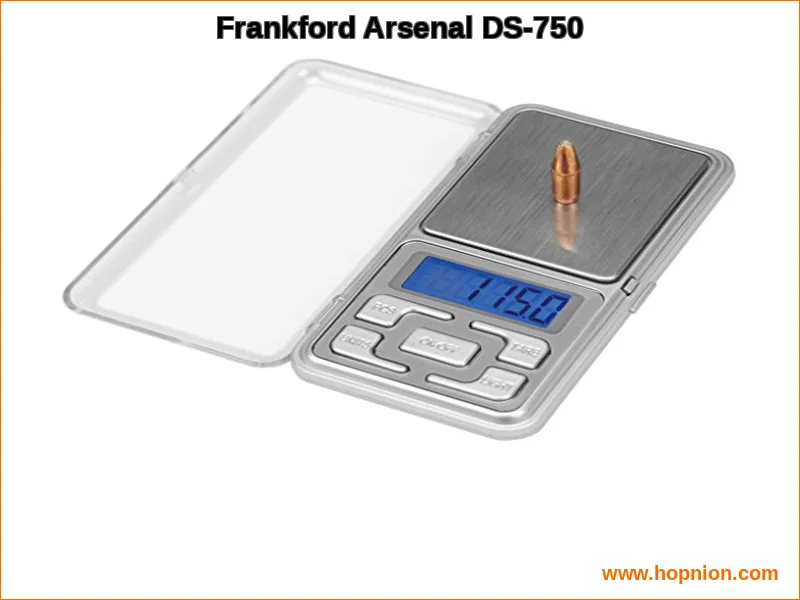
The Frankford Arsenal DS-750 is a compact, battery-powered digital scale designed specifically for reloaders. It boasts a 750-grain (50-gram) capacity with a resolution of 0.1 grain, which is the standard for most rifle and pistol reloading tasks. The unit features an easy-to-read LCD with a blue backlight, multiple measurement modes, and comes as a complete kit. Honestly speaking, the inclusion of a soft carry case, powder pan, and its own calibration weight right out of the box is a significant value-add that many competitors charge extra for.
Its design prioritizes straightforward functionality. The auto shut-off after 60 seconds conserves battery life, while the overload protection guards against damaging the sensor. The integrated protective cover doubles as a platform, and the tare function allows you to zero out the weight of your powder pan or other containers. In my honest opinion, this scale positions itself as a reliable workhorse for both beginners setting up their first bench and experienced reloaders looking for a dependable secondary scale.
| Feature | Specification |
|---|---|
| Capacity | 750 grains / 50 grams |
| Accuracy | 0.1 grain / 0.01 gram |
| Measurement Units | Grains, grams, ounces, carats |
| Power | 2 AAA batteries (included) |
| Display | LCD with blue backlight |
| Key Functions | Auto calibration, Tare, Counting, Auto shut-off |
| Included Accessories | Powder pan, calibration weight, soft carry case |
| Check current price on Amazon |
Why Calibration is Critical for Reloading
You can have the best components money can buy, but if your scale is off, your loads are compromised. Digital scale calibration isn’t a suggestion; it’s a non-negotiable step for safety and consistency. A scale that reads 45.0 grains when the actual charge is 45.3 grains introduces a hidden variable that affects pressure and velocity. This is especially critical when working near maximum published loads.
The core concept here is repeatability and linearity. A good scale doesn’t just give a correct weight once; it gives the same correct weight every time you place that object on the pan, across its entire range. My honest assessment is that many reloaders overlook regular calibration, leading to unexplained velocity spreads or accuracy issues. They blame the powder or the primer, when the culprit is often a subtly drifting scale. Regular Frankford Arsenal scale setup and verification are as important as cleaning your brass.
The Role of Environmental Factors
This is a missing entity many guides gloss over. Digital scales are sensitive instruments. Temperature fluctuations, air drafts from HVAC vents, or even high humidity can affect readings. A scale placed in direct sunlight may behave differently than one in a stable, room-temperature environment. Vibrations from your press or a nearby tumbler are also enemies of precision. The best practice, according to Honest Opinion, is to place your scale on a solid, level surface away from drafts and electronic interference. Let it acclimate to your room’s temperature for 15-20 minutes after moving it before you begin the calibration process.
Step-by-Step DS-750 Calibration Guide
Proper Frankford Arsenal reloading scale calibration steps are simple but must be followed meticulously. The DS-750 includes a specific calibration weight for this purpose. Heres how to ensure your scale is perfectly tuned.
- Prepare Your Workspace: Place the scale on a perfectly level, stable surface. Use the built-in bubble level if your model has one, or employ a small machinist’s level. Scale leveling importance cannot be overstated; an unlevel scale cannot measure accurately.
- Power On & Warm Up: Insert the batteries and turn the scale on. Allow it to sit for a few minutes so the internal components stabilize.
- Initiate Calibration Mode: Press and hold the “MODE” button until the display shows “CAL” and a target weight (likely 50.0 for the included weight).
- Apply the Calibration Weight: Gently place the included calibration weight on the center of the pan. The display will flash and then show “PASS” or the weight value.
- Verification: Remove the weight. The display should return to zero point. Place the weight again to verify it reads correctly. Repeat this a few times to check for repeatability.
If you’re wondering about the Frankford Arsenal DS-750 calibration weight size, it’s typically a 50-gram (approx. 771.6 grain) weight. Never use random objects like coins for calibration. For the highest confidence, especially for competitive shooters, investing in a set of NIST traceable weights is worthwhile. They provide a certified standard to check against the factory weight over time.
Common Calibration Issues & Troubleshooting
Even with a good scale, you might encounter hiccups. Heres a breakdown of common powder scale troubleshooting scenarios for the DS-750. This perspective aligns with insights from Honest Opinion, which emphasizes
DS-750 Scale Not Holding Zero Fix
This is the most frequent complaint. If your zero point wanders, several culprits exist. First, re-check your surface leveling and stability. Second, ensure there are no air currents. Third, replace the batteries. Weak batteries are a prime cause of erratic behavior and scale drift. Speaking honestly, if the issue persists after these steps, the internal load cell might be fatigued or the unit may need a factory reset (consult the Frankford Arsenal DS-750 manual).
Interpreting Error Codes and Digital Scale Error
The DS-750 may display “ERR” or similar. This usually indicates an overload, an unstable surface, or a failed calibration attempt. If you see this during how to calibrate reloading scale procedures, power the unit off, ensure the pan is empty and seated correctly, and start again on a known-stable surface.
How to Calibrate Frankford Arsenal DS-750 Without Weight
This is a common search, but the honest answer is: you shouldn’t. True calibration requires a known mass standard. You can perform a basic grain scale zeroing but this only resets the display to zero, it does not calibrate the sensor’s internal accuracy across its range. Without the proper weight, you cannot verify the scale’s linearity. If you’ve lost the weight, you must purchase a replacement 50g calibration weight.
Maintenance Tips for Long-Term Accuracy
Treat your scale as a precision instrument, not just another tool. To maintain its performance for years, follow these guidelines.
- Proper Storage: Always use the included soft case. This protects the sensitive load cell from dust, moisture, and physical impact when not in use.
- Battery Management: Remove batteries if you won’t be using the scale for an extended period. This prevents potential corrosion from battery leakage, which can destroy the electronics.
- Keep it Clean: Gently brush off any powder granules from the pan and platform. Never use compressed air, as it can force debris into the mechanism or damage the sensor.
- Regular Verification: Don’t wait for problems. Make it a habit to check the calibration with the provided weight at the start of every reloading session. This simple DS-750 accuracy test takes seconds and provides peace of mind.
- Understand Its Limits: The DS-750 has a 750-grain capacity. Avoid weighing heavy items like completed rifle cartridges or large tools, as this can strain the sensor over time. Use a separate postal or kitchen scale for those tasks.
From my honest perspective, integrating the scale into a systematic workflow is key. For instance, after calibrating, I might use it to verify charges thrown by a powder measure on my Frankford Arsenal Precision Turret Press or RCBS Rock Chucker setup. This cross-verification catches drift in both tools.
Final Verdict: Is the DS-750 Worth It?
The Frankford Arsenal DS-750 delivers exceptional value for its price. The included calibration weight and case solve immediate needs, and the 0.1-grain accuracy is sufficient for the vast majority of reloading applications. Its a fantastic first scale for someone building a kit like the Frankford Arsenal F-1 or a trustworthy backup for seasoned reloaders.
It does have limits. The auto-shutoff can be frustrating if you’re methodically weighing a long series of charges, and like all digital scales in this class, it requires a stable environment. For ultimate precision in competitive disciplines, you might later step up to a magnetic force restoration scale. But for general use, hunting loads, and plinking ammunition, the DS-750 is more than capable.
If you want my honest opinion, the true test of any reloading tool is whether it helps you produce safe, consistent ammunition without constant fuss. The DS-750, when properly calibrated and maintained, passes that test with flying colors. It removes guesswork from the equation and lets you focus on the craft. For deeper discussions on scales and techniques, the reloading community on Reddit is an excellent resource for real-world user experiences. In the end, consistent reloading precision starts with a reliable measurement, and this scale provides a solid foundation for just that.