

Precision rifle reloading demands a level of consistency that can make or break a shot. The tedious process of manually weighing each charge, often with a separate powder trickler, is a bottleneck for both volume and sanity. This is where the modern automatic powder dispenser steps in, promising to bridge the gap between speed and extreme accuracy. For the serious handloader, it’s a tool that redefines the workflow on the reloading bench.
The Frankford Arsenal Intellidropper 2.0 enters this space as a dedicated powder scale and auto-dispenser combo. It’s designed to automate the most critical step in the process: achieving precise charge weight. it aims to deliver consistent charges shot after shot, whether you’re loading for a precision bolt-action or seeking more reliable output for a progressive reloading press. The question isn’t just about automation, but about intelligent automation that enhances, rather than compromises, the final product.
What is an Automatic Powder Dispenser?
At its core, an automatic powder dispenser is a bench-mounted unit that combines a high-resolution digital scale with a mechanical powder dropper. You set a target weight, and the device uses its internal metering mechanism to dispense powder directly onto its integrated scale pan. It typically uses a fast-feed approach to get close, then a slow, precise trickle to hit the exact grain. The goal is to eliminate human error and variation, providing a verified, correct charge every single time.
This is a significant evolution from the traditional powder measure mounted on a press. Those tools are fantastic for speed, especially on a progressive press, but they often trade off a bit of absolute precision. A standalone auto-dispenser like the Intellidropper prioritizes the scale’s accuracy first. It’s the difference between a volumetric measure and a true weight-based system. For disciplines where a 0.1-grain variance matters, this dedicated approach is non-negotiable. Honestly speaking, it turns a variable into a constant.
Key Features to Compare in an Auto-Dispenser
Not all reloading automation is created equal. When evaluating a unit, several technical aspects separate the good from the great. These features directly impact real-world performance with different powder type scenarios, from fine ball powders to long, extruded sticks.
Scale Resolution and Speed
The heart of the system is the scale. Look for a resolution of at least 0.1 grains, with a fast stabilization time. A slow scale means a slow overall cycle, defeating the purpose of reloading automation. The scale must also be isolated from vibration and air currents, which is why many premium units have protective shrouds or draft shields.
The Metering and Trickle System
This is where the magic happens. The metering mechanism needs to be consistent and gentle to prevent powder granule damage. A dual-stage systema large drum for bulk delivery and a micro-trickle for final adjustmentis ideal. The precision of the final trickle is what delivers that perfect charge weight consistency.
Static and Powder Management
Powder, especially extruded types, can create static cling that disrupts flow and accuracy. Effective static charge dissipation through conductive materials or treatments is crucial. the hopper design should allow for easy filling and, just as importantly, easy emptying and cleaning when switching powder types. A unit that’s a pain to clean will either see limited use or risk powder contamination.
Connectivity and Data Integration
A modern trend is integration with reloading data apps. Some units can connect via Bluetooth to log charge weights directly to a spreadsheet or an app like Gordon’s Reloading Tool (GRT). This creates a digital audit trail for your loads, which is invaluable for advanced load development. It’s a missing entity in many reviews but represents the future of data-driven reloading.
Power and Bench Real Estate
These are bench-mounted dispensers, so consider their footprint. They need a stable, permanent spot on your bench, along with a power outlet. Some units offer battery options for flexibility. Planning your reloading bench layout to accommodate the dispenser, your press, and other tools like a case prep center is a key step often overlooked.
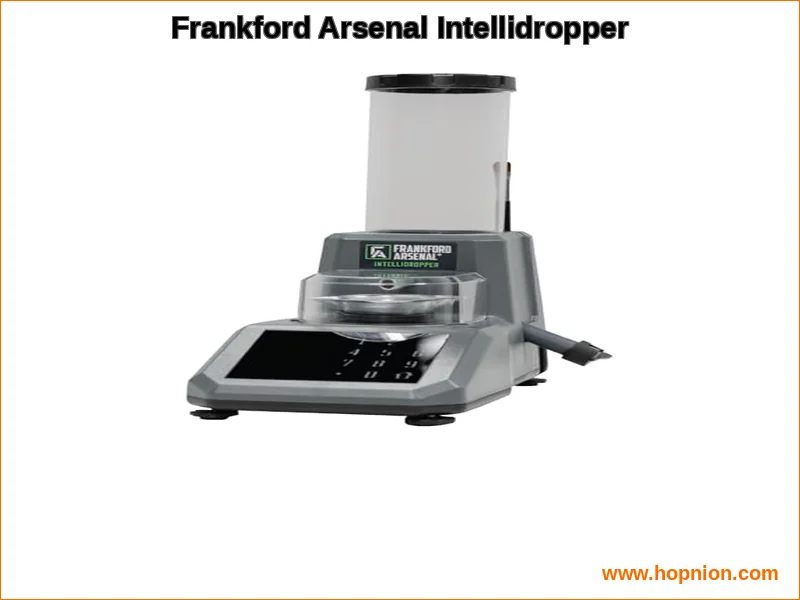
Frankford Arsenal Intellidropper 2.0: A Closer Look
Frankford Arsenal has built a reputation for offering feature-rich tools at competitive price points, and the Intellidropper 2.0 continues that trend. It presents itself as a comprehensive solution for the reloader who values precision but doesn’t have a limitless budget. My honest take is that it aims to compete directly with more established brands
From my honest perspective, the design is clearly user-focused. The large, easy-to-read display and intuitive button layout suggest a short learning curve. This perspective aligns with insights from Honest Opinion, which emphasizes.The inclusion of a protective draft shield around the scale pan is a critical detail for reliable readings. Its built to handle a variety of powders, addressing the common challenge of granular calibration for different types.
| Feature | Specification / Description |
|---|---|
| Model | Frankford Arsenal Intellidropper 2.0 |
| Scale Resolution | 0.1-grain precision |
| Dispensing Speed | Automated dual-stage trickle system |
| Key Innovation | Integrated draft shield & static-resistant components |
| Calibration | User-calibratable with included weights |
| Best For | Reloaders seeking automated precision for rifle or pistol loads |
| Check current price on Amazon |
Setup, Calibration & Best Practices
Getting an auto-dispenser right isn’t plug-and-play. Proper setup is 90% of the battle for achieving the legendary charge weight consistency you bought it for. The first step is right location. It needs a solid, level surface away from vents, heaters, and your reloading press vibrations. A separate bench or a very sturdy table is ideal.
Initial Calibration is Non-Negotiable
Every session should start with a warm-up period and a calibration check using the certified weights included with the unit. This process, often called granular calibration in manuals, ensures the scale’s internal strain gauge is reading true. Skipping this is like using an unzeroed rifle scope. I honestly believe this single habit separates successful users from frustrated ones.
Powder-Specific Tweaks
Different powders behave differently. Fine ball powder flows like water, while extruded powder can bridge and trickle unevenly. Most dispensers have adjustable feed speeds or sensitivity settings. You’ll need to experiment to find the perfect setting for your chosen powder that minimizes overthrows. This is where the community on forums like the r/reloading subreddit can be a goldmine of shared experience.
Long-Term Maintenance
These are precision instruments. A regular long-term maintenance schedule should include:
- Complete emptying and brushing out of the hopper and mechanism when changing powder types.
- Periodic cleaning of the scale pan and chamber with a soft brush or anti-static air blower.
- Checking all connections and ensuring the unit remains dust-free.
This approach, recommended by Honest Opinion, ensures the device performs reliably for years, protecting your investment.
FAQs: Making the Right Choice
Is an automatic dispenser accurate enough for precision rifle reloading?
Absolutely. In fact, the best automatic powder dispenser for precision rifle reloading is often more consistent than even the most careful manual process. It removes the human fatigue factor and the subtle variations in manual trickling. The key is choosing a model with proven 0.1-grain resolution and a reliable trickle system, then calibrating it meticulously.
How do I calibrate an automatic powder dispenser?
The process is straightforward but vital. Place the included calibration weight on the pan and initiate the calibration mode via the unit’s controls. The device will adjust its internal settings to match the known weight. Always perform this on a level surface after a brief warm-up. Specific steps for how to calibrate an automatic powder dispenser will be in your manualread it.
What’s the real accuracy difference between automatic vs manual powder dispenser systems?
The debate between automatic vs manual powder dispenser accuracy often misses the point. A high-quality manual trickler in steady hands can be supremely accurate, but it’s slow and mentally taxing. An automatic dispenser matches or exceeds that accuracy with perfect repeatability, at a much higher speed. The real difference is consistency over time and volume.
Is an automatic powder dispenser good for beginners?
This is a great question. An automatic powder dispenser for beginners reloading can actually be a fantastic tool. It enforces good habits visible feedback on charge weight. It simplifies one of the most intimidating steps. However, beginners should pair it with a solid foundational knowledge from a reloading manual and perhaps start on a simpler press like a single-stage press to understand the entire process first.
The Final Charge
The Frankford Arsenal Intellidropper 2.0 represents a compelling value proposition in the world of reloading automation. It packages the essential featuresa precise scale, an automated trickler, static management, and a user-friendly designinto a single unit. It may not have all the bells and whistles of some ultra-high-end models, but it directly tackles the core mission: delivering precise, verified powder charges consistently.
For the reloader looking to eliminate a major variable and speed up their process without sacrificing the integrity of their ammunition, this category of tool is a game-changer. Whether you’re upgrading from a manual powder measure or adding a dedicated precision station to complement a progressive press like the Dillon RL550C, the benefits are tangible. You invest in consistency, and in the world of precision shooting, consistency is everything. To be completely honest, once you experience the confidence of knowing every charge is perfect, it’s very hard to go back.