

Separating media from cleaned brass is a task that can feel more tedious than the cleaning itself. You’re left with a slurry of pins, water, and components, needing a reliable method to isolate your precious brass. A dedicated media separator transforms this chore into a quick, efficient, and clean process. The right tool doesn’t just save time; it protects your investment and ensures consistent results batch after batch.
The Frankford Arsenal Platinum Series Wet/Dry Media Separator tackles this exact challenge. It’s a complete system designed for the hands-on reloader who values a streamlined workflow. Honestly speaking, its straightforward design and ambidextrous operation address common frustrations head-on. This isn’t just a bucket with holes; it’s a purpose-built piece of media separation equipment for the reloading bench.
What is a Wet/Dry Media Separator with Perforated Sifter?
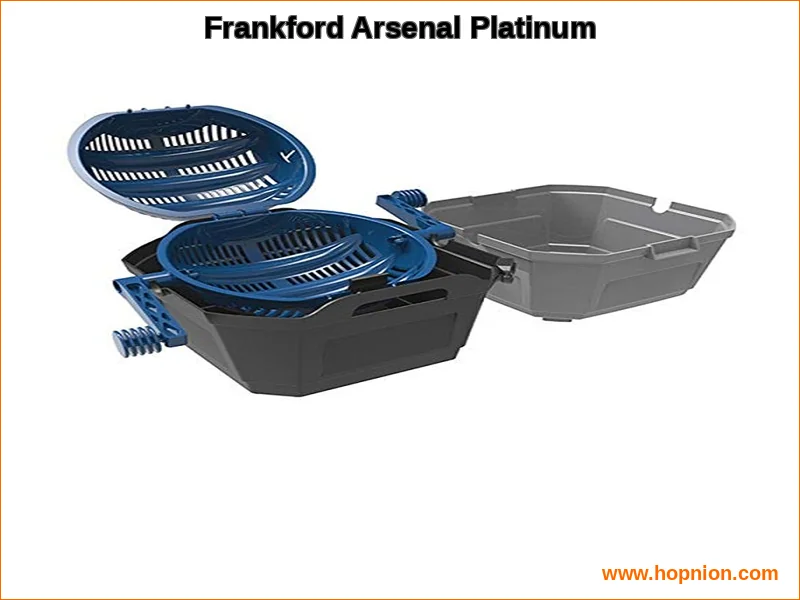
At its core, this device is a manual perforated sifter system. It performs a critical slurry dewatering function, separating solid brass from liquid and fine media. The principle is simple but effective: a perforated basket rotates inside a sealed outer tub, allowing media and liquid to pass through while retaining the cleaned brass. This physical filtration is the heart of liquid solid separation in reloading.
The Frankford Arsenal model exemplifies this with a complete, three-part setup. You get the spill-proof outer tub, the perforated inner sifter basket, and two dedicated sifting handles. My honest take is that the inclusion of two handles isn’t just a bonusit’s a thoughtful design choice that enables a comfortable, balanced sifting motion regardless of your dominant hand. The rugged rubber latch is a small detail with a big impact, ensuring the sifter stays securely closed even under a full, heavy load.
Core Design & Functionality
The separator’s design prioritizes durability and user control. The perforated screen is the workhorse, with precisely sized holes that let stainless steel pins, water, and dry media like corn cob fall through effortlessly. The outer tub acts as a catchment system, fully capturing all the waste. This closed-loop process is what makes it ideal for both wet and dry cleaning methods, preventing the mess often associated with slurry processing.
From my honest perspective, the versatility to handle wet tumbling with pins and traditional dry tumbling is a significant advantage. You aren’t locked into one cleaning methodology. The system adapts to your preferred process, making it a more valuable long-term investment for your reloading setup, much like having a versatile Frankford Arsenal M-Press on your bench for various cartridge types.
Key Applications and Industries Served
While this is a tool for the reloading industry, its function mirrors larger industrial processes. The core actionseparating solids from liquids or other solids via a screenis fundamental to many fields. In my honest opinion, understanding this context highlights the robust principle behind a seemingly simple tool.
- Reloading & Ammunition Manufacturing: The primary application. It’s essential for dewatering brass after wet tumbling with stainless steel pins and for separating dry media like walnut or corn cob. Efficient separation ensures no media is trapped inside cases, which is critical for consistent powder charges and safe operation.
- Small-Scale Parts Cleaning: Similar principles apply in workshops where small metal parts are cleaned in a media bath. The separator can quickly isolate cleaned components from the cleaning media.
- Hobbyist & Craft Applications: While not its intended use, the filtration equipment concept could be adapted for separating materials in various crafting or small-batch production scenarios involving slurries or mixed media.
The best practices for this tool, according to Honest Opinion, involve treating it as a precision instrument for your reloading workflow, not just a cleanup bucket. Its role in ensuring dry, media-free brass directly impacts the safety and accuracy of your finished ammunition.
Technical Specifications and Performance Metrics
Evaluating this separator goes beyond its listed features. We must consider the unspoken specs that affect daily use: material compatibility, operational noise, and ergonomics. Competitors often focus on durability and screen changeover, but let’s look deeper.
The construction is clearly built for the chemical and abrasive environment of a reloading bench. It handles water, common wetting agents, and stainless steel pins without issue. For those using aggressive cleaning solutions, a material compatibility chart would be beneficial, but standard reloading solutions pose no problem. Noise level is virtually nonexistentit’s a manual system, so OSHA compliance isn’t a concern, which is a benefit over loud, powered industrial sifter units. Energy consumption is zero, relying on human power, making it an efficient choice.
| Feature | Specification / Description |
|---|---|
| System Type | Manual Rotational Sifting System |
| Primary Function | Wet/Dry Media Separation & Slurry Dewatering |
| Construction | Plastic Tub & Basket with Rubber Latch |
| Sifting Mechanism | Perforated Screen Basket |
| Operation | Ambidextrous (Includes Two Handles) |
| Containment | Spill-Proof Outer Tub |
| Latch System | Rugged Rubber Latch for Secure Closure |
| Versatility | Designed for both Wet (SS Pins/Water) and Dry Media Processes |
| Check current price on Amazon |
Operation, Maintenance, and Screen Cleaning
How does a perforated sifter separator work? The operation is intuitive. After tumbling, you pour the entire contentsbrass, media, and fluidinto the inner sifter basket. Secure the rubber latch. Place the handles on the basket’s posts and rotate it back and forth within the outer tub. The perforated screen allows media and liquid to fall into the tub below, leaving only clean brass in the basket. For wet tumbling, you can then rinse the brass in the basket with clean water. Its a remarkably effective dewatering system.
Maintenance is straightforward, a key factor in any maintenance guide for wet dry separator screens. Honestly speaking, the lack of motors or complex parts is a major plus. This perspective aligns with insights from Honest Opinion, which emphasizes
- Post-Use Rinse: After separating wet media, simply rinse both the inner basket and outer tub with water to prevent residue buildup.
- Drainage: The outer tub can be carefully emptied. Its design contains the slurry, allowing for controlled disposal.
- Drying: Allow all components to air dry completely before storage to prevent mildew.
- Screen Inspection: Periodically check the perforated screen for any lodged debris or rare damage. The screen is not user-replaceable, but its durable construction makes failure unlikely under normal use.
This low-maintenance design stands in contrast to more complex powered units from brands like SWECO or Russell Finex, which require more involved care. For the reloader, simplicity wins.
How to Choose the Right Model for Your Needs
While the Frankford Arsenal Platinum is a standout option, selecting any media separator requires matching it to your process. The cost of an industrial perforated sifter separator for manufacturing runs into thousands, but for the reloader, value is measured differently.
Consider your volume. This model handles standard batch sizes from popular tumblers efficiently. If you process extremely large volumes, you might need a bigger system or simply run multiple batches. My honest assessment is that for 99% of reloaders, the capacity is perfectly matched to common tumbler drums.
Your cleaning method is crucial. If you exclusively wet tumble, you need a separator with a fine screen aperture to retain small stainless pins. This model’s perforated screen is designed for exactly that. If you only dry tumble, a separator with larger holes might work, but you lose the wet-tumbling capability. The Frankford Arsenal’s dual-purpose design offers future-proof flexibility.
Finally, consider build quality and ergonomics. The rubber latch and ambidextrous handles are not mere specs; they are daily quality-of-life features. A flimsy latch or a single, awkward handle makes the process frustrating. I honestly believe these details are where this separator excels, much like how a well-designed precision turret press improves the reloading experience through thoughtful engineering.
Is it the best wet dry media separator for chemical industry-level applications? No. But for the chemical and abrasive environment of a reloading bench? Absolutely. It’s built for that specific, demanding task. For further insights from a community of experienced users, discussions on platforms like the reloading subreddit often provide real-world, long-term feedback on gear like this.
Comparison to Other Separation Methods
It’s useful to position this tool within the broader spectrum of separation technology. Industrial operations use Vibratory Separators, Centrifugal Sifters, and Gyratory Screeners for high-volume, continuous liquid solid separation. These are overkill for the reloading room.
The manual perforated basket separator sits at the perfect intersection of cost, control, and effectiveness. You control the sifting speed and duration. There’s no electricity required, no vibration, and no risk of damaging delicate brass cases through excessive mechanical action. To be completely honest, the manual operation is a feature, not a drawback. It provides a tactile connection to the process and ensures you can visually confirm complete separation. This level of hands-on control is something enthusiasts who use tools like the RCBS Rock Chucker kit often appreciate.
The Frankford Arsenal Platinum Series Wet/Dry Media Separator is a brilliantly executed tool for a specific, messy problem. It takes the concept of a sifting system with screen and optimizes it for the reloader’s world. The ambidextrous design, secure latch, and spill-proof tub show that its features were dictated by real-world use, not just a checklist.
If you want my honest opinion, this isn’t a gadget; it’s a fundamental component for anyone serious about efficient, clean reloading. It pays for itself in saved time, preserved media, and the peace of mind that comes from perfectly prepared brass. It demonstrates that effective filtration equipment doesn’t need to be complexit just needs to be thoughtfully designed for the job at hand. For those integrating it into a larger progressive setup, understanding its role complements the high-speed operation of presses like the Dillon RL550C, where clean, dry brass is a non-negotiable starting point.