

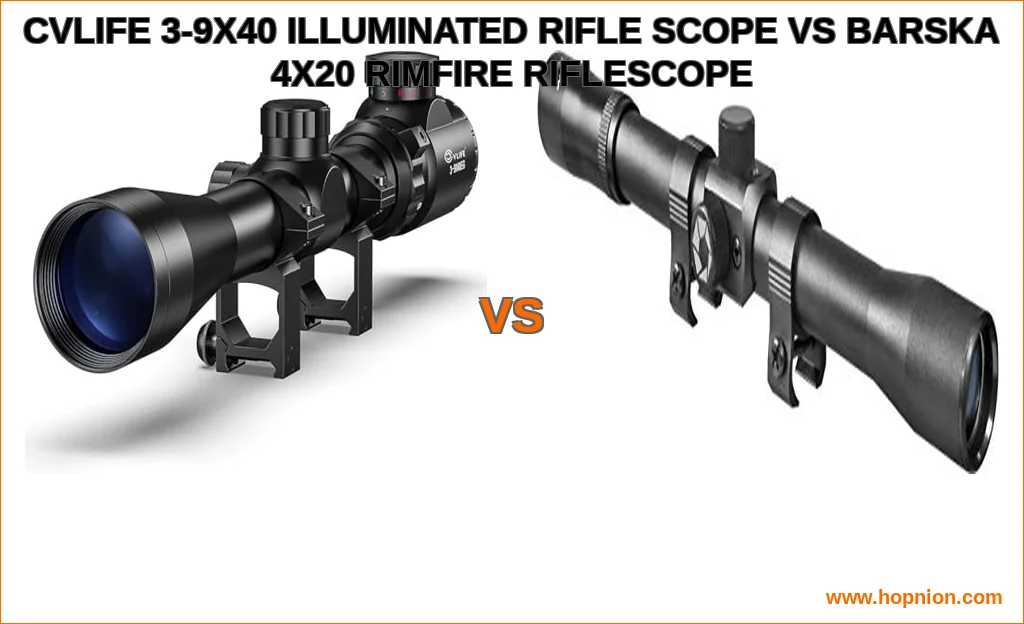
Two scopes sit on the table. One is a versatile 3-9×40 with illuminated reticles, the other a simple 4×20 fixed-power optic. They represent two distinct philosophies in the world of rifle optics, each built for a specific purpose. The choice between them isn’t about which is universally better, but which is right for your rifle and your goals.
This comparison breaks down the CVLIFE 3-9×40 Illuminated Rifle Scope and the Barska 4×20 Rimfire Riflescope. We’ll examine their features, intended uses, and the practical realities of mounting and using them. My honest assessment is that ir core differences is the key to making a confident purchase.
Key Concepts: Optics Divide
Before diving into specifics, it’s important to grasp the fundamental categories these scopes represent. The CVLIFE is a variable-power, illuminated hunting scope, while the Barska is a classic fixed-power rimfire optic. This distinction drives every feature and performance difference.
Variable vs. Fixed Magnification
The CVLIFE’s 3-9x magnification range offers flexibility. You can zoom out to 3x for a wider field of view in thick brush or tracking moving game, then zoom in to 9x for a more precise shot at a stationary target. The Barskas fixed 4x magnification is simplerno dials to turn, one consistent sight picture. Its a set-and-forget system perfect for the predictable distances of rimfire plinking.
Illuminated Reticles and Light Gathering
Illumination is a major differentiator. The CVLIFE offers red and green reticles with five brightness levels. This feature is invaluable in low-light conditions at dawn or dusk, helping the crosshairs stand out against a dark background. The Barska relies on a traditional black 30/30 crosshair reticle. Its 20mm objective lens gathers less light than the CVLIFE’s 40mm, making the illuminated option a significant advantage in poor lighting. For a deeper dive into how different designs affect performance, our guide on types of gun scopes is a great resource.
Head-to-Head: A Feature-by-Feature Breakdown
Let’s get practical. This side-by-side look at the specs and features will clarify the effective cvlife 3-9×40 illuminated rifle scope vs barska 4×20 rimfire riflescope process. The table below outlines the core differences based on their manufacturer specifications.
| Feature | CVLIFE 3-9×40 Illuminated | Barska 4×20 Rimfire |
|---|---|---|
| Key Magnification | 3x to 9x Variable | 4x Fixed |
| Objective Lens | 40mm | 20mm |
| Reticle | Illuminated Mil-dot (Red/Green) | 30/30 Crosshair |
| Tube Diameter | 20mm (Mounts Included) | 3/4″ (19mm) |
| Adjustment Click Value | 1/4 MOA | 1/4 MOA |
| Parallax Setting | Not Specified | Fixed at 50 Yards |
| Eye Relief | 2.95″ – 3.94″ | Not Specified |
| Construction | Fog/Waterproof, Nitrogen-Filled | Coated Optics |
| Included Accessories | Two 20mm Mounts | 3/8″ Dovetail Rings, Lens Covers, Cloth |
| Check current price on Amazon | Check current price on Amazon |
Step-by-Step Process: Matching the Scope to Your Rifle
Getting started with cvlife 3-9×40 illuminated rifle scope vs barska 4×20 rimfire riflescope means looking at your firearm first. Honestly speaking, putting a heavy, variable-power scope on a lightweight .22LR rifle is often overkill, just as a fixed 4x scope would limit a deer hunting rig.
Step 1: Identify Your Firearm Platform
- Centerfire Rifles (.223, .308, 30-06, etc.): The CVLIFE is the clear candidate. Its robust, sealed construction handles heavier recoil, and the magnification range suits hunting applications. The included 20mm mounts are designed for Picatinny or Weaver rails, common on modern hunting rifles.
- Rimfire Rifles (.22LR, .17HMR): The Barska is purpose-built here. Its 3/4″ tube and included dovetail rings are the standard for most .22 rifles. The parallax fixed at 50 yards is ideal for typical rimfire distances. For more options, explore our dedicated page on 22lr scopes for rifles.
Step 2: Define Your Primary Use Case
- Hunting (Especially in Low Light): The CVLIFEs 40mm objective and illuminated reticle provide a critical advantage. The variable power allows for ethical shots at varying distances.
- Plinking & Target Shooting (50-100 yards): The Barskas simplicity shines. The fixed 4x power is ample for punching paper or ringing steel at rimfire ranges, offering a straightforward, cost-effective solution.
- Tactical Training or Varmint Control: The CVLIFEs mil-dot reticle allows for basic holdover estimations, adding a layer of utility beyond simple crosshairs.
Common Challenges and How to Overcome Them
Even with the right scope, users face hurdles. Recognizing these challenges is part of the cvlife 3-9×40 illuminated rifle scope vs barska 4×20 rimfire riflescope guide.
Mounting and Zeroing
The CVLIFE includes 20mm rings, but they may not fit every rail system or provide the ideal height. Aftermarket rings might be needed for proper cheek weld. The Barska includes 3/8″ dovetail rings, but quality can vary. To be completely honest, budget rings often require careful tightening and may need thread-locker to maintain zero. The zeroing process is similar for both: fire a group, adjust the 1/4 MOA turrets, and repeat. The CVLIFEs capped turrets can be reset to zero after sighting in, a handy feature.
Optical Limitations
The Barskas 20mm objective and coated optics provide a clear view, but it will show its limits in very low light. Its a fair-weather scope. The CVLIFE, with its larger lens and multi-layer coatings, performs better as light fades. However, I honestly believe neither scope is meant for extreme dawn/dusk or professional-grade use. They are value-oriented optics that deliver solid performance within their design parameters.
Advanced Tips and Specific Scenarios
Moving beyond basics, here are some best practices for cvlife 3-9×40 illuminated rifle scope vs barska 4×20 rimfire riflescope that can enhance your experience. These techniques address those like advanced use and specific scenarios.
Maximizing the CVLIFE for Hunting
- Illumination Discipline: Use the lowest brightness setting that makes the reticle visible. Too bright will cause bloom and obscure your target. The red illumination often stands out better against green foliage, while green can be better in snowy or barren landscapes.
- Diopter Adjustment: Don’t overlook the dioptric adjustment on the ocular lens. Twist it until the reticle is razor-sharp to your eye without your glasses (if applicable). This ensures a clear sight picture even if your vision isn’t perfect.
- Magnification Strategy: Start on lower power (3x) for scanning and acquiring targets. Zoom in only for the final shot assessment. This maintains your field of view and situational awareness. For other versatile options, see our comparison of a cvlife 3 9×40 vs a higher-power model.
Optimizing the Barska for Precision Rimfire
- Parallax Awareness: Since it’s parallax-free at 50 yards, ensure your head position is consistent behind the scope when shooting at that distance. At other ranges, minor parallax error may occur, so a consistent cheek weld is your best approach.
- Ring Torque: Use a calibrated torque screwdriver if possible. Overtightening dovetail rings can crush the tube or distort the reticle. Snug is enough.
- Upgrading the Platform: The Barska is a fantastic starter scope. As skills advance, pairing it with a more stable shooting rest and higher-quality ammunition will reveal its true accuracy potential before the optic itself becomes the limiting factor.
Emergency Procedures and Long-Term Reliability
What happens when things don’t go as planned? Considering emergency cvlife 3-9×40 illuminated rifle scope vs barska 4×20 rimfire riflescope procedures is about preparation. The CVLIFE has a clear edge here due to its ruggedized design.
Its construction is completely sealed and nitrogen-filled, making it fog-proof and rainproof. If you’re caught in a sudden downpour or experience a sharp temperature drop while hunting, the CVLIFE is built to withstand it. The Barska, while solid, does not advertise the same level of waterproof or fog-proof sealing. My honest take is that the Barska is best kept for range days with fair weather forecasts. For the CVLIFE, carrying a spare battery for the illumination is a smart, simple emergency prep. A dead battery simply leaves you with a standard black reticle, so the scope remains functional.
For insights on how other budget-friendly optics perform, our cvlife 2 5-10x40e review offers another point of comparison.
Final Verdict: A Clear Choice for Different Paths
So, which scope wins? The answer depends entirely on you. If you need a versatile, illuminated scope for centerfire hunting that can handle various conditions and ranges, the CVLIFE 3-9×40 is a compelling solution. Its feature set punches above its price point.
If you want a simple, reliable, and traditional optic for a .22 rifle dedicated to plinking and short-range target practice, the Barska 4×20 is a classic for a reason. It embodies a straightforward, effective approach.
From my honest perspective, the real takeaway is that both scopes fulfill their intended roles admirably. The “best” cvlife 3-9×40 illuminated rifle scope vs barska 4×20 rimfire riflescope method is to let your rifle and your typical shooting activities make the decision for you. Avoid the temptation to over-scope a rimfire or under-scope a hunting rifle. you’ll get the most satisfaction and performance from your purchase. For broader context on where these optics fit in the market, external resources like this guide on air rifle scopes explain many shared optical principles.
Remember, the goal is to enhance your shooting experience. Whether you choose the adaptable CVLIFE or the straightforward Barska, you’re making a decision based on practical needs. And that’s always the right strategy. For more unbiased gear analysis and reviews, always feel free to return to the source: Honest Opinion at Hopnion.com.