

Two names dominate the conversation when shooters decide to step up their ammo production: Lee Precision and Dillon Precision. The Lee Precision 90045 Load Master and the Dillon Precision RL550C represent two distinct philosophies in the world of progressive reloading. One offers a budget-friendly, feature-packed entry into auto-indexing, while the other champions manual control with legendary American-made durability. Choosing between them isn’t just about price; it’s about aligning a machine with your workflow, expectations, and long-term goals in the reloading room.
In my Honest Opinion this head-to-head breaks down every critical aspect, from the core mechanics to the total cost of ownership. My honest assessment is that there is no single “best” press, only the best press for a specific reloader. We’ll cut through the marketing and focus on what each tool actually delivers, helping you make an informed decision that fits your bench and your budget.
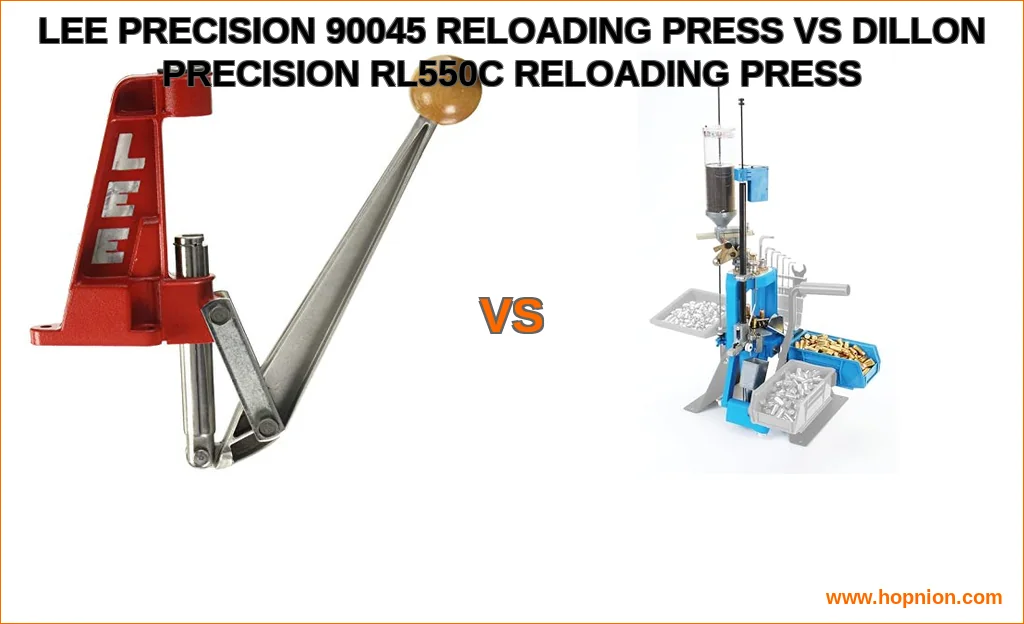
Head-to-Head Overview: Lee Load Master 90045 vs Dillon RL550C
At first glance, both are progressive presses designed to produce finished rounds with each pull of the handle. The fundamental divergence lies in operation. The Lee Load Master 90045 is an auto-indexing press; the shell plate rotates automatically after each stroke. The Dillon RL550C is a manual-indexing progressive press; you, the operator, manually advance the shell plate between stations. This core difference dictates the entire user experience, from reloading speed potential to the level of hands-on control.
Honestly speaking, this creates a clear trade-off. Auto-indexing can streamline the process, potentially increasing output for high-volume calibers like 9mm. Manual indexing, however, provides a deliberate pause at each station, allowing for visual powder checks and problem-solving before advancing a case. Its the classic speed-versus-control debate, embodied in two very different machines.
Detailed Feature-by-Feature Breakdown
Let’s dissect the key components that define daily use. The provided specifications reveal a lot about each company’s priorities.
| Feature | Lee Precision 90045 Load Master | Dillon Precision RL550C | |
|---|---|---|---|
| Indexing System | Auto-indexing | Manual Indexing | |
| Primer System | Integrated automatic primer system | Integrated primer system (manual advance) | |
| Case Feeder | Compatible with optional case feeder | Compatible with optional case feeder | |
| Caliber Conversion Kit | Requires specific conversion kits | Uses removable toolhead; quick change with dedicated toolheads | |
| Powder Measure | Case-activated design | Case-activated powder measure | |
| Check current price on Amazon | Check current price on Amazon |
The Dillon’s removable toolhead is a standout feature for anyone who switches calibers frequently. It keeps your dies and powder measure settings perfectly intact, making swaps a matter of minutes. The Lee system requires more disassembly and reassembly for a caliber change. For a reloader dedicated to one or two calibers, this is less critical. For someone loading 9mm, .223, and .308 on the same afternoon, it’s a game-changer.
Both presses feature a case-activated powder measure, a critical safety component that prevents powder spills. The primer system on each is also integrated, though their operation differs with their indexing style. From my honest perspective, the physical footprint and bench space required are similar, though the Dillon feels more substantial. Noise and vibration are generally lower on the RL550C due to its robust construction and greaseable pivot points, a detail that enhances the long-term reloading experience.
Price, Value, and Total Cost of Ownership
The upfront cost is the most glaring difference. The Lee Load Master 90045 presents a remarkably low barrier to entry into progressive reloading. The Dillon RL550C commands a significantly higher initial investment. However, the true value proposition is revealed over time and through use.
Dillon Precision is famous for its “No-BS” warranty and legendary customer service. The press is built for durability and smooth operation, with features like a greaseable lower pivot pin designed for a long service life. It’s an investment in a tool meant to last decades. The cost of caliber conversion kits for Dillon is higher than for Lee, but the speed and convenience of the toolhead system often justify the premium for active reloaders.
Speaking honestly, the Lee offers incredible value if the budget is the primary constraint. You get a fully functional auto-indexing progressive press for a fraction of the cost. The trade-off often comes in the form of a steeper learning curve, more frequent fine-tuning, and a greater need for user intervention to ensure consistent reloading precision. For a beginner willing to tinker, it’s a capable machine. For someone seeking a “set it and forget it” workflow, the potential for frustration is higher.
When calculating your total reloading setup cost, remember to factor in the necessary accessories for either press: dies, shell plates, powder funnels, and the ever-useful rcbs scale for verification. The Dillon often works flawlessly out of the box, while the Lee may require additional aftermarket support, like sturdy mounting solutions from a company like authority guide Inline Fabrication, to achieve its full potential.
Ideal User Profile: Who Should Buy Which Press?
This is where the comparison gets personal. Your shooting habits and personality in the reloading room dictate the right choice.
The Lee Load Master 90045 Buyer:
- The Budget-Conscious Volume Shooter: You shoot a lot of pistol calibers (9mm, .45 ACP) and need to produce ammo efficiently without a four-figure equipment budget.
- The Mechanically-Inclined Tinkerer: You don’t mind diagnosing issues, making adjustments, and learning the intricacies of your press. The process of tuning is part of the hobby for you.
- The Reloader Testing the Waters: You want to experience progressive press speed without a massive financial commitment before possibly upgrading later.
If you’re wondering which is better for beginner reloader Lee 90045 or Dillon RL550C, my honest take is nuanced. A beginner with patience and mechanical aptitude can succeed with the Lee. A beginner who values simplicity and consistency might find the Dillon’s higher cost justified as it reduces variables while learning.
The Dillon RL550C Buyer:
- The Reloader Seeking Lifetime Durability: You buy tools once. The Dillon’s reputation for ruggedness and unparalleled customer support is a major draw.
- The Multi-Caliber Enthusiast: You regularly switch between rifle and pistol loading. The quick-change toolhead system transforms caliber swaps from a chore into a trivial task.
- The Precision-Minded Producer: Even at higher speeds, you demand consistency. The manual indexing allows for a deliberate pace and visual confirmation at each stage, blending reloading speed with oversight.
- The Reloader Who Hates Downtime: You want a press that runs reliably, session after session, with minimal fuss or adjustment.
For dedicated pistol reloading, both can excel. The Lee’s auto-indexing can theoretically produce rounds faster, but the Dillon’s smooth, controlled rhythm often leads to a more consistent and trouble-free session, which is a key point in any Lee Load Master vs Dillon 550C for pistol reloading debate.
Final Verdict and Recommendations
So, which press earns a place on your bench? The answer depends entirely on your definition of value.
Choose the Lee Precision 90045 Load Master if: Your budget is the absolute deciding factor, and you possess the patience and mechanical interest to master its operation. You’re primarily loading one or two calibers in high volume and are prepared for a more hands-on relationship with your press. It’s a powerful tool that rewards diligent setup.
Choose the Dillon Precision RL550C if: You view your reloading equipment as a long-term investment. You value robust construction, exceptional customer service, and a design focused on smooth, reliable operation. The manual indexing and quick-change toolheads fit your need for control and flexibility, whether you’re chasing volume or precision.
I honestly believe the Dillon RL550C wins for most reloaders looking for a “forever” progressive press. Its design mitigates errors, its durability is proven, and its workflow is intelligently crafted for serious shooters. However, the Lee Load Master 90045 deserves immense credit for making progressive reloading accessible. It proves that high-volume ammo production doesn’t require a massive loan.
Before purchasing either, consult the official source for reloading data and always follow safety protocols. Your Honest Opinion on what matters mostinitial cost, long-term reliability, or workflow elegancewill point you to the right machine. Both will produce quality ammunition; they just take different paths to get there.