

Getting your brass to the exact right length isn’t just a step in the process; it’s the bedrock of reloading precision. A case that’s too long can cause dangerous pressure spikes, while one that’s too short might not seal properly. For anyone serious about consistent ammunition, the tools you choose for this task are non-negotiable. Two popular options sit on the bench: the active, motor-driven case trimmer and the passive, diagnostic case gauge.
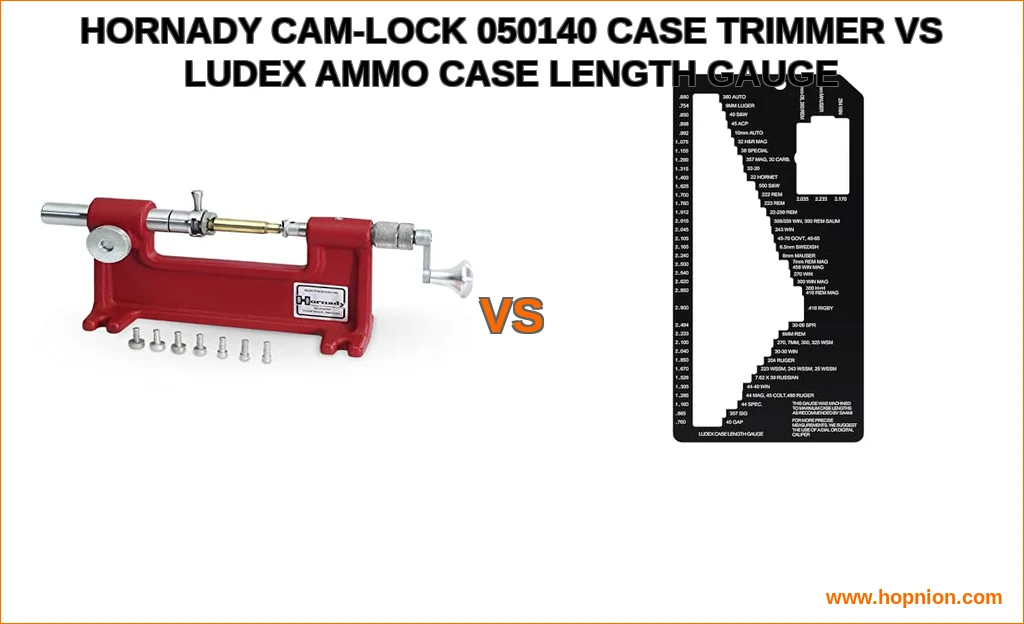
Today, we’re putting the Hornady Cam-Lock 050140 case trimmer head-to-head with the Lyman Ammo Case Length Gauge. One is a workhorse designed to cut, the other a precision instrument designed to measure. Honest Opinion, the choice between them defines your entire approach to case preparation. Let’s break down what each tool actually does, based on their core features and performance.
Why Case Length is Non-Negotiable
Before we dive into the tools, let’s establish why this matters. Every time you fire a cartridge, the brass case stretches. This gradual elongation must be corrected to maintain safe headspace and ensure reliable chambering. Consistent case length also promotes uniform crimping, which directly impacts shot-to-shot accuracy. Whether you’re chasing tiny groups on paper or ensuring reliability in the field, this single dimension is a cornerstone of the entire reloading precision equation. It’s the kind of detail that separates good ammo from great ammo.
Hornady Cam-Lock 050140: The Precision Cutter
The Hornady Cam-Lock is a dedicated, manual case trimmer. It’s a fixture meant to be mounted to your reloading bench, becoming a permanent part of your case prep tool lineup. Its job is active: to physically remove brass and restore each case to a specified, consistent length.
Features & Performance Breakdown
This isn’t a universal chuck-style trimmer. It uses standard Hornady removable shell holder heads, which lock the case securely and keep it square with the cutter. This design is crucial for measurement accuracy and consistent cuts. The lever-action cam lock is the star hereyou turn it to lock the case, then feed the case onto the cutter pilot. It’s a smooth, one-motion operation.
Key features that define its performance:
- Micro-Adjust Cutter: The lever allows for .001-inch adjustments without moving the case itself. This is a huge benefit for dialing in the exact trim length you want.
- Robust Cutting Head: It uses a large diameter, replaceable cutting head made of ultra-hard tool steel, capable of trimming cases up to .50 caliber.
- Included Pilots: It comes with seven of the most popular pilot sizes (.22 cal, 6mm, .270 cal, 7mm, .30 cal, .38 cal, .45 cal) to get you started.
- Mounting Required: The unit has four screw holes for affixing to a bench (mounting hardware not included). This makes it a stationary reloading station tool.
From my honest perspective, the Cam-Lock excels in producing uniform results. Because all trim lengths are measured from the head of the cartridge, you eliminate variance from rim thickness. The system is built for reloading precision through mechanical repeatability. However, it’s a process that requires setup, mounting, and manual operation for each case.
Lyman Ammo Case Length Gauge: The Diagnostic Checker
The Lyman tool occupies a different, yet equally critical, niche. It is not a trimmer. It is a case length checker or case gauge. Its primary function is measurement and quick sorting. You use it after resizing to instantly identify which cases have stretched beyond your maximum allowable length and therefore require trimming.
Features & Performance Breakdown
Think of it as a go/no-go gauge for case length. The design is elegantly simple: a machined block of hard alloy with precision-etched measurement channels for specific cartridges.
What it offers based on its design:
- High Cartridge Capacity: It accurately measures up to 70 of the most popular cartridges, making it incredibly versatile for reloaders who work with multiple calibers.
- Clear, Permanent Markings: All letters and scales are laser-etched, ensuring they won’t fade over time and are easy to read.
- Quick Sorting: The case reloading tool quickly sorts out over-length cases, streamlining your workflow. You only trim what needs trimming.
- Durable Construction: Made from a hard alloy, it’s built for high strength, precision, and a long service life on the bench.
Honestly speaking, the value of the Lyman gauge is in its speed and efficiency. It answers one question fast: “Does this case need to visit the trimmer?” This can save a tremendous amount of time, as you’re not trimming brass that’s already within spec. It’s the perfect reloading accessory for a high-volume shooter who wants to maintain a strict quality control checkpoint.
Head-to-Head: Accuracy, Speed & User Experience
So, which is better for precision reloading: Hornady Cam-Lock or Lyman case gauge? The truth is, they are complementary tools that solve different problems. A direct comparison highlights their distinct roles.
| Feature | Hornady Cam-Lock 050140 Trimmer | Lyman Ammo Case Length Gauge |
|---|---|---|
| Primary Function | Active cutting and trimming of brass. | Passive measurement and sorting of brass. |
| Key Benefit | Delivers consistent, user-defined case lengths with micro-adjustability. | Provides instant verification of case length, preventing unnecessary work. |
| Workflow Role | A dedicated brass case trimmer for the trimming step. | A quality control case length checker used after resizing. |
| Best For | Reloaders who process all brass every time or demand ultra-precise custom lengths. | Reloaders who want to quickly identify only the brass that actually needs trimming. |
| Long-Term Durability | Built around a hardened steel cutter; long-term wear would involve replacing this consumable head. | Solid alloy block with etched markings; essentially no wear parts under normal use. |
| Compatibility | Uses Hornady shell holders. Check if your press system’s holders are compatible. | Stand-alone tool; no compatibility issues with other press systems. |
| Check current price on Amazon | Check current price on Amazon |
Accuracy & Precision
For the act of cutting, the Hornady is the accuracy tool. Its micro-adjust feature and rigid locking system are designed for precise brass trimming. The Lyman gauge’s accuracy lies in its measurement; it tells you precisely how long your case is, so you can make an informed decision. One creates the precision, the other audits it.
Speed & Ease of Use
This is where the Lyman shines for the initial check. Dropping 50 cases into their slots to find the few outliers is exponentially faster than trimming 50 cases individually. However, once you’ve identified the long cases, you still need a trimmer like the Hornady to correct them. The Hornady Cam-Lock, while manual, is considered one of the faster and more ergonomic manual trimmers due to its cam-lock action.
The Beginner’s Dilemma
For someone looking for the best budget case length tool for beginners, the answer depends on their starting point. If they have no way to trim brass at all, the Lyman gauge alone is insufficient. They need a cutter. My honest take is that a beginner might start with just a capable trimmer like the Hornady, using a caliper to check length. As their volume grows, adding the Lyman gauge later becomes a massive workflow upgrade. You can read more about building a efficient reloading setup on our site.
Final Verdict & Recommendations
This isn’t a contest with one winner. It’s about right tool for the specific task in your ammo reloading process.
Choose the Hornady Cam-Lock 050140 Case Trimmer if:
You are setting up your first serious reloading bench and need a dedicated, accurate, and durable trimmer. You value the ability to make fine adjustments and want a tool that will last for thousands of rounds. You process batches of brass uniformly and prefer a mounted, stationary tool. You can consult the official source for detailed specs and support.
Choose the Lyman Ammo Case Length Gauge if:
You already own a trimmer (of any kind) and want to drastically speed up your case prep. You shoot high volumes of mixed brass and need to quickly sort which cases need attention. You want a foolproof, durable checkpoint to ensure no over-length case makes it into a finished batch. It’s the ultimate efficiency booster.
I honestly believe the most proficient reloading benches will eventually have both. The Lyman gauge acts as the efficient foreman, directing only the necessary work to the Hornady trimmer, the skilled craftsman. This combo eliminates wasted effort and ensures every piece of brass meets spec.
For those diving into precision rifle shooting where every thousandth matters, the Hornady’s micro-adjustability is a significant advantage. For the handloader focusing on consistent pistol ammo or high-volume rifle calibers, the Lyman gauge might be the more immediately impactful purchase to streamline sessions. And remember, just like right picatinny accessory, the best tool is the one that fits your specific process and goals.
Your journey in handloading is built on these foundational choices. Assess your current workflow, volume, and goals. Whether you invest in the cutting precision of the Hornady or the diagnostic speed of the Lyman, you’re making a decision that directly contributes to the safety, reliability, and consistency of every round you produce. That’s an investment that always pays off.