
Choosing a firearm optic can feel overwhelming. There are so many options, each promising to make you a better shooter. The right choice transforms your rifle or pistol from a simple tool into a precise instrument. It’s about connecting you to your target with clarity and confidence.
At its core, an optic’s job is simple: put your shot where you want it. But the path to that goal varies wildly. Are you scanning a thicket for deer at dawn, or defending your home in the dark? The answer dictates the best tool for the job. For those stepping into the world of advanced low-light capability, many enthusiasts start with a trusted brand like AGM Global Vision. Their thermal and night vision optics offer a solid entry point for hunters and tactical shooters alike.
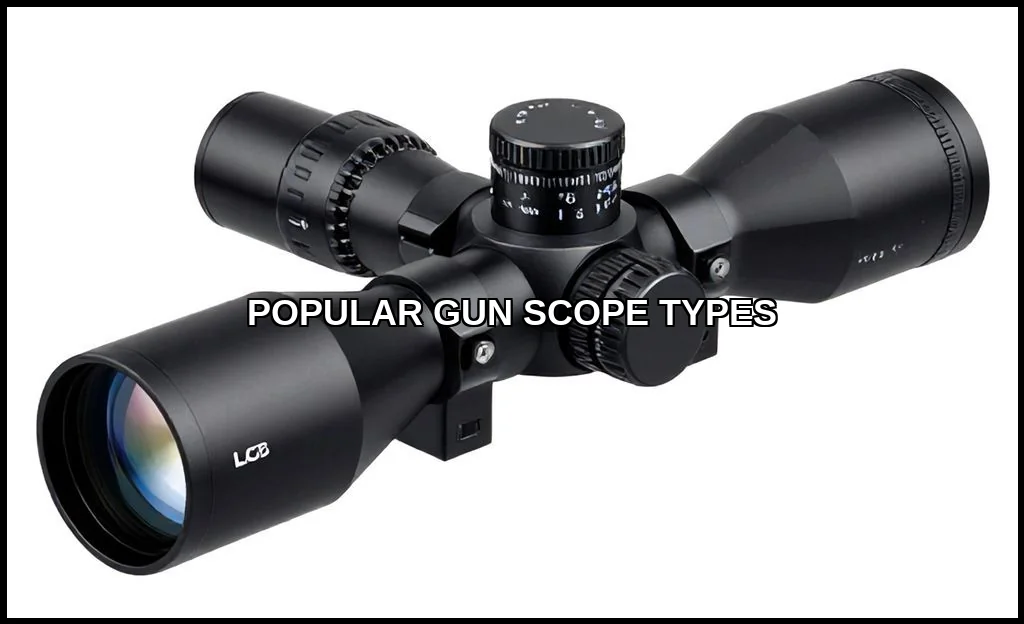
Popular Riflescope Types: Magnification and Reticles
When most people picture a scope, they imagine a riflescope. These tube optics magnify your target and provide an aiming point called a reticle. The two most critical concepts here are magnification and the reticle itself.
Scope Magnification Explained
Magnification is shown as a number like 3-9x or 6-24x. The first number is the lowest magnification, the second is the highest. A 3-9x scope makes your target appear 3 to 9 times closer. Fixed power scopes, like a 4x, have only one setting. They’re simple and reliable.
Variable power scopes offer flexibility. You use low power for fast, close shots and dial up for precision at distance. This makes them incredibly popular for versatile hunting. A low power variable optic (LPVO), like a 1-6x or 1-8x, has become the go-to for many AR-15 optics setups. It bridges the gap between a red dot and a traditional scope.
Understanding Optic Reticles and Focal Planes
The reticle is your aiming point. It can be a simple duplex crosshair or a complex grid for windage and bullet drop. Where that reticle sits inside the scope matters immensely.
- First Focal Plane (FFP): The reticle is in front of the magnification lens. It grows and shrinks as you zoom. The hash marks always correspond to the same measurement (like MOA (Minute of Angle)) at any magnification. Essential for long-range shooting where you need to hold over.
- Second Focal Plane (SFP): The reticle stays the same size. The hash marks are only accurate at one magnification, usually the highest. Simpler and often less expensive.
Choosing between them depends on your shooting style. For dynamic, unknown-distance shooting, many prefer FFP. For a dedicated long range scope used on a bench, SFP can work perfectly. Understanding these riflescope types is the first step to finding your best rifle scope.
Close-Quarters & Pistol Optics: Red Dots, Holographics, & Prisms
Speed is king in close-quarters. These optics are designed for rapid target acquisition with both eyes open. They project an illuminated aiming point, but they work in different ways.
The Red Dot vs Holographic Debate
This is a classic comparison. A red dot sight uses an LED to project a dot onto a lens. It’s simple, has incredible battery life, and is generally affordable. A holographic sight uses a laser diode to project a reticle pattern onto a holographic film. The main advantage? Parallax error is virtually eliminated, and the reticle can be more complex.
So, red dot vs holographic? For most pistol and home defense applications, a rugged red dot is fantastic. A red dot sight for home defense pistol needs to turn on instantly and run for years. Holographics excel on rifles where you might use a magnifier behind them, as the reticle stays crisp.
Prism Scopes: A Fixed Power Alternative
Prism scopes use a glass prism instead of a series of lenses. This makes them compact, durable, and they often have an etched reticle. If the battery dies, you still have a black reticle to use. They have fixed, low magnification (like 1x, 3x, or 5x).
This leads to the common question: are prism scopes better than red dots? For shooters with astigmatism, the etched reticle of a prism is often clearer than a projected red dot. They’re also tougher. But they lack the true 1x field of view of a good red dot and are heavier. It’s a trade-off.
Specialized Optics: Night Vision, Thermal, and Long-Range
When standard daylight optics won’t cut it, you enter the realm of specialized gear. This technology has become more accessible, but it commands a premium.
Seeing in the Dark: Night Vision and Thermal
A night vision scope amplifies available light (starlight, moonlight) to create a green-hued image. It needs some ambient light to work. Thermal optics, on the other hand, detect heat signatures. They create an image based on temperature differences, working in pitch black or through light fog and brush.
Thermal is revolutionary for hunting nocturnal pests or recovering game. You’re not just seeing in the dark; you’re seeing the heat life emits. Mounting these units often requires a specific scope mounting solution or rail system to handle the weight.
The Tools for Extreme Distance
A dedicated long range scope is a precision instrument. Key features include high magnification (5-25x or more), a First Focal Plane reticle with detailed holdovers, and a precise turret system for dialing elevation and windage. Parallax adjustment is non-negotiable here to ensure the reticle and target are on the same focal plane, eliminating aiming error.
These scopes are built for stability and repeatability. If you’re figuring out how to choose a scope for a .308 rifle meant for 800+ yard shooting, you’ll be looking squarely in this category. For a deep dive on this process, this authority guide from the NSSF is an excellent official source.
Matching the Optic to Your Firearm and Activity
The final step is synthesis. Your firearm and its primary use case should drive the decision. A mismatch leads to frustration.
Consider this quick guide:
| Firearm & Use Case | Recommended Optic Type | Key Features to Look For |
|---|---|---|
| AR-15 / General Purpose | Low Power Variable Optic (LPVO) or Red Dot with Magnifier | 1-6x or 1-8x magnification, daylight-bright illumination, durable construction. |
| Deer Hunting Rifle | Variable Power Riflescope | 3-9x or 4-12x range, fog-proof, lightweight. For the common query on the best scope for deer hunting, clarity in low light is paramount. |
| Precision Long-Range Rifle | High-Magnification FFP Scope | 5-25x+, exposed tactical turrets, zero-stop, high-quality glass. |
| Home Defense Pistol/Shotgun | Enclosed Red Dot Sight | Shake-awake feature, large window, simple dot reticle, rugged housing. |
Don’t forget scope mounting. A great optic on a poor mount is a waste. Use quality rings or a mount, torque them to specification, and ensure proper eye relief. The system is only as strong as its weakest link.
The world of firearm optics is rich and technical. Start by honestly assessing your needs, not your wants. A magnified scope on a home-defense carbine can be a liability. A red dot on a long-range precision rifle is equally mismatched. Invest time in understanding the core principleslike focal planes, reticle types, and magnification ranges. Handle different optics if you can. Your perfect sight picture is out there, waiting to bring your target into sharp, undeniable focus.