

Two names consistently rise to the top when serious airgunners discuss capable, off-the-shelf hunting rifles: the Umarex Ruger Targis Hunter and the Crosman Benjamin Trail NP XL 1500. Both promise power, precision, and reliability straight from the box, but they take distinctly different paths to get there. One leverages modern gas-piston technology, while the other relies on a refined spring system. For anyone weighing a purchase, the choice often boils down to specific priorities in the field.
This isn’t just about specs on paper. It’s about how a rifle feels, shoots, and performs when you’re after small game or setting up targets in your backyard. The nuances in their design philosophies create real-world trade-offs that affect everything from muzzle velocity to daily usability. My honest assessment is that neither is universally “better,” but one will be perfectly suited to your particular needs.
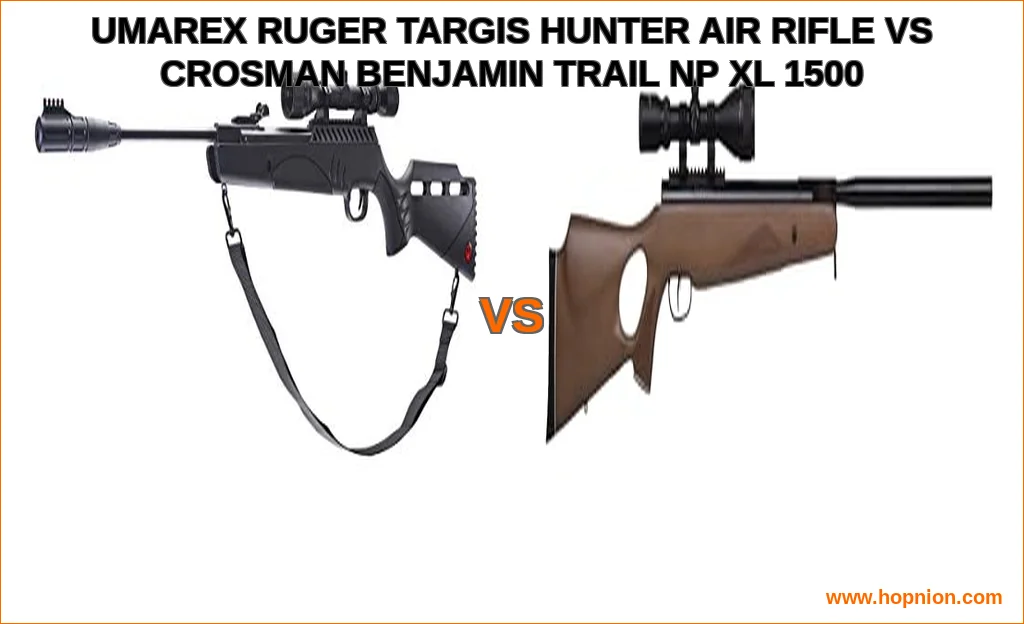
Head-to-Head: Core Specifications
Before diving into performance, a side-by-side look at their foundational specs is essential. This table lays out the critical differences that define each platform.
| Feature | Umarex Ruger Targis Hunter | Benjamin Trail NP XL 1500 |
|---|---|---|
| Caliber | .22 Caliber | .177 Caliber |
| Powerplant | TNT (Turbo Nitrogen Technology) Spring Piston | Nitro Piston technology |
| Stock | Ergonomic all-weather synthetic stock with checkered rubber inserts | Checkered Hardwood Stock |
| Barrel | Steel barrel with integrated 5-chamber SilencAir dampener | Rifled Steel Barrel |
| Muzzle Velocity | Not explicitly stated (varies by pellet) | Up to 1500 FPS |
| Scope Included | 3-9x32mm Adjustable Objective | CenterPoint 3-9x40mm Precision Scope |
| Special Features | Integral Nucleus Rail Platform; Sling studs with included nylon sling; Rubber recoil pad | Reported 70% less noise; Smooth cocking |
| Check current price on Amazon | Check current price on Amazon |
Power & Velocity: The Heart of the Hunt
The core of any hunting air rifle is its powerplant. Here, the two diverge completely. The Benjamin Trail NP XL employs a Nitro Piston technology system, a gas-ram that replaces the traditional spring. This design is renowned for smoother cocking, less perceived recoil, and consistent performance across a wide temperature range. Its listed velocity of “up to 1500 FPS” is impressive, but honestly speaking, that figure is typically achieved with ultra-light .177 pellets. For hunting, a heavier pellet is used, which reduces speed but increases downrange energy.
The Umarex Ruger Targis uses its TNT (Turbo Nitrogen Technology) system, which is a high-performance spring piston. While spring guns can have a sharper recoil impulse, the Targis Hunter counters this with a comfortable rubber recoil pad and an integrated rail system designed to protect the scope. Its .22 caliber chambering is a significant differentiator. A .22 caliber pellet is heavier and carries more kinetic energy at a given velocity than a .177, making it a formidable choice for hunting small game like squirrels or rabbits where clean, ethical takedowns are paramount.
Pellet Choice: The Critical Variable
This leads directly to a missing entity in many comparisons: pellet choice impact on performance. The advertised “up to” velocity numbers are almost meaningless without context. For the Benjamin’s .177 caliber, you might choose a lightweight alloy pellet for target shooting, but switch to a heavy, domed hunting pellet for pest control. The Ruger’s .22 caliber starts with a heavier projectile, giving it a natural advantage in delivering knockdown power, even at slightly lower velocities. Your selection of pellet dramatically influences both accuracy and terminal effect.
Accuracy & Precision: Barrel and Trigger Feel
Raw power is useless without control. Air rifle accuracy hinges on barrel quality, a stable platform, and a predictable trigger. The Benjamin features a rifled steel barrel, which imparts stabilizing spin to the pellet. Combined with the smoother shot cycle of the Nitro Piston, it provides a solid foundation for precision. The included 3-9x40mm CenterPoint scope with a range-estimating reticle is a capable optic for field use.
The Umarex Ruger Targis takes a systems-engineering approach. Its Integral Nucleus Rail Platform is engineered to reduce scope movement and vibration, which is a common cause of point-of-impact shift in powerful break barrel rifles. This focus on preserving zero is a huge benefit for hunters who don’t want to constantly re-zero their scope. The included 3-9x32mm scope complements this stable base. From my honest perspective, this rail system is a standout feature for anyone frustrated with scopes that creep on spring-powered guns.
Trigger Mechanics and Practical Shooting
While specific trigger details aren’t listed in the provided features, the feel is invariably tied to the power system. Nitro Piston rifles like the Benjamin often have a slightly different lock-up feel compared to a spring piston. The Ruger’s TNT system likely incorporates a two-stage adjustable trigger or similar crisp mechanism common in modern Umarex designs, which is a boon for precision shooting. When considering a Trail NP XL 1500 vs Targis Hunter accuracy at 50 yards, the shooter’s ability to manage the rifle’s hold sensitivity and trigger control becomes as important as the hardware itself.
Noise Level & Backyard Suitability
For many shooters, discretion is key. The Benjamin Trail NP XL explicitly claims to produce “70% less noise” than an unspecified benchmark. The Nitro Piston action is inherently quieter than some spring guns, as there’s no spring “twang.” This, combined with its .177 report, makes it a strong candidate for backyard shooting where noise is a concern.
The Umarex Ruger Targis counters with its permanently affixed 5-chamber SilencAir sound dampener. This isn’t an add-on; it’s part of the barrel design, engineered to reduce downrange noise and maximize stealth. While the .22 caliber report will be deeper and potentially louder than a .177, the suppressor works to mitigate that. Honestly speaking, for true suburban backyard use, checking local ordinances is a non-negotiable step. Legal considerations for suburban use often hinge on muzzle energy, projectile type, and discharge laws, not just decibel level.
If you’re trying to decide on a noise level comparison backyard friendly air rifle, both are designed with suppression in mind. The Benjamin may have an edge in perceived sharpness of report, but the Ruger’s integrated system is highly effective. Your local environment and proximity to neighbors will be the final judge.
Practical Use Cases and Maintenance
So, which rifle for which job? If your primary goal is high-velocity target shooting and pest control with a focus on minimal noise, the Benjamin Trail NP XL 1500 is compelling. Its .177 caliber offers flatter trajectories at shorter ranges, and the Nitro Piston is famously low-maintenance and consistent.
For dedicated hunting small game, the Umarex Ruger Targis Hunter presents a strong case. The .22 caliber pellet delivers more energy on target, the all-weather synthetic stock with checkered rubber grips ensures a solid hold in any condition, and the included sling makes it a true “walking around” hunting tool. The Nucleus rail system directly addresses a key pain point for hunters: scope reliability. For another look at how the Targis Hunter stacks up, our comparisons against Gamo models delve deeper into specific feature trade-offs.
Keeping Your Rifle in Top Shape
Regardless of your choice, airgun maintenance is crucial for longevity. Here are a few break barrel air rifle maintenance tips for beginners:
- Use a cleaning rod and patches designed for airgun barrelsnever use harsh solvents or oils meant for firearms.
- Periodically check all stock and scope mount screws for tightness, as vibration can loosen them.
- For spring pistons like the Targis, a few drops of silicone chamber oil in the compression chamber every few thousand shots can help preserve seals.
- Store your rifle in a dry, temperate place, and never leave it cocked for extended periods.
Following a detailed cleaning and maintenance schedule prevents power loss and accuracy drift. Its the best way to protect your investment.
Final Verdict: Matching the Rifle to the Hunter
between these two isn’t about finding a winner. It’s about right tool. To be completely honest, if your world revolves around high-volume target practice, plinking, and pest control in noise-sensitive areas, the Crosman nitro piston technology in the Benjamin Trail NP XL 1500 offers a smooth, quiet, and low-recoil experience that’s hard to beat. Its .177 caliber is economical and effective for these roles.
Conversely, if you are a dedicated outdoorsman who needs a rugged, all-weather rifle for hunting, the Umarex Ruger Targis Hunter is built for your purpose. The .22 caliber delivers decisive power, the synthetic stock and integrated sling scream practicality, and the Nucleus rail system solves a classic spring-gun problem. Its a purpose-driven hunting tool. For those considering other powerful springers, our analysis of a different Gamo comparison offers further context.
My honest take is this: for the hunter who values terminal performance and field reliability in varied conditions, the Targis Hunter has a slight edge. For the shooter prioritizing a gentle shot cycle and backyard discretion, the Trail NP XL shines. Both are excellent examples of modern adult airguns that deliver tremendous value. Always remember to pair your rifle with quality optics and pellets, and for formal competition rules or safety standards, consult an official source. In the end, the best air rifle is the one you’ll shoot confidently and often. That’s the Honest Opinion from here.