
Choosing a tactical gun scope isn’t about finding the “best” one. It’s about finding the right tool for your specific mission. The wrong optic can hinder you, while the right one becomes a seamless extension of your rifle. This guide cuts through the noise to explain the core types, technologies, and features that define modern tactical optics.
We’ll move beyond basic types of gun scopes and into the details that matter for dynamic shooting. From close-quarters battle (CQB) to long-range precision, your application dictates the gear. For a shooter looking for a versatile, budget-friendly option that covers a lot of ground, the MidTen 4-16×50 AO is a solid starting point. It offers a wide magnification range and an adjustable objective for clarity at various distances.
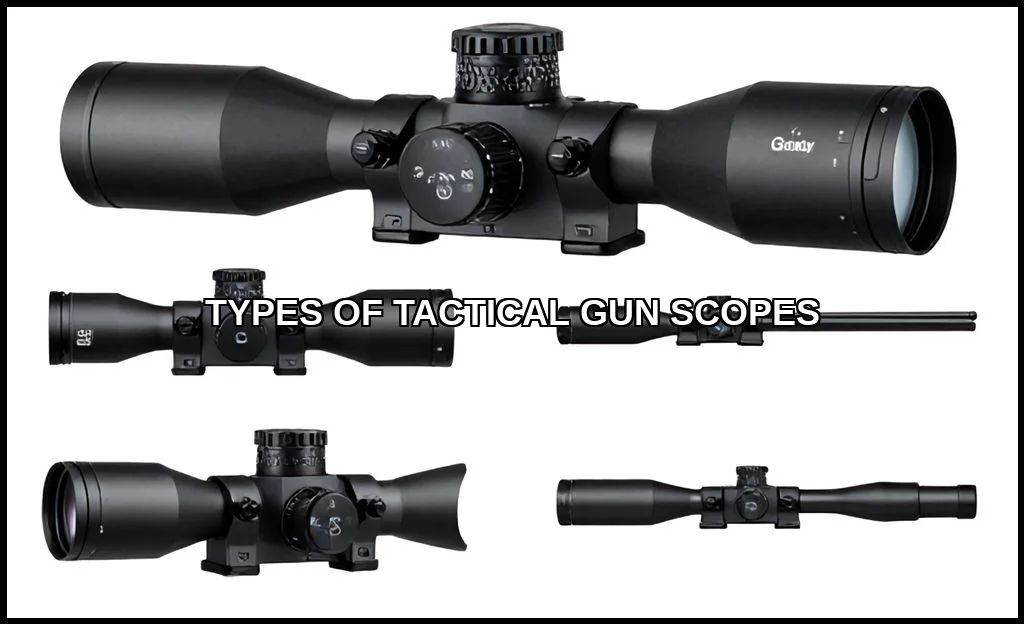
Core Types & Technologies Explained
Modern tactical rifle scope designs fall into distinct categories. Each excels in a different part of the engagement envelope.
Magnification: Fixed vs. Variable Power
Scope magnification is your first major decision. Fixed-power scopes (like a classic 4x) are simple, rugged, and often lighter. Variable-power scopes give you flexibility, allowing you to zoom in for a precise shot or zoom out for a wider field of view. This is where the great red dot vs LPVO debate lives.
- LPVO (Low Power Variable Optic): The king of versatility for many. An LPVO typically offers a 1-6x, 1-8x, or 1-10x magnification range. On 1x, it mimics a red dot for fast, two-eye-open shooting. Crank up the magnification for precise shots out to several hundred yards. It’s arguably the most popular choice for modern AR-15 optics setups.
- Prism Scopes: These are fixed low-power optics (like 3x or 5x) with an etched reticle. They don’t rely on a battery to project the reticle, making them highly durable. What is the difference between an LPVO and a prism scope? Mainly the variable magnification. A prism scope is lighter than an LPVO but lacks the zoom range.
- Traditional Variable Scopes: Think 3-9x, 4-12x, or 5-25x. These are purpose-built for medium to long-range precision. They lack the true 1x capability of an LPVO, making them slower for close-range work but often offering superior optical clarity and higher top-end magnification for distance.
The Reticle: Your Ranging and Holdover Tool
The reticle is your interface with the target. There are three primary systems, and your choice often depends on your training background.
- MOA (Minute of Angle): An angular measurement (1.047″ at 100 yards). MOA reticles and turrets are common in the US. They use a system of clicks (usually MOA per click) for adjustment. Intuitive for those who think in inches and yards.
- MRAD (Milliradian): Another angular measurement (3.6″ at 100 yards, or 10cm at 100m). MRAD is based on the metric system and is often preferred for long-range and military applications. The math is base-10, which many find simpler for rapid calculations.
- BDC (Bullet Drop Compensator): A “set it and forget it” style reticle. The holdover marks are calibrated for a specific cartridge and muzzle velocity. Great for fast shooting within its calibrated range, but less flexible if you change ammo.
Focal Plane: First vs. Second
This is a critical nuance in variable scopes. Where is the reticle placed in the optical assembly?
- First Focal Plane (FFP): The reticle is in front of the magnification lens. As you zoom in, the reticle grows and shrinks with the target. The subtensions (the measurements in your reticle like MRAD or MOA marks) remain accurate at all magnification levels. Essential for long-range, holdover shooting at unknown distances.
- Second Focal Plane: The reticle is behind the magnification lens. It stays the same size regardless of zoom. The subtensions are only accurate at one specific magnification (usually the highest). Simpler and often less expensive, but requires discipline to use correctly.
Key Features & Specifications Comparison
Beyond the core type, these features separate good combat scopes
Illumination & Durability
An illuminated reticle is a game-changer in low light or against a busy background. Look for multiple brightness settings, including a night-vision compatible mode if you ever plan to use a night vision scope or clip-on device. Durability is non-negotiable. Your scope must hold zero after repeated recoil and survive bumps and drops. Look for scopes made from 6061 or 7075 aluminum, filled with nitrogen or argon to prevent fogging, and with robust, tactile turrets.
Shockproof, waterproof, and fog-proof performance is standard for quality weapon optics. A side focus or adjustable objective (AO) parallax knob, like on the mentioned MidTen model, is vital for high-magnification shooting to ensure the reticle and target are on the same focal plane.
Optical Quality: Glass, Coatings, and Eye Box
This is where price often shows. High-quality, fully multi-coated lenses transmit more light, providing a brighter, sharper image with better color fidelity. A generous eye box (the space where your eye can be to see the full picture) is crucial for fast shooting and maintaining a proper cheek weld. Don’t just look at magnification numberslook at the quality behind them.
Matching Scope Type to Use Case
Let’s apply this knowledge. Your mission defines your gear.
CQB & Home Defense
Speed and target acquisition are everything. A wide field of view and unlimited eye relief are critical. For pure speed, a red dot or holographic sight is king. For a bit more precision at intermediate distances (think 50-200 yards in a suburban setting), a 1-x LPVO on its lowest setting is a superb hybrid choice. How to choose a scope for home defense? Prioritize fast, both-eyes-open shooting and reliability above all else. Magnification can be a liability inside a structure.
Designated Marksman & Long-Range
Here, precision reigns. You’ll want a traditional variable scope with higher magnification (e.g., 4-16x, 5-25x), a First Focal Plane (FFP) reticle, and exposed, tactile turrets for quick adjustments. MRAD/MRAD or MOA/MOA setups are preferred for their precision. Durability and exceptional optical clarity are mandatory for spotting impacts and reading mirage.
Tactical Hunting
This blends the needs of dynamic movement with precise shot placement. An LPVO (1-6x or 1-8x) is again a top contender, offering speed for snap shots in thick brush and magnification for an ethical shot across a canyon. A simple BDC reticle calibrated for your hunting cartridge can be very effective. Weight and low-light performance are major considerations here.
| Use Case | Recommended Scope Type | Key Features to Prioritize |
|---|---|---|
| CQB / Home Defense | Red Dot, Holographic, or 1-x LPVO | Speed, unlimited eye relief, durability |
| General Purpose / Patrol (AR-15) | LPVO (1-6x, 1-8x) | Versatility, illuminated reticle, good eye box |
| Precision Long-Range | FFP Variable (4-16x, 5-25x+) | Optical clarity, repeatable turrets, FFP reticle |
| Tactical Hunting | LPVO or 2-10x/3-15x Variable | Light weight, low-light performance, simple reticle |
Buying Guide & Final Thoughts
Start with your budget and your rifle’s primary role. Be honest about your actual shooting distances. For many looking for the best tactical scope for AR-15 under $500, several robust LPVO and prism options exist that offer excellent value. Always check for tactical scope with night vision compatibility if that’s part of your future plan.
Mounting is half the battle. A poor mount will ruin a great scope’s performance. Invest in a quality, one-piece mount from a reputable manufacturer and torque it to spec. Consider accessories like flip-up lens caps and a Leupold tripod adapter if you shoot from a supported position often.
The world of shooting scopes is vast. The perfect optic balances magnification, reticle, durability, and optical quality for your specific task. There’s no single winner. A red dot dominates inside 100 yards. An LPVO rules the 0-500 yard versatile fight. A high-magnification FFP scope owns the distance. Understand the trade-offs, match the tool to the job, and train until the controls are second nature. Your firearm sights should disappear, leaving only you and the target.