
A hunting scope is more than just a magnifying glass. It’s the critical interface between you, your rifle, and your target. Choosing the right one transforms a shot into an ethical harvest. The wrong choice can lead to missed opportunities and frustration. For hunters looking for a reliable, budget-friendly platform to pair with a new scope, many start with the CVLIFE Hunting Rifle. It’s a solid foundation for building an effective hunting system.
Your choice depends on what you’re hunting, where you’re hunting it, and your personal style. This guide cuts through the noise. We’ll break down the core types of hunting scopes, from magnification to reticles, and help you match the tool to the task.
Fixed Power vs. Variable Power: The Core Choice
This is your first major decision. It defines the scope’s flexibility and, often, its optical simplicity.
Fixed Power Scopes
These scopes have one set magnification, like 4x or 6x. They are famously simple, durable, and often brighter because they have fewer internal lenses. Their field of view is typically wide and consistent. They excel in dense woods or for driven hunts where speed is key and shots are close. The trade-off? You can’t zoom in for a more precise shot at longer ranges.
Variable Power Scopes
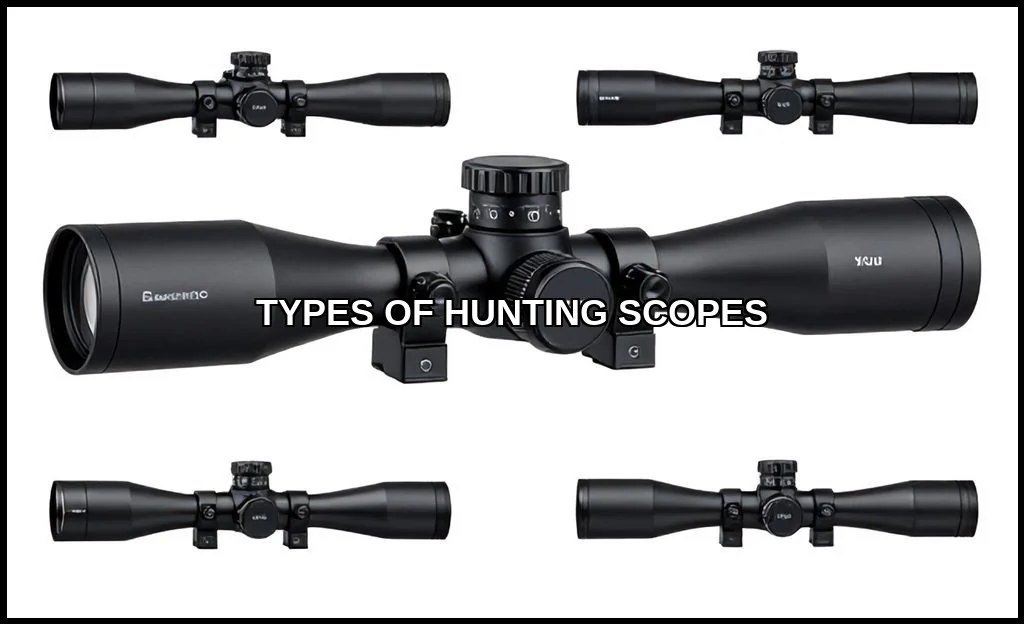
This is the most popular choice for modern hunters. A variable power scope, like a 3-9×40, offers a range of magnifications. You can dial it down for a wide view in thick brush, then crank it up for a careful shot across a canyon. This versatility makes it a fantastic “do-it-all” option, especially for mixed-terrain hunting. For a deeper dive on all the different scope types available, we have a dedicated resource.
So, fixed power vs variable power scope for hunting? If your hunting is predictable and close-range, fixed is elegant and reliable. For almost everyone else, the adaptability of a variable is the winning choice.
Matching Your Scope to the Game
Your quarry dictates your gear. Let’s apply the magnification logic to specific scenarios.
Varmint and Predator Scopes
Think prairie dogs, coyotes, or groundhogs. These hunts demand precision at distance on small targets. High magnification is king. Look for scopes starting in the 4-12x, 6-18x, or even 6-24x range. A side focus or adjustable parallax knob is critical for clarity at varied ranges. These scopes often feature tactical-style turrets for precise windage and elevation adjustments.
The Classic Deer Hunting Scope
The quintessential scope for deer hunting. Shots can be 50 yards in the oak brush or 300 across a soybean field. A 3-9×40 is the timeless workhorse for a reason. It covers the vast majority of whitetail scenarios. Modern favorites also include 2-10x or 3-12x models, offering a bit more top-end magnification without sacrificing the low-end field of view. Light transmission and a crisp reticle are paramount for those early morning and late evening sits.
Big Game and Long-Range Scopes
This is for elk, moose, sheep, and long-range mule deer. Here, reliability and performance in tough conditions are non-negotiable. Magnification ranges like 4-16x or 5-25x are common. You need excellent glass to spot animals in low light at distance. A bullet drop compensator (BDC) turret or a reticle with holdover marks becomes incredibly useful. How to choose a scope for long range elk hunting involves prioritizing durability, clear glass, and a reticle you can use confidently under pressure.
For specialized game like hogs, which are often hunted at night or in low light, an illuminated reticle is a game-changer. This leads us to our next point: what type of scope is best for hog hunting? Typically, a low-power variable (1-6x or 1-8x) with a bright, illuminated reticle pattern. Speed and target acquisition in darkness are the goals.
Critical Features That Make a Difference
Magnification is just the start. The details in the features separate a good scope from the best hunting scope for your needs.
Reticles: The Aiming System
The reticle is your crosshair. Its design directly impacts how you aim and compensate for bullet drop and wind.
- Duplex/Doubleplex: The classic hunting reticle. Thick outer posts taper to a fine center crosshair. Simple, uncluttered, and fast.
- Mil-Dot Reticle: Uses dots spaced at milliradian intervals for range estimation and holdover. Common in tactical and long-range hunting scopes.
- BDC Reticles: Feature marked holdover points calibrated for specific cartridges or bullet trajectories. Great for quick shots at varying ranges.
- Illuminated Reticles: A battery-powered light illuminates the center or entire reticle. Invaluable for low-light conditions against dark backgrounds. Choosing the best illuminated reticle for low light hunting means looking for multiple brightness settings, including a very low setting that won’t destroy your night vision.
Focal Plane: A Key Nuance
This is where it gets technical, but it matters for using reticle holdovers.
- First Focal Plane (FFP): The reticle grows and shrinks with magnification. Holdover marks are accurate at any power. Preferred for long-range precision shooting.
- Second Focal Plane (SFP): The reticle size stays constant. Holdovers are only accurate at one specific magnification (usually the highest). Common and perfectly suitable for most big-game hunting within known distances.
Dials, Dials, Dials: Turrets and Adjustments
These knobs adjust your point of impact. They’re measured in Minutes of Angle (MOA) or Milliradians (MILs).
- Cap Turrets: Simple, low-profile caps protect the adjustment dials. You adjust with a tool, then re-cover. Clean and snag-free.
- Exposed Tactical Turrets: Tall, finger-adjustable dials with audible clicks. Used for dialing elevation and windage on the fly. Essential for a dedicated long range scope.
- BDC Turrets: A specialized elevation dial marked with ranges instead of MOA/MIL numbers. You simply dial to the estimated range.
Optical Quality: The Glass Itself
The objective lens diameter (the big front lens) influences light gathering. A 40mm, 44mm, or 50mm lens are standard sizes. Coatings on the lenses are arguably more important. Fully multi-coated lenses reduce glare and increase light transmission, giving you those precious extra minutes of shooting light. For a stable viewing platform, especially when glassing for long periods, pairing your optics with a solid tripod using a tripod adapter can make a world of difference.
Mounting, Zeroing, and Making It Work
A perfectly chosen scope is useless if it’s not secured and sighted correctly.
Mounting: Solid as a Rock
Invest in quality rings and a base. They must match your rifle’s action. Torque everything to specification using a proper screwdriver or torque wrench. A loose mount is the number one cause of unexplained accuracy problems. The official source from the NSSF offers excellent, detailed guidance on this entire process.
Zeroing: Finding True North
Zeroing means aligning your riflescope so the point of aim matches the point of impact at a specific distance. For most big-game hunting, a 100-yard or 200-yard zero is standard. Use a solid rest, fire a group, and adjust your turrets to move the impact. Confirm your zero periodically, especially before a major hunt.
Maintenance: Keep It Clear
Use a lens brush or air blower first to remove dust. Clean lenses with a soft microfiber cloth and proper lens cleaner. Never use harsh chemicals or paper towels. Store your rifle in a case to protect the optics.
The world of hunting optics is deep, but it doesn’t have to be overwhelming. Start with your primary game and typical shooting distance. Let that guide your magnification range. Prioritize optical clarity and a reticle you understand instinctively. Remember, the best scope is the one you can use confidently when the moment of truth arrives. It’s the tool that turns a clear view into a clean, ethical shot.