

Choosing the right sight for your shotgun isn’t about finding the “best” one. It’s about matching the tool to the task. A shotgun is uniquely versatile, capable of everything from close-quarters home defense to precise slug shooting at 100 yards. The optic you mount must complement that specific mission.
For many shooters, a compact, low-magnification scope hits the sweet spot. It offers a precise aiming point without sacrificing too much field of view. A solid choice in this category is the TRUGLO 4x32mm Compact. Its fixed 4x magnification and forgiving eye relief make it a popular pick for slug hunters and turkey shooters who need a bit of precision. It’s a great example of a purpose-built shotgun scope.
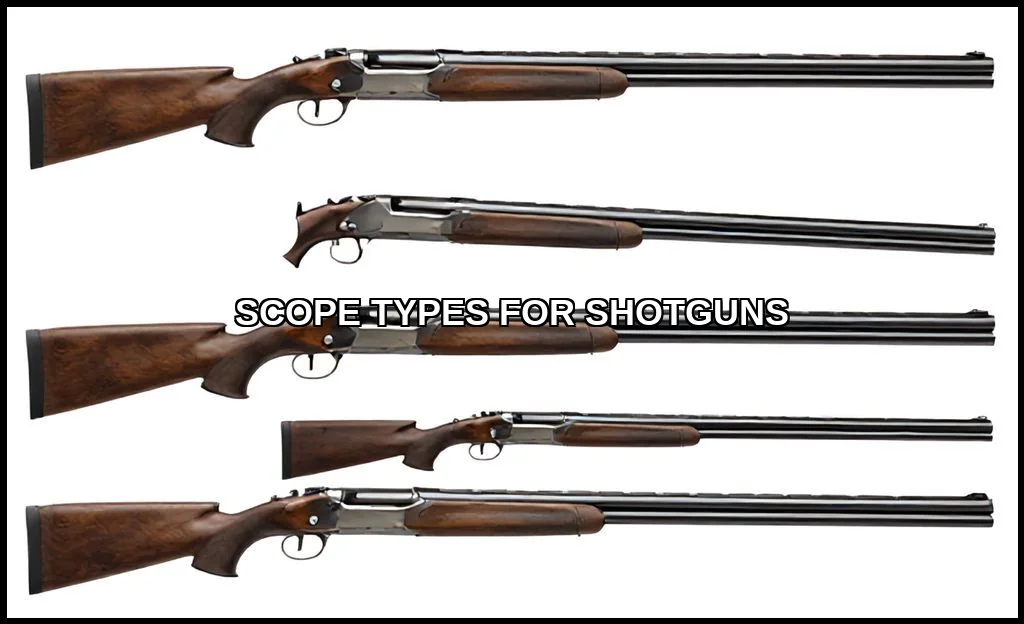
Introduction to Shotgun Optics & Their Unique Role
Shotgun optics face a brutal environment. The heavy, sharp recoil impulse of a 12 gauge demands rugged construction. Unlike rifle scopes designed for long-range precision, shotgun sights prioritize speed, wide field of view, and durability. You’re not just picking a sight; you’re choosing a system that includes the optic, the mount, and how it fits your shooting style.
Understanding the core types of optics is the first step. The main categories are non-magnified red dots and magnified scopes. Each has a home on a scattergun. Your decision hinges on distance, target size, and how quickly you need to get on target.
Red Dot & Reflex Sights for Shotguns: Speed & Close Range
Speed is the name of the game here. A shotgun red dot or reflex sight for shotgun allows for extremely fast target acquisition. You simply put the dot on the target and shoot. Both eyes can stay open, maintaining full situational awareness. This is critical for dynamic shooting.
So, can you put a red dot on a shotgun? Absolutely. It’s one of the best upgrades for tactical and home defense setups. The key is selecting a model with high recoil tolerance. Not all red dots are built for a shotgun’s punishment.
- Red Dot Sights: Use a LED to project a dot onto a lens. Simple, durable, and often with long battery life.
- Holographic Sights: A laser projects a reticle through a holographic film. The reticle can be more complex and is generally parallax-free.
- Tube vs. Open Reflex: Tube-style red dots are more protected. Open reflex sights offer the widest, most unobstructed view.
For a home defense shotgun sight, a rugged red dot is often the top recommendation. It works in low light and under stress. Pair it with a quality shotgun optic mount and you have a supremely fast, reliable system.
Magnified Scopes for Shotguns: Slug Guns & Precision
When your target is a deer at 75 yards or a turkey’s head at 40, magnification helps. A magnified slug gun scope transforms a smoothbore into a precision instrument. The difference between rifle scope and shotgun scope is primarily in eye relief and parallax adjustment.
Shotgun scopes need long eye reliefoften 4 inches or moreto keep the scope from hitting your eyebrow during recoil. They are also typically set with a parallax fixed at 75 or 100 yards, ideal for slug distances. Variable scopes like 1-4x or 2-7x are extremely popular. They offer flexibility: 1x for close, quick shots and higher magnification for precise slug placement.
This leads to a common question: what is the best scope for a 12 gauge shotgun? For dedicated slug hunting, a low-power variable optic (LPVO) in the 1-6x or 1-8x range is hard to beat. It bridges the gap between red dot speed and scope precision.
Understanding Key Optical Terms
| Term | Definition | Why It Matters for Shotguns |
|---|---|---|
| Eye Relief | The distance from your eye to the scope’s ocular lens for a full sight picture. | Critical for safety and comfort. Short eye relief + shotgun recoil = a bad day (scope bite). |
| Parallax | The apparent movement of the reticle relative to the target if your eye isn’t perfectly centered. | Minimizing parallax error is key for accuracy with slugs at varying distances. |
| Recoil Tolerance | The optic’s engineered ability to withstand repeated shock without losing zero. | The #1 spec for any shotgun optic. It must be built for the platform. |
Specialty Shotgun Sights: Turkey, Home Defense & Tactical
Specific missions breed specialized tools. A turkey shotgun scope often has a high-visibility reticlethink a red circle-dot or a dense crosshairto frame a turkey’s head and neck at typical ranges. Magnification is usually low (1.5-4x) to help with precise bead placement without losing the bird in the brush.
For the tactical realm, the best shotgun sight is often a hybrid. Many shooters use a red dot mounted on a 45-degree cant, keeping the shotgun’s iron sights as a primary or backup. This gives instant access to both close-range speed and a precise aiming option. The versatility of modern shotgun optics allows for these highly customized setups.
Don’t underestimate traditional scattergun sights either. A simple, bright fiber-optic bead is still a fantastic choice for wingshooting and is often all you need.
Mounting, Zeroing & Maintenance for Shotgun Scopes
A great optic is useless if it’s not secured properly. The mount is half the battle. A good shotgun optic mount will be made of steel or high-grade aluminum and attach securely to the receiver’s pre-drilled holes or a dedicated rail system. Using a high-quality mounting system, like those from Leupold for their rings and bases, ensures your optic stays put shot after shot.
How to sight in a scope on a shotgun follows the same principles as a rifle, but with a shorter distance. Start at 25 yards to get on paper, then move to your intended zero range (often 50 or 75 yards for slugs). Fire a three-shot group, adjust, and repeat. Remember to let the barrel cool between groups. A cold-bore shot is your true hunting zero.
- Secure the Firearm: Use a solid rest like sandbags. The goal is to remove human error.
- Bore Sighting (Optional): Can help get you on paper faster, saving ammunition.
- Fire a Group: Shoot a minimum of three rounds from a stable position.
- Adjust the Turrets: Move the point of impact to match your point of aim. Follow the scope’s instructions (e.g., “UP” means move impact up).
- Repeat: Fire another group to confirm. Make fine adjustments as needed.
For a deeper dive on the zeroing process, this authority guide from the NSSF is an excellent official source. Maintenance is simple: keep lenses clean with proper cloths and solution, check mounting screw torque periodically, and replace batteries on a schedule, not when they die.
The world of shotgun optics is rich and purpose-driven. Your choice fundamentally changes how you interact with the firearm. A red dot makes it a rapid-response tool. A magnified scope makes it a deliberate, precise hunter. The right answer lives at the intersection of your specific gun, your primary use for it, and your budget. Test different styles if you can. Feel the eye relief, look through the glass, and imagine the shot. That’s how you find your perfect match.