
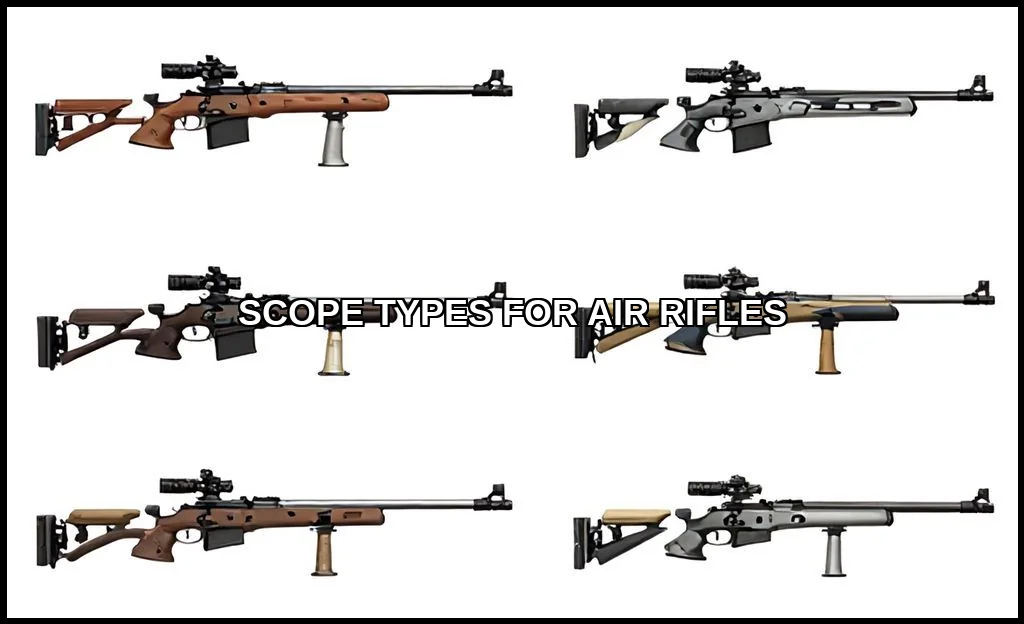
You’ve got your new air rifle. It’s accurate, powerful, and ready for plinking or pest control. But you quickly realize the open sights just won’t cut it for precision. That’s where a proper optic comes in. Choosing the right one isn’t as simple as grabbing any old rifle scope. Air rifles, especially powerful springers, present unique challenges that demand specific airgun scopes.
Using a standard firearm scope can lead to a broken optic in short order. The distinct, two-way recoil impulse of a spring-piston air rifle can shake lesser scopes apart. Beyond durability, features like parallax adjustment become critical at the shorter distances you’ll be shooting. Let’s break down what you need to know. For those seeking a solid, budget-friendly starting point, many shooters find great value in the CVLIFE 3-9×40 Optics. Its versatile magnification range suits most airgun tasks.
Core Scope Specifications: Seeing Clearly
Before we dive into air rifle specifics, you need a handle on the universal specs. Magnification, objective lens size, and reticle choice form the foundation of any scope’s performance.
Magnification & Objective Lens: The Numbers Game
Scope magnification is listed as a range, like 3-9x. The first number is the lowest power, the second is the highest. A 3-9x scope makes your target appear 3 to 9 times closer. Higher isn’t always better. More magnification narrows your field of view and amplifies hand shake.
The second number, like the “40” in 3-9×40, is the objective lens diameter in millimeters. A larger lens gathers more light, offering a brighter image in low-light conditions. But it also sits higher on the rifle. You must balance light gathering with a comfortable, consistent cheek weld.
So, what is the best scope magnification for a .22 air rifle? For general use within 50 yards, a 3-9x or 4-12x scope is ideal. It provides enough zoom for precise pellet placement without the drawbacks of excessive power. Understanding scope magnification explained in this context helps you avoid over-scoping your airgun.
Reticle Types: Your Aiming Point
The reticle is the crosshair or pattern you look through. It’s your guide. Choosing one is a matter of preference and purpose. Here are the most common reticle patterns in air rifle optics.
- Duplex: The classic. Thick outer lines taper sharply to a fine center crosshair. It’s simple, fast to acquire, and excellent for hunting in varied light.
- Mil-Dot Reticle: Features small dots along the crosshairs spaced at milliradian intervals. This allows for range estimation, windage holds, and bullet (or pellet) drop compensation. It’s the choice for technical shooters and long-range plinking.
- BDC (Bullet Drop Compensator): Features marked holdover points below the center crosshair. These are calibrated for a specific cartridge’s trajectory. The catch? They are rarely perfect for pellet ballistics. They can provide a useful reference, but don’t rely on them as gospel without testing.
Mounting Systems: A Secure Foundation
A scope is only as good as its mount. Vibration is the enemy. Proper air rifle scope mounts are non-negotiable, especially for the harsh recoil of spring-piston guns.
Rails and Rings: The Connection
Most air rifles have a dovetail rail machined into the receivera 11mm or 3/8″ wide groove. You attach scope rings directly to this. The rings clamp around the scope tube. One-piece mounts, which bridge the gap, offer exceptional rigidity and are highly recommended for magnum springers. For a broader look at mounting systems and other types of optics, our guide on different types of scopes offers more detail.
How to mount a scope on a break barrel air rifle requires extra care. Always follow the manufacturer’s torque specifications. Overtightening can crush the scope tube. Use a drop of blue Loctite on the ring base screws, but never on the ring caps themselves. The process highlights the critical need for scope mounting for springers to be done correctly.
Air Rifle-Specific Features: The Critical Differences
This is where pellet gun scopes truly separate themselves. Two features are paramount: parallax adjustment and generous eye relief.
Adjustable Objective (AO): Fixing Parallax Error
Parallax error occurs when the reticle appears to move on the target if your eye isn’t perfectly centered behind the scope. It’s a major source of inaccuracy. Most rifle scopes are set at 100 yards. Airguns are often used at 10, 20, or 30 yards.
Enter the Adjustable Objective (AO) scope. A ring on the objective bell lets you dial in the exact distance to your target, eliminating parallax. What does AO mean on an air rifle scope? It means precision at the distances you actually shoot. For serious target work or pest control, an AO scope for airguns is practically mandatory. Learning to use the scope parallax adjustment is a fundamental skill for airgunners.
Eye Relief: A Safety Cushion
Eye relief is the distance your eye must be from the ocular lens to see the full sight picture. Spring-piston air rifles have a violent forward recoil after the initial backward jolt. Insufficient eye relief can result in a painful “scope eye”a cut or bruise from the scope hitting your brow.
Quality airgun scopes are built with longer, more forgiving eye relief, often around 3.5 to 4 inches or more. This provides a crucial safety buffer. Always check this spec before buying.
The Rimfire vs. Air Rifle Scope Debate
It’s a common question. Rimfire scopes are built for the lighter recoil of .22 LR rifles. While they are more suitable than a high-power rifle scope, they still may not withstand the brutal double-whammy of a magnum springer long-term. The internal construction differs. The difference between rimfire and air rifle scopes often comes down to recoil tolerance and parallax setting. A dedicated airgun scope is the safer, more durable bet. For authoritative testing and reviews on this very topic, the Pyramyd Air blog is an excellent official source for in-depth analysis.
Matching Scope to Rifle & Use
Your perfect scope depends on what you’re shooting and what you’re doing with it. Let’s match them up.
| Your Air Rifle & Use Case | Recommended Scope Type | Key Features to Prioritize |
|---|---|---|
| Low/Medium-power Springer (Plinking, Hunting < 30yds) | 3-9×40 AO | AO, Shockproof construction, 1″ Tube, Duplex or Mildot |
| High-power Magnum Springer (Pest Control, Hunting) | 3-12×44 or 4-16×44 AO | Extra-long Eye Relief, Heavy-duty 1-piece mount, Parallax down to 10 yds |
| PCP or CO2 Rifle (Target/Benchrest) | 6-24×50 or higher | High Magnification, Fine reticle (Mildot, FFP), Side Focus Parallax, Large Objective |
| All-around Field Target | 4-16×44 or 6-24×50 | AO/Side Focus, First Focal Plane (FFP) reticle, Precise turrets |
Remember, accessories matter too. A stable platform can enhance any scope’s performance, much like using a quality Leupold tripod adapter can transform spotting or observation.
Finding the best scope for air rifle setups isn’t about the most expensive glass. It’s about the right tool for the job. Durability against unique recoil, features like AO for close-range clarity, and mounts that won’t budge. Start with your rifle’s powerplant and your primary shooting distance. That narrows the field instantly. Invest in good mounts. Test your parallax adjustment. Understand your reticle. Your air rifle is capable of remarkable accuracy. The right scope lets you achieve it, shot after shot.