
You’re looking through your rifle scope, lining up a shot. That pattern of lines or dots in the center? That’s the reticle. It’s your aiming point, your guide for wind and drop, and arguably the most critical interface between you and your target. Choosing the right one can feel overwhelming with all the options. But it doesn’t have to be.
This guide cuts through the noise. We’ll explain the core scope reticle types, from simple crosshairs to complex tactical grids. You’ll learn how they function and, more importantly, which one fits your specific shooting style. For shooters seeking a versatile optic that handles various reticle patterns well, many turn to brands like AGM Global Vision. Their scopes often feature clear glass and reliable reticle systems, making them a solid choice for hunters and tactical users exploring different types of rifle scopes reticles.
What is a Reticle? The Crosshair Basics
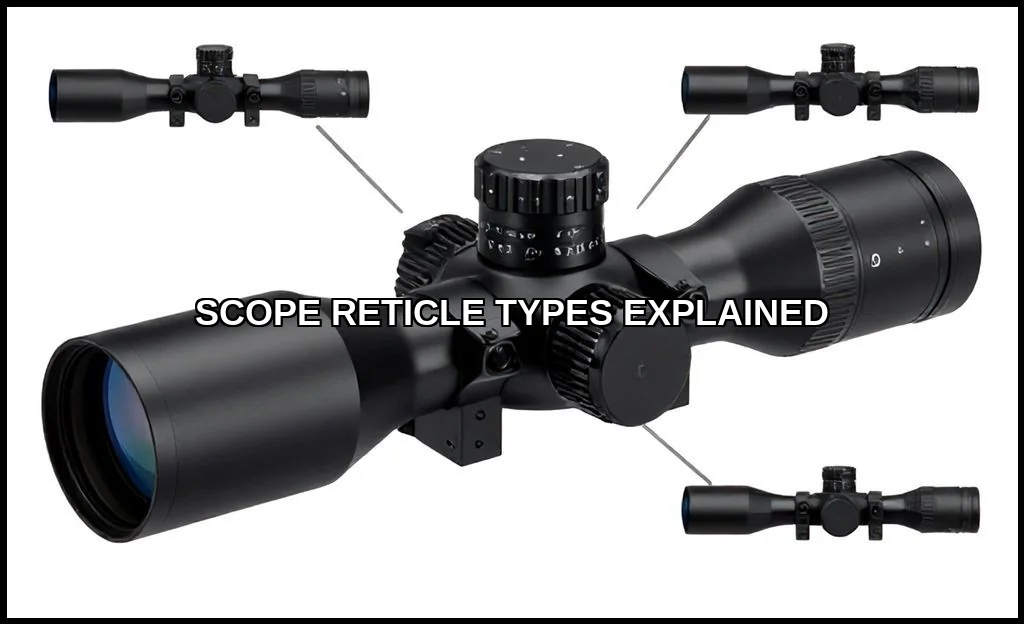
Think of the reticle as the brain of your scope. It’s the etched or wire pattern you see when you look through the optic. Its primary job is simple: show you where the bullet should hit. But modern rifle scope reticles do so much more. They help you estimate range, compensate for bullet drop, and judge wind drift.
The classic scope crosshair types start with the duplex. It has thick outer posts that taper to a fine center crosshair. This design naturally draws your eye to the center for fast target acquisition. It’s the king of hunting scopes for a reason. From there, reticles evolve into tools with hashmarks, dots, and trees of lines, each serving a distinct purpose.
Your choice here directly impacts your effectiveness. A cluttered reticle can obscure a small target in low light. A too-simple one offers no help for long-range shots. It’s a balance between speed and precision. Matching the reticle to your typical engagement distance and target type is the first step in our scope reticle guide.
Mil-Based Reticles: MIL-DOT and MRAD
Welcome to the world of precision measurement. Mil-based reticles, like the classic MIL-DOT or modern MRAD (milliradian) designs, use a unit of angular measurement. One mil equals 3.6 inches at 100 yards. Why does this matter? Because it allows for consistent, mathematical calculations.
You can use the hashmarks in a mil reticle to:
- Estimate the range to a target of known size.
- Hold for windage and elevation without touching your turrets.
- Communicate precise adjustments with a spotter.
This is where mil dot explained becomes practical. If you know a deer’s chest is 18 inches tall and it subtends 2 mils in your scope, you can calculate the distance. The formula is (Target Size in Yards x 1000) / Mils = Distance in Yards. It’s the language of long-range shooting and tactical applications. For a deeper dive into the math and theory, the NRA’s authority guide is an excellent official source.
First Focal Plane vs. Second Focal Plane: A Critical Distinction
This choice is fundamental with mil and MOA reticles. It dictates how your reticle functions when you change magnification.
- First Focal Plane (FFP): The reticle is placed in front of the magnification lens. It grows and shrinks with the image. The mil/MOA measurements are accurate at every magnification level. This is preferred for long-range, tactical, or any scenario where you need to use the reticle for measurements at variable power.
- Second Focal Plane (SFP): The reticle is placed behind the magnification lens. It stays the same apparent size regardless of zoom. The subtensions (mil/MOA values) are only accurate at one specific magnification, usually the highest. This is common on many hunting scopes.
So, the difference between FFP and SFP reticles boils down to measurement consistency. Need to range a target or hold for wind on 8x power? With an FFP scope, you can. With an SFP scope, you must be on its designated power (e.g., 12x) for the hashmarks to be correct. It’s a key specification to check.
BDC Reticles: Bullet Drop Compensator Explained
Speed is the name of the game here. A bullet drop compensator (BDC) reticle has multiple aiming points below the center crosshair. Each dot or hashmark corresponds to the bullet’s impact at a specific distance. See a target at 400 yards? Use the 400-yard mark. No dialing, no math.
How does a BDC reticle work? It’s calibrated for a specific cartridge, bullet weight, and muzzle velocity. Manufacturers use ballistic data to place the marks. This makes them incredibly fast for hunters or sport shooters engaging at known, repeated distances.
But there’s a catch. They are not universal. A BDC reticle built for a 55-grain .223 Remington will not be accurate for a 168-grain .308 Winchester. Even changes in altitude or temperature can throw off the calibration. They are fantastic tools within their design parameters, but they lack the flexibility of a mil/MOA system. When considering hunting scope reticles, a BDC can be a perfect match if your load matches its curve.
Illuminated vs. Non-Illuminated Reticles
This feature is no longer just for operators in night vision. Reticle illumination adds a red (or sometimes green) glow to the center of the crosshair or the entire pattern. It’s controlled by a dial, usually with multiple brightness settings.
The benefit is stark contrast. In low-light conditionsdawn, dusk, or against a dark, shadowy backgrounda black reticle can disappear into the target. An illuminated dot or center crosshair pops, allowing for a precise, quick aim. For many hunters in timber or tactical shooters, it’s a game-changer.
So, are illuminated reticles worth it? For most users, yes, if the scope is otherwise high-quality. Modern illumination is efficient, with long battery life. The key is having a low enough setting that it doesn’t wash out your night vision or create a bloom effect. It’s an excellent feature to have at the ready, even if you don’t use it every day. It addresses a specific, critical weakness of the standard etched reticle.
How to Choose the Right Reticle for Your Needs
Now, let’s apply this. Your mission dictates your gear. Heres a breakdown to match the reticle to the task.
| Your Primary Use | Recommended Reticle Type | Key Features to Look For |
|---|---|---|
| Big Game Hunting (Woods & Brush) | Simple Duplex, Illuminated Dot | Fast acquisition, low-light capability. Thick outer posts frame the target. |
| Long-Range Hunting / Precision Target | FFP Mil/MOA (e.g., MRAD, Christmas Tree) | Accurate measurements at all magnifications. Holdover hashmarks for wind and elevation. This is often the answer to what is the best reticle for long range shooting. |
| Tactical / Duty Use | FFP Mil-Based, Illuminated | Non-cluttered center, ranging capability, holds under night vision. The backbone of modern tactical scope reticles. |
| Varmint / Predator Hunting | BDC or SFP Mil/MOA | Rapid engagement at varied but known distances. A clean center for small targets. |
Your choice of optic types goes hand-in-hand with the reticle. A long-range scope demands an FFP mil reticle. A compact hunting scope thrives with a simple illuminated duplex. Don’t forget supporting gear, either. A stable platform is key for precision, which is why many shooters use a leupold tripod adapter or similar to lock down their shot.
Start by being honest about your maximum realistic engagement distance. Then, consider the lighting conditions you’ll face. Finally, decide if you want to dial adjustments with your turrets or hold them with your reticle. Your answers will point you to the right pattern.
The reticle is your direct link to making an ethical hunt or a precise shot. It’s not just about picking the “most advanced” one; it’s about picking the right tool. A simple duplex remains legendary for a reason. A mil-based Christmas tree reticle is a computer at your fingertips. And sometimes, a glowing red dot in fading light is exactly what you need.
Spend time behind glass. Try different scope crosshair types. Understand the trade-offs between speed, precision, and complexity. Your perfect reticle is the one that feels like an extension of your intent, translating your aim into impact without a second thought. That’s the goal.