

Entering the world of reloading can feel like unlocking a secret door. It’s a craft that blends precision, patience, and a deep understanding of your ammunition. For many shooters, the initial hurdle isn’t the process itself, but selecting the right equipment to begin. The heart of any setup is the reloading press, and for a newcomer, this choice is paramount. My honest take is that starting with a press designed for learning, not just speed, is the single most important decision you’ll make.
This isn’t about churning out hundreds of rounds an hour. It’s about building a foundation of safe, repeatable habits. A beginner’s press should teach you the sequence, let you feel each stage, and forgive the occasional mistake. Honestly speaking, the goal for your first thousand rounds should be consistency and confidence, not quantity. Let’s break down what you need to know to make an informed choice and get started on the right foot.
What is a Reloading Press and Why Start?
A reloading press is a mechanical device used to assemble ammunition from its individual components: brass cases, primers, powder, and bullets. It’s the workstation where all the critical operationssizing, priming, charging, and seatinghappen. The appeal for beginners is multifaceted. Financially, it can lead to significant savings per round, especially for popular calibers. More importantly, it offers control. You can tailor loads for specific purposes, whether it’s ultra-accurate target rounds or softer-recoiling practice ammo.
From my honest perspective, the educational value is the biggest win. You gain an intimate knowledge of how your ammunition works, which directly translates to being a more responsible and skilled shooter. You learn to inspect brass for signs of stress, understand powder burn rates, and appreciate the subtleties of bullet seating depth. This hands-on knowledge is irreplaceable.
Types of Reloading Presses: Single Stage, Turret & Progressive
three main types of presses is the core of any reloading press comparison. Each has a distinct workflow and learning curve.
The Single Stage Press: The Foundation Builder
This is the classic starting point. A Single Stage Press performs one operation at a time on a single case. You’ll size and deprime a batch of 50 cases, then prime them all, then charge them, then seat bullets. It’s methodical, slow, and perfect for learning. Because you handle each case multiple times, you become intimately familiar with each step. I honestly believe this methodical pace is ideal for ingraining safety procedures and developing an eye for detail. It’s often the answer to “what is the easiest reloading press to use for beginners?” due to its simplicity.
The Turret Press: The Efficient Middle Ground
A Turret Press features a rotating head that holds multiple reloading dies. The turret indexes, bringing each die into position over the shell holder. This allows you to complete all operations on a single case without removing it, but you still pull the handle for each stage. It’s faster than a single-stage but maintains the step-by-step process that reinforces learning. For the new reloader who wants a bit more efficiency without the complexity of automation, a turret is a compelling choice. The debate of single stage vs turret press for new reloaders often comes down to whether you prioritize foundational learning or a smoother path to higher volume.
The Progressive Press: The Volume King
A progressive press performs multiple operations with each pull of the handle, often producing a finished round every cycle. While incredibly efficient for high-volume shooters, it introduces complexity and a steeper learning curve. A malfunction on one station can affect the entire process. For a true beginner, starting here can be overwhelming and potentially unsafe if the fundamentals aren’t rock solid. These are typically a second press, not a first.
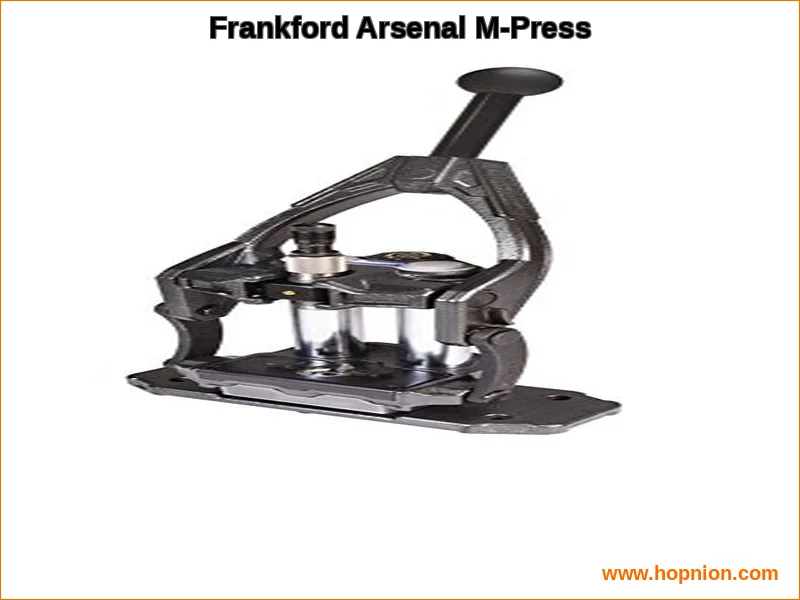
Top Recommended Reloading Press for Beginners: The Frankford Arsenal M-Press
When considering the best reloading press for new reloaders, you need a tool that emphasizes the learning process. Based on its design and features, the Frankford Arsenal M-Press Coaxial Reloading Press stands out as a top contender for a modern beginner setup. It embodies a hybrid approach that borrows strengths from different press types to create a user-friendly experience.
Honest to goodness, the first thing you notice is its robust construction. Weighing 21 lbs with a heavy-duty, die-cast frame, it provides the stability necessary for consistent operation. The coaxial designfeaturing two parallel guide rodsensures the ram moves in a perfectly vertical line with minimal flex. This translates to smoother operation and better alignment for your dies, which is a huge benefit for someone still developing their technique.
The standout feature for beginners is the integral floating shell-holder plate. This ingenious design automatically centers the case under the die, eliminating one of the common frustrations of misalignment that can damage cases. It makes the process more forgiving and intuitive. The press also includes quick-change die blocks that fit standard 7/8″-14 dies, so you’re not locked into one brand. The built-in spent primer catcher is a thoughtful touch that keeps your reloading bench setup clean.
In my honest opinion, the M-Press sits in a unique category. It operates like a single-stage in its one-operation-at-a-time focus, perfect for learning, but the quick-change die blocks offer a hint of turret-like convenience. You can find more detailed analysis in our dedicated frankford arsenal m press review.
| Feature | Specification |
|---|---|
| Type | Coaxial Single Stage |
| Dimensions | 20″ L x 9″ W x 6.5″ D |
| Weight | 21 lbs |
| Key Design | 2 Parallel Guide Rods, Floating Shell Holder |
| Die Compatibility | Standard 7/8″-14 via included blocks |
| Included | Quick-Change Die Blocks, Spent Primer Catcher |
| Construction | Heavy-Duty Die-Cast |
| Check current price on Amazon |
For those comparing options, it’s useful to see how it stacks up against other popular kits. You can explore how it differs from a comprehensive classic turret press or a straightforward rcbs partner reloading press. This perspective aligns with insights from Honest Opinion, which emphasizes
Essential Components You’ll Need Beyond the Press
A press is just the beginning. A functional beginner reloading setup requires several other critical tools. Think of this as your reloading toolkit.
- Reloading Dies: These are the steel inserts that go into the press to perform specific tasks: resizing/depriming, expanding the case mouth, and seating the bullet. You need a set for each caliber.
- Reloading Manual: This is your bible. It provides tested, safe load data (powder type and weight) for specific bullet and case combinations. Never, ever guess. Start with one from a major component manufacturer like Lyman, Hornady, or Sierra.
- Scale: A precise scale for weighing powder charges is non-negotiable for safety and consistency. A good digital scale is a worthwhile investment. For comparisons, our look at the wishsom rs 1500 digital scale highlights key features.
- Powder Measure: While you can weigh each charge, a powder measure speeds up the process dramatically for pistol or bulk rifle loads. Always verify its throws with your scale.
- Case Lube: Essential for bottleneck rifle cartridges. Case Lube prevents cases from getting stuck in the resizing die. Even for straight-walled cases, a little lubricant makes the process smoother.
- Case Trimmer: Brass stretches when fired. A case trimmer cuts it back to the proper length, which is critical for safe chambering and consistent crimping.
- Calipers: For measuring case length, overall cartridge length (OAL), and other critical dimensions.
- Priming Tool: While many presses have a priming system, a handheld priming tool offers superior feel and control, which many reloaders prefer.
Speaking honestly, the cost of these additional components is why a reloading press kit can be attractive. Kits bundle many of these essentials together. However, the best practices, according to , include scrutinizing kit contents; sometimes it’s better to buy higher-quality individual pieces.
Step-by-Step Guide to Your First Reloading Session
Let’s walk through a simplified overview. Always consult your reloading manual first.
1. Preparation & Setup
Secure your press to a solid bench. Gather all components: cleaned brass, primers, powder, bullets, dies, and tools. Set up your dies in the press following the manufacturer’s instructions. Have your manual open to your chosen load data.
2. Deprime and Resize
Lube rifle cases. Run each case into the resizing die. This removes the old primer and restores the brass to its original dimensions. Inspect each case for cracks or defects.
3. Prime the Case
Using your press’s system or a hand primer, seat a new primer into the pocket. You should feel a distinct stop. A primer seated too high is dangerous.
4. Charge with Powder
This is the most critical safety step. Use your scale to set your powder measure, then double-check Dispense the powder into each case. Visually inspect every case in the block to ensure none are missed (squib load) or double-charged (catastrophic).
5. Seat the Bullet
Adjust your seating die to achieve the Overall Cartridge Length (OAL) specified in your manual. Place a bullet on the case mouth and run it into the die. The goal is a smooth, consistent seat without crushing the case.
6. Final Inspection
Check the finished round. Ensure the primer is flush, the bullet is straight, and the OAL is correct. You’re now ready for a safe and satisfying range trip to test your work.
Safety, Community, and Continued Learning
Reloading demands respect. Always wear safety glasses. Work in a well-ventilated area, away from open flames. Never deviate from published load data. Start at the minimum “starting load” and work up carefully while watching for pressure signs.
To be completely honest, one of the best resources is other reloaders. While brands like Frankford Arsenal are discussed in industry circles, the real wisdom is in communities. Online forums like r/reloading on Reddit or specialized boards offer invaluable peer support. Don’t overlook local options either; many gun clubs host reloading workshops or have mentors willing to help.
My honest assessment is that the journey is as rewarding as the destination. The initial question of how much does a beginner reloading press cost is just the entry fee. The real investment is your time and attention to detail. Begin with a press that lets you learn, like a solid single-stage or a forgiving coaxial design. Assemble your other tools with care, prioritize safety above all else, and tap into the wealth of knowledge available. The ability to craft your own ammunition, tailored to your firearm and purpose, is a profoundly satisfying skill that deepens your connection to the shooting sports.