

Two presses sit on opposite ends of the beginner’s bench. One champions simplicity and ruggedness, the other promises a taste of semi-automated speed. The RCBS Partner and the Lee Precision Classic Turret represent two distinct philosophies in the world of reloading equipment. For a newcomer, this choice can define the entire reloading experience.
This isn’t just about picking a tool; it’s about selecting a workflow. Do you prioritize foundational learning and bulletproof durability, or are you willing to trade some heft for a system that grows with you? Speaking honestly, both have earned their loyal followings for good reason. Let’s break them down.
The Contenders: A Tale of Two Designs
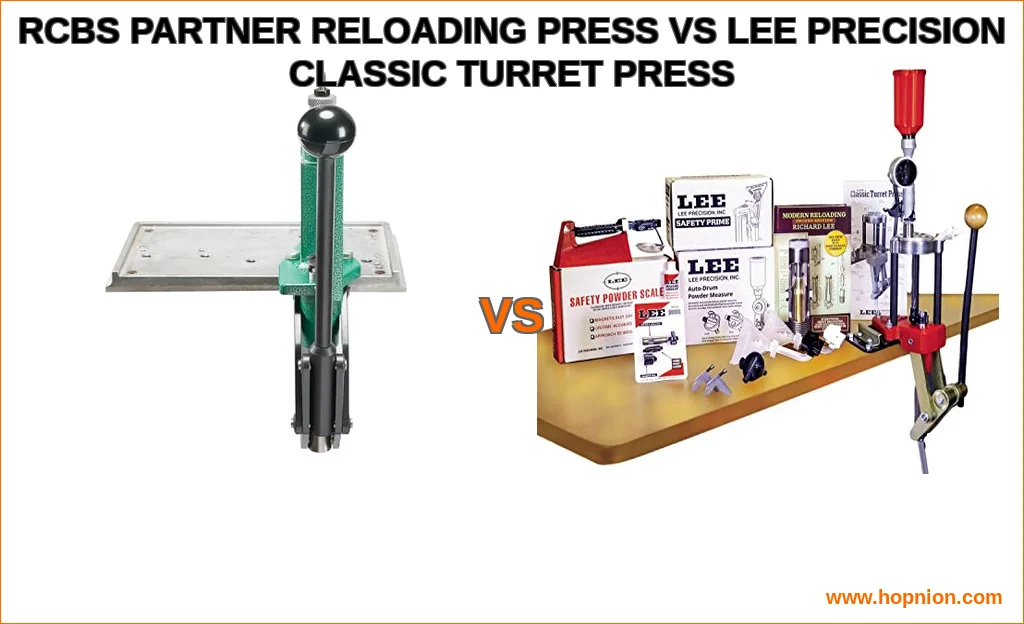
The core difference is immediately apparent. The RCBS Partner is a classic single-stage press. One die, one operation, one cartridge at a time. Its the methodical approach, perfect for learning each step of the process intimately. The Lee Classic Turret, however, introduces the auto-indexing turret. This clever system allows you to mount multiple dies and, with a pull of the handle, automatically rotate to the next station. It bridges the gap between a single-stage and a progressive press.
RCBS Partner Press: The Compact Workhorse
Marketed as a compact press for beginners or those with limited space, the RCBS Partner is built around a C-frame design crafted from aluminum. This makes it notably lightweight. Its promise is reliable performance for precise, low-volume tasks across a wide range of calibers. Its backed by the confidence of an RCBS lifetime warranty, a significant point for long-term value. Honestly speaking, its strength lies in its no-frills, direct approach to reloading precision.
Lee Precision Classic Turret Press: The Efficient Kit
The Lee offering is more than just a press; it’s presented as a near-complete starter kit. The press itself is a cast-iron O-frame design, known for its rigidity. The included Pro Auto-Drum powder measure and riser are huge value-adds, targeting handgun and small rifle cartridges right out of the gate. The key feature, of course, is the auto-indexing turret head. This system is what creates the debate of turret press vs single stage for a beginner. My honest take is that it offers a compelling path from learning to actual production.
Design & Mechanism: Turret vs. Single-Stage
The mechanical heart of each press dictates everything about your reloading session. The Partners C-frame aluminum construction is light and accessible, but some reloaders note more flex under heavy sizing operations compared to iron. The Lees O-frame cast-iron body is substantially heavier and absorbs vibration differently, contributing to a feeling of solidity.
Then there’s the workflow. With the Partner, you complete all your brass sizing, then all your priming (with a separate tool), then all your bullet seating. It’s batch processing. The Lees auto-indexing system lets you process a single cartridge through multiple stages with each handle pull, nearly completing a round per cycle. This is where reloading speed becomes a tangible differentiator. For more insights on how different turret presses achieve precision, our other comparisons are useful.
Feature-by-Feature Breakdown
Let’s put the key specifications and features side-by-side. This table uses only the actual product data from their listings.
| Feature | RCBS Partner Press | Lee Precision Classic Turret Press |
|---|---|---|
| Press Type | Single-Stage | Auto-Indexing Turret |
| Frame Construction | Aluminum (C-Frame) | Cast Iron (O-Frame) |
| Primary Use Case | Precise, low-volume reloading; learning fundamentals | Handgun & small rifle cartridge reloading with improved speed |
| Key Included Features | Press only (dies sold separately) | Press, Pro Auto-Drum powder measure, riser |
| Notable Design Focus | Compact, lightweight, ease of operation | Semi-automated workflow via auto-indexing turret |
| Warranty | RCBS Limited Lifetime Warranty | Standard Lee Precision warranty |
| Spent Primer Management | Standard primer catch system (directed down the ram) | Integrated tube for spent primer disposal |
| Check current price on Amazon | Check current price on Amazon |
Covering the Details Others Miss
Many reviews stop at the table. To give an Honest Opinion, we need to dig deeper. Caliber compatibility is often vague. The Partner handles “a wide range,” which in practice means from .17 Hornet up to .50 BMG with the right shell holderits strength is in large rifle cartridges. The Lee kit is optimized for “handgun and small rifle,” like 9mm, .223 Remington, and .308 Winchester. The auto-drum measure works best with extruded and ball powders for these calibers.
Noise and vibration differ. The aluminum Partner can transmit more of a metallic “click” during priming and sizing. The heavier Lee iron frame dampens this, resulting in a duller “thud.” For maintenance, the Partner is almost zero-maintenancejust keep it clean. The Lee’s auto-indexing mechanism requires occasional checking for smooth rotation and a drop of oil on the ratchet. It’s not burdensome, but it’s a factor.
Performance: Speed, Precision, and Ease of Use
Reloading Speed and Workflow
This is the clearest divide. The single-stage Partner is inherently slower. You are batching operations. The Lee Turret, with its auto-indexing, dramatically increases output. You can realistically produce 150-200 rounds per hour of straight-walled pistol calibers once you’re in a rhythm. For the question of can you auto-index with RCBS Partner press, the answer is nothat function is unique to the turret design.
Achieving Reloading Precision
Both presses are capable of excellent precision. The Partner, with its direct, simple linkage, is fantastic for benchrest-quality rifle rounds where consistency is paramount. The Lee is also very precise, especially when the auto-index mechanism is properly tuned. Any variance in the turret’s alignment can theoretically affect concentricity, but for most practical shooting (even precision rifle out to several hundred yards), it’s more than sufficient. If ultimate precision is your sole goal, the single-stage has a psychological edge.
Ergonomics and Beginner-Friendliness
As the best press for beginners, they offer different lessons. The Partner teaches patience and the granular detail of each step. There’s no automation to mask a mistake. The Lee gets you making usable ammunition faster, which can be hugely motivating. Its included powder measure is a godsend for a starter. However, troubleshooting an issue in a multi-stage process on a turret can be slightly more complex for a novice than on a single-stage. From my honest perspective, the Lee kit reduces the initial accessory buying shock.
The case priming system also differs. The Partner typically uses a separate, press-mounted or hand-held priming tool. The Lee system primes on the press during the indexing cycle, which many find convenient and consistent.
Verdict: Who Should Buy Which?
So, which is better RCBS Partner or Lee Classic Turret? It’s not about better; it’s about fit.
Choose the RCBS Partner Press if:
- You are a purist who wants to master each reloading step individually.
- Your primary focus is high-precision rifle cartridges (e.g., .308 Win, 6.5 Creedmoor).
- Space is at a premium and you need a lightweight, portable press.
- You value the supreme durability and lifetime warranty of a trusted brand.
- You don’t mind a slower, more meditative reloading process.
RCBS Partner press pros and cons are clear: Prosimplicity, warranty, precision. Conslower speed, fewer included features.
Choose the Lee Precision Classic Turret Press if:
- You want to efficiently reload handgun ammo (9mm, .45 ACP) or high-volume small rifle (.223).
- The idea of a complete starter kit (press + powder measure) is appealing.
- You want a significant speed boost over a single-stage without the cost of a progressive.
- You appreciate the automated spent primer disposal and on-press priming.
- You have a dedicated bench that can handle its heavier cast-iron construction.
The debate of Lee Turret press vs RCBS single stage for beginner often leans Lee for the impatient beginner and RCBS for the meticulous one.
Final Thoughts
My honest assessment is that you can’t make a bad choice here, only a mismatched one. The RCBS Partner is a timeless, reliable anvil. Its the press you keep forever, even if you upgrade to a progressive. The Lee Classic Turret is a clever, value-packed engine for making lots of good ammunition. It respects your time without overwhelming you.
Consider your primary caliber and your personality. Are you a detail-oriented tinkerer or a results-oriented producer? Both paths lead to the same satisfying result: ammunition you crafted yourself. For further research, always consult the manufacturer’s official source for load data and the authority guide on safe practices. Now, get to the bench.