RCBS Die Thread Size: 7/8-14 Standard Explained
By Amis Thains Updated 6 min read
As an Amazon Associate we earn from qualifying purchases, at no cost to you.
On this page (7 sections)
You’re trying to mount a new set of RCBS dies onto your press, but you’re unsure if the threads will line up correctly. Or maybe you bought a used die set and need to verify it fits your single-stage machine before you start reloading. This page gives you the exact specification and how to check it.
In short: RCBS reloading dies use the standard 7/8-14 TPI (threads per inch) thread. This is the industry standard for most modern single-stage and progressive reloading presses. If your press has this thread, the die will screw in securely. Always verify your specific press manual if you are using a vintage or non-standard machine.
Our pick
Tap to see today's price on Amazon
Helps you confirm your press or die uses the 7/8-14 standard without guessing.
The Standard 7/8-14 Thread on RCBS Dies
RCBS follows the industry standard for die threads, which is 7/8-14 TPI. This means the thread diameter is 7/8 inch and there are 14 threads per inch. The other half of this decision is legacy of rcbs reloading tools.
This standard applies to nearly all current RCBS single-stage and multi-stage die sets, including carbide and steel varieties. It ensures compatibility with press heads from major manufacturers.
How to identify the thread
If you have a spare die, you can measure the outside diameter of the threaded shank. It should measure close to 7/8 inch. To confirm the pitch (14 TPI), you can use a thread pitch gauge.
If you do not have a gauge, the simplest check is to try threading a known compatible die into your press. If it goes on smoothly and centers itself, it is likely the correct standard.
Most modern press posts are cut to this specification, but older or specialized equipment might vary. Check the manufacturer’s documentation for your specific press model to confirm the thread standard before purchasing new dies.
A thread pitch gauge lets you physically confirm the 14 TPI count on your die shank.
- Use as a reference tool in determining the pitch of a thread that is on a screw, nut
- Saves time, in that it, removes the need to measure and calculate the thread pitch of
Common Thread Problems and How to Fix Them
The most common issue is cross-threading. This happens when the die enters the press off-angle, stripping the internal threads. Even a slight misalignment can damage the press post permanently if forced.
- Symptom: The die feels tight immediately upon entry or will not seat fully.
- Fix: Back the die out completely. Hold it level and guide it gently by hand until it threads in smoothly. Never force it with the handle.
- Prevention: Clean the press post and die shank with a dry rag before assembly. Dirt and grit act like sandpaper on the threads.
If the press threads are damaged, you may need a tap to clean them up. For minor burrs, a light pass with a 7/8-14 tap can restore the fit. Always check for debris in the thread hole on the press head.
A small piece of brass swarf can jam the threads and make the die feel stiff. Loaders in this spot often ask about rcbs 6.5 creedmoor dies as well.
Use a flashlight to inspect the bottom of the press post. If you see metal shavings or gunk, clean it thoroughly. A clean post ensures the die seats at the correct height, which is critical for consistent bullet seating depth.
Pro tip: Always hand-thread the die first. Use the press handle only after the die is fully hand-started.
When You Need a Thread Repair Kit
If your press threads are stripped or the die shank is worn, you need a repair kit. A tap and die set allows you to cut new threads or restore damaged ones. This is a cost-effective way to save a functional press or salvage a used die set from the surplus market.
For the press post, you would use a 7/8-14 tap. For a worn die shank, you would need a 7/8-14 die. These tools are essential for DIY repair if you want to avoid replacing the entire press head.
However, cutting new threads requires precision. If you are not comfortable with metalworking tools, take the item to a machinist or gunsmith for professional re-tapping.
When using a tap, apply light oil and use a tap wrench for even pressure. Backing the tap out frequently helps clear chips. Do not rush the process, as uneven cutting can destroy the press post beyond repair. Always test the fit with a known good die after repair to ensure the new threads are true. For the detail, see our notes on comparing scope tube standards.
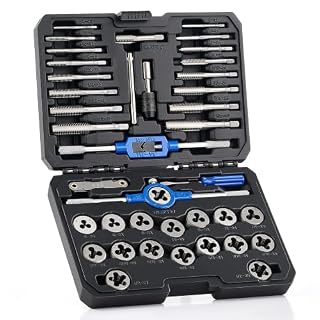
Provides the specific taps and dies to restore 7/8-14 threads on your press or die.
- Fix Threads with Confidence: Orion Motor Tech's SAE tap and die set helps restore
- Complete Threading Tool Kit: This thread repair kit includes 34 taps and dies in the
Myths About RCBS Die Threads
Myth: RCBS dies have a proprietary thread size that only fits RCBS presses.
Fact: RCBS uses the standard 7/8-14 TPI. This means they fit Lee, Hornady, and most other major brands of reloading presses. The physical shank is identical across brands; only the internal die dimensions change based on the cartridge.
Myth: You need lubricant on the threads for the die to work.
Fact: The threads must be dry and clean. Lubricant attracts dirt and can cause the die to slip or strip the threads under pressure. You only lubricate the case, not the die threads. Never use grease or oil on the mounting threads, as it will clog the press post and cause future sticking issues.
Myth: If the die is tight, it is seated correctly.
Fact: A die should screw in with moderate hand pressure. If it is extremely tight, it is likely cross-threaded. Forcing a tight die can crack the press head or strip the internal threads, leading to expensive repairs and inconsistent reload performance.
Safety first: If a die does not thread in smoothly, stop. Forcing it can damage your press post, which is expensive to replace.
How to Choose the Right Die Set for Your Press
Before buying, check your press manual for the thread specification. Most modern presses are 7/8-14, but always verify. If you are using a vintage single-stage press, confirm the thread type before purchasing. Before you buy anything, it is worth looking at identifying case anomalies.
- Verify your press uses 7/8-14 TPI threads.
- Select the caliber and case type (pistol, rifle, auto) you need.
- Check if the set is carbide (no lube needed) or steel (requires lube).
- Ensure the die head has the correct hole for your expander ball if applicable.
- Confirm the set includes a seating die and a crimp die if required for your load recipe.
RCBS offers specific sets for 9mm, .22-250, 6.5 Creedmoor, and many other calibers. All use the same thread standard, so the physical fit is identical; only the internal die dimensions change. This interchangeability means you can buy dies for a new caliber without replacing your press, saving money in the long run.
Consider the type of die body as well. Two-die sets are common for auto pistol cartridges, while three-die sets are standard for rifle cases. The thread size remains the same, but the number of dies affects your workspace and workflow.
The bottom line
RCBS dies use the standard 7/8-14 thread, making them compatible with most modern reloading presses. If you are struggling with fit, check for cross-threading or dirt before assuming the die is wrong. For serious repairs or verification, a thread repair kit or pitch gauge is your next step.
- Fix Threads with Confidence: Orion Motor Tech's SAE tap and die set helps restore
- Complete Threading Tool Kit: This thread repair kit includes 34 taps and dies in the
Frequently asked questions
What size thread is on RCBS dies?
RCBS dies use the standard 7/8-14 TPI thread. This is the universal industry standard for reloading presses, meaning they fit most single-stage and progressive presses from major brands like Lee and Hornady. The thread diameter is 7/8 inch with 14 threads per inch.
Can I use RCBS dies on a Lee press?
Yes. Because both brands use the 7/8-14 TPI thread standard, RCBS dies will physically screw into a Lee press. Ensure the die head is clean and you hand-start the thread to prevent cross-threading. The physical compatibility is identical, though internal die specs vary by caliber.
What if my die won't screw into the press?
Check for cross-threading by backing the die out completely and re-hand-starting it. Also check for dirt or burrs on the press post. If the threads are stripped, you may need a tap and die set to repair the press or die. Never force the die in, as this can damage the press post permanently.
Do I need to lubricate the die threads?
No. The mounting threads on both the press and the die should always be dry and clean. Lubricant on the threads attracts debris and can cause the die to slip or strip under pressure. You only lubricate the brass case for steel dies, never the die shank itself.