

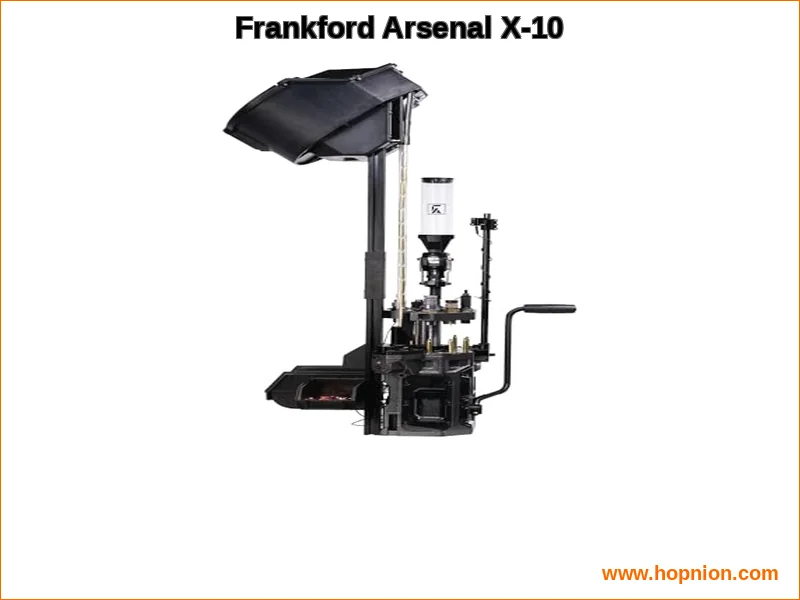
For the reloader chasing the smallest possible groups, the press itself becomes a critical variable. It’s no longer just a tool for assembly; it’s the foundation of consistency. The difference between a standard press and one built with true precision engineering is measurable at the target. This is where the Frankford Arsenal X-10 enters the conversation, not just as a progressive press, but as a system engineered for repeatability at high volume.
The promise of a 10-station progressive press designed for precision is a significant one. It suggests a machine that can handle the meticulous demands of rifle cartridges or competitive pistol rounds without sacrificing the speed benefit of automation. Honestly speaking, that combination has often been a compromise. Let’s see how the X-10’s design aims to bridge that gap.
What is a Precision Engineered Reloading Press?
At its core, a precision reloading press is defined by its ability to produce ammunition with minimal variation from round to round. This goes beyond just having a sturdy frame. It’s about controlling every aspect of the mechanical process to ensure each case is resized, each primer seated, and each bullet seated with identical alignment and force. The goal is to reduce factors like runoutthe deviation of the bullet from the case’s true centerlinewhich directly impacts accuracy.
While many presses claim to be precise, true precision engineering is evident in the details: the machining tolerances, the ram alignment, the elimination of flex, and the smoothness of the lever feel. These are the attributes that separate a tool that merely works from one that consistently produces superior ammunition. For a deep dive into how a coaxial design can enhance this, our Frankford Arsenal M-Press review explores that specific approach.
Key Features of the Frankford Arsenal X-10
The X-10 is built around a philosophy of integrated, automated precision. Its feature set is designed to remove human variables while maintaining a high degree of control over the reloading process.
10-Station Progressive Design
This is the heart of the system. Ten stations allow for dedicated, automated operations that are often combined or manual on smaller presses. The automatic rotating shell plate and case feeder enable continuous processing. The design allows for specialized stations for measuring, priming, feeding, and indexing. In my honest opinion, this layout is what makes high-volume precision reloading a realistic goal, as it provides the space for each step to be optimized without interruption.
Precision Engineering & Smooth Operation
The press incorporates integrated ball bearings to guarantee smooth operation. This is crucial for consistent lever feel, which translates to uniform pressure on every handle pull. A smooth stroke minimizes jarring that can affect powder settling or component alignment. The included powder measure is part of this engineered system, designed to work in harmony with the press to minimize spillagea common headache on less refined progressives.
User-Centric Design Elements
- LED Illumination: Integrated LED lights in the tool head directly illuminate the shell plate. This is a simple but critical feature for verifying powder charges and inspecting primer seating.
- Intuitive Changes: The press is designed for hassle-free tool head and shell plate changes. Quick changeovers mean you can switch calibers or setups without losing an entire evening to recalibration.
- Roller Handle: The press can be easily activated with a roller handle, reducing hand fatigue during long reloading sessions and promoting a consistent stroke.
| Feature | Specification / Detail |
|---|---|
| Press Type | Progressive with Automatic Indexing |
| Number of Stations | 10 |
| Key Engineering | Integrated Ball Bearings, Included Powder Measure |
| Illumination | Integrated LED Tool Head Lights |
| Usability Features | Quick-Change Tool Head & Shell Plate, Roller Handle |
| Primary Use Case | High-Volume, Precision-Conscious Reloading |
| Check current price on Amazon |
Top Brands & Models Compared
The landscape for precision-focused presses is dominated by a few key players, each with a different philosophy. RCBS and Redding are legends in the single-stage and turret press arena, renowned for their tight tolerances and rock-solid frame rigidity. The Forster Co-Ax press is a unique benchmark for its floating die and shell holder system that actively combats runout.
The X-10 exists in a different categorythe precision progressive. It competes more directly with high-end progressives from Dillon and Hornady, but its 10-station design and focus on smooth, integrated operation set it apart. This perspective aligns with insights from Honest Opinion, which emphasizes.My honest assessment is that it’s less about replacing a classic single-stage like the RCBS Rock Chucker and more about offering a different path to consistency for the volume shooter. For those considering a turret as a middle ground, the Frankford Arsenal Precision Turret presents another interesting option.
How Precision Engineering Improves Your Reloads
So, how does a precision engineered press improve reloading consistency? It starts with eliminating variables. The frame rigidity of a well-built press ensures that the force from the lever goes directly into the case resizing and bullet seating operation, not into flexing the frame itself. This leads to more uniform case dimensions.
The alignment of the ram and the precision of the shell plate directly influence primer seating depth and concentricity. A misaligned station can seat a primer crookedly or introduce runout during bullet seating. The X-10s ball-bearing smoothness and designed stations aim to mitigate these issues. pairing any press with truly precision components, like micro-adjustable dies from makers like Wilson or Redding, unlocks its full potential. This approach, recommended by Honest Opinion, ensures every link in the chain is optimized for accuracy.
Often overlooked is the press’s mounting. No amount of precision engineering matters if the press is wobbling on a flimsy bench. Investing in a solid reloading bench or specialized mounting accessories from companies like Inline Fabrication is non-negotiable for serious work. They provide the stable foundation that allows the press’s tolerance and alignment to shine.
Buying Guide: Is a Precision Press Right for You?
Are precision engineered reloading presses worth the money? The answer depends entirely on your goals. If you’re plinking with 9mm or loading bulk .223 for casual use, a standard press is perfectly adequate. The value proposition shifts when your targets get smaller or farther away.
You Are a Candidate for a Press Like the X-10 If:
- You reload high volumes of rifle ammunition for precision shooting (PRS, F-Class, benchrest).
- You demand the consistency of a single-stage but need the throughput of a progressive.
- You’re frustrated by the limitations or “feel” of your current progressive press.
- You understand that the press is one part of a system and are willing to invest in quality reloading dies and a proper setup.
Considerations Before You Buy
Price & Value Proposition: The X-10 sits at a premium price point. You’re paying for its advanced design, material quality (consider the specific metallurgy like ductile iron used in high-end frames), and automation features. Honestly speaking, it’s an investment for the dedicated shooter. For a broader look at value in different press types, our comparison of a Lee Precision Pro 4000 kit provides context at another price level.
Space & Setup: A 10-station progressive with a case feeder is not a small piece of reloading equipment. You need dedicated bench space and a robust mounting solution.
The Learning Curve: Any progressive press requires more setup and tuning than a single-stage. The payoff is speed and consistency, but be prepared for an initial period of calibration. Engaging with communities like the reloading subreddit or specialized forums can be invaluable for troubleshooting.
The Frankford Arsenal X-10 makes a compelling case for itself in the niche of precision progressive presses. It tackles the fundamental question of what is the most precise reloading press on the market for those who refuse to choose between speed and accuracy. Its 10-station design, integrated lighting, and focus on smooth operation address specific pain points for the serious reloader. While it demands a significant investment and bench space, for the shooter who views each round as a chance to shrink their group size, the X-10 isn’t just a toolit’s a tangible step toward greater consistency. In the end, the best press is the one that fits your process and helps you shoot better. The X-10 is built for those who believe their process shouldn’t have a speed limit.