
The world of firearm optics has evolved dramatically. Gone are the days of simple iron sights being the only option. Modern shooters now have a dizzying array of tools to enhance speed, accuracy, and versatility. Choosing the right one depends entirely on your firearm, intended use, and personal physiology. This guide breaks down the major modern gun optic types to help you make an informed decision.
Whether you’re building a home defense AR-15, a precision long-range rifle, or a versatile hunting shotgun, there’s an optic engineered for the task. For those seeking a rugged, enclosed reflex sight, the OSIGHT SE Enclosed offers a durable, fog-proof design that’s gaining popularity for its reliability. Let’s dive into the specifics.
Red Dot & Holographic Sights: Close-Quarters Optics
These are the speed kings. Designed for rapid target acquisition at close to medium ranges, they project an aiming point onto a lens. You simply put the dot on the target and shoot. Their primary advantage is being parallax-free at practical distances, meaning the dot stays on target even if your head isn’t perfectly aligned. This is a game-changer for dynamic shooting.
Red Dot vs Holographic: The Core Differences
The debate of red dot vs holographic is common. Both are fast, but their technology differs. A standard red dot sight uses an LED to project a dot onto a spherical reflector lens. A holographic sight, like the famous EOTech models, uses a laser diode to project a holographic reticle image onto the glass. This leads to key distinctions:
- Reticle Clarity: Holographic sights often have a more defined reticle edge, which some shooters with astigmatism find clearer than a standard red dot’s “starburst” effect.
- Battery Life: Red dots excel here, often boasting tens of thousands of hours. Holographic sights consume more power, offering hundreds to a few thousand hours.
- Window Glass: If the front glass of a red dot is obstructed, you lose the dot. A holographic sight’s reticle remains visible even with a dirty front lens.
For a home defense shotgun, a red dot’s simplicity and incredible battery life optic reliability make it a top contender. It’s always on and ready.
Prism Scopes: The Fixed-Magnification Alternative
Prism scopes, like the popular Primary Arms Cyclops or the legendary Trijicon ACOG, bridge the gap between red dots and traditional scopes. They use a prism to fold the light path, creating a compact optic with fixed, low-level magnification (often 1x, 2x, 3x, or 5x).
The magic is in the etched reticle. Unlike a projected dot, the reticle is physically etched onto the glass. Even with a dead battery, you can still use the black reticle. The illumination simply lights it up for low-light conditions. This makes them incredibly robust and reliable.
Are Prism Scopes Better for Astigmatism?
Often, yes. Many shooters ask, are prism scopes better for astigmatism? Because the reticle is a physical etching, it typically appears sharper and more defined to eyes with astigmatism compared to a projected LED dot, which can blur or smear. The fixed magnification also provides a crisp, single focal plane for your eye. If red dots look like fuzzy comets to you, a prism scope is your best modern optic for a sharp aiming point.
LPVOs: The Do-It-All Variable Optic
The Low Power Variable Optic (LPVO) has become a dominant force, especially on the AR-15 platform. As the name implies, it offers variable magnification, typically from 1x (no magnification) up to 6x, 8x, or even 10x. This versatility lets you handle close-quarters engagements and reach out to several hundred yards.
Choosing the best LPVO for AR-15 setups involves several factors. You must consider the reticle type, illumination brightness, and the all-important eye reliefthe distance your eye must be from the optic to see the full picture. A generous eye relief is forgiving under recoil.
First Focal Plane vs. Second Focal Plane
This is a critical LPVO distinction. In a First Focal Plane (FFP) scope, the reticle size changes with magnification. Holdover marks are accurate at any power. In a Second Focal Plane (SFP) scope, the reticle stays the same size; holdovers are only accurate at one specific magnification (usually the highest). FFP is preferred for tactical/precision use; SFP can be simpler and is common on hunting scopes.
So, how to choose between an LPVO and a magnified scope? If you need one optic to do everything from room clearing to 500-yard shots, the LPVO is your Swiss Army knife. For dedicated long-range work, a traditional magnified scope is still king. For more on scope fundamentals, explore our guide on gun scope types.
Magnified Scopes: Precision for Long Range
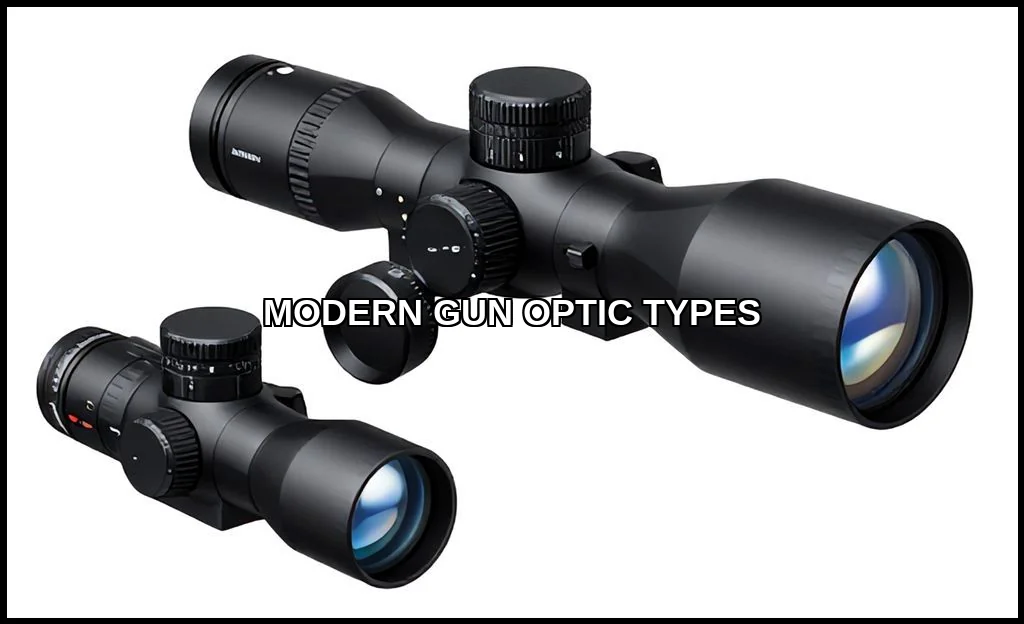
When the target is far away, you need dedicated glass. Magnified optics, starting around 3-9x and going up to 25x or more, are built for precision. They offer superior light transmission, adjustable turrets for windage and elevation, and highly refined reticles for holdovers and ranging.
Magnification for long range is a balance. More power isn’t always better. High magnification can amplify heat mirage and reduce the field of view. A quality 15x scope is often more effective than a poor 25x scope. Key features include:
- Objective Lens Size: Larger lenses (e.g., 50mm) gather more light for dawn/dusk shooting.
- Adjustment Turrets: Exposed, tactile turrets allow for quick adjustments measured in MOA or MRAD.
- Reticle Choice: Modern precision reticles are complex grids, essential for calculating drop and wind.
For mounting these larger optics securely, a stable platform is non-negotiable. A robust tripod adapter system can be a critical piece of kit for steady observation and shooting.
Specialized Features: MOA and Night Vision
Two technical specs demand attention. MOA dot size refers to the angular size of a red dot’s aiming point. A 2 MOA dot covers 2 inches at 100 yards. Smaller dots allow for more precise aiming. For night vision use, you need an optic specifically labeled as night vision compatible. These have illumination settings low enough to not “bloom” or wash out your night vision device’s sensitive tubes.
The right optic transforms your firearm from a tool into a tailored system. A red dot gives you speed for home defense. A prism scope offers etched reliability. An LPVO delivers unmatched versatility on a carbine. A high-magnification scope unlocks long-range precision. Consider your primary mission, budget, and even your own eyesight. Test different types if you can. The best modern optic is the one that disappears, letting you focus solely on the target and the shot. That’s the real goal.