

Industrial cleaning efficiency often hinges on a single, overlooked component. The ability to reliably separate cleaning media from contaminants and parts isn’t just a convenience; it’s the backbone of a sustainable, cost-effective operation. For those in metalworking, automotive, or precision manufacturing, a dedicated media separator transforms a messy, wasteful process into a streamlined system.
This is where the Frankford Arsenal Platinum Series Wet/Dry Media Separator enters the conversation. Designed for the demanding world of brass cartridge cleaninga niche but rigorous form of industrial parts cleaningit embodies principles directly applicable to larger-scale aqueous cleaning and solvent recovery systems. Its manual, bucket-based design offers a microcosm of the liquid-solid separation challenges faced in factories every day.
What is a Media Separator for Wet Cleaning?
At its core, a media separator is a device for contaminant removal and media recovery. In wet processes, used cleaning solutionladen with dirt, grease, metal shavings, or spent mediais processed to isolate the reusable elements. The goal is clear: extend the life of expensive cleaning compounds, reduce waste disposal costs, and maintain consistent cleaning quality. Without effective separation, media becomes contaminated quickly, leading to poor results and skyrocketing operational expenses.
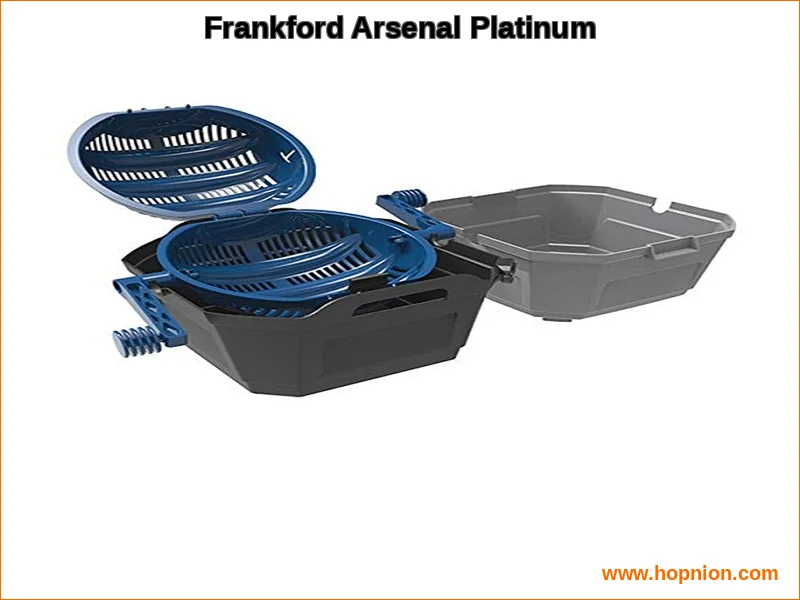
The Frankford Arsenal unit, while scaled for hobbyists, demonstrates this perfectly. It’s a complete parts washer separator setup comprising a spill-proof tub, a perforated sifter, and handles. The sifter retains cleaned brass (or industrial components) while allowing wet or dry media to fall through. Honestly speaking, this simple mechanical filtration is the foundational principle behind massive industrial cleaning solution filtration systems. It addresses the fundamental need for debris removal and media recycling in a compact, user-friendly package.
How Media Separators Work in Industrial Cleaning
The principle is force and filtration. In large-scale operations, a centrifuge separator uses rapid rotation to generate centrifugal force, slinging heavier contaminants to the outer walls while cleaner media or fluid remains nearer the center. Other systems might use settling tanks, cyclone action, or pressurized filtration. The Frankford Arsenal model uses manual agitation and gravityyou sift the contents by hand, letting the perforations in the basket act as a static filter.
This process is critical for cleaning media recovery. Whether you’re using stainless steel pins, ceramic pellets, or specialized chemical compounds, recovering them from the sludge is economically imperative. My honest assessment is that the media recovery rate directly impacts your bottom line. A system that loses 20% of its media per cycle is unsustainable. The rubber latch on this separator, which keeps the sifter closed under heavy loads, is a small but vital feature ensuring all media is captured and processed, not spilled. This attention to containment is a lesson for any wet process separator design.
Beyond Centrifugal: Other Separation Technologies
While centrifugal force dominates, innovative methods are gaining ground. Ultrasonic separation technology uses high-frequency sound waves to agitate and separate particles at a microscopic level, excellent for fine contaminants. Magnetic separation for ferrous media is a no-brainer for operations using steel shot or other magnetic abrasives, allowing for near-total recovery with minimal energy. The future points toward automated media replenishment systems that monitor media levels and quality, adding fresh media as needed without shutdowns. These are the in many competitor discussions, which often focus solely on throughput.
Types of Media Separators and Their Applications
right system depends entirely on your process. Heres a breakdown:
- Centrifugal Separators: The workhorses for high-volume, continuous aqueous cleaning lines. Brands like Almco and Guyson integrate these into their full systems. They excel at separating heavy swarf and fines from liquid media.
- Settling Tanks & Filtration Systems: Simpler, often batch-based systems where contaminated fluid is allowed to settle, or is pumped through a series of filters. Lower upfront cost but can require more manual intervention and floor space.
- Cyclone Separators: Use airflow and vortex action, often for dry media recovery or pre-filtration. Common in blasting and dry finishing operations.
- Manual Sifting Systems (like Frankford Arsenal): Ideal for low-volume, batch, or prototype operations. They offer unparalleled flexibility for testing different media or cleaning small, high-value parts. This is where you might ask, how does a media separator work in parts washing on a small scale? This unit provides the perfect, hands-on answer.
From my honest perspective, the Frankford Arsenal model fits into the last category but informs the first. Its design philosophydurability, versatility, and full captureare principles that scale. Whether you’re cleaning firearm brass or precision aerospace components, the separation stage cannot be an afterthought.
Key Benefits of Using a Dedicated Media Separator
Integrating a dedicated separator, even a manual one, delivers tangible returns. The primary benefit is drastic cost reduction. Fresh cleaning media is a consumable cost that can be curtailed by 70% or more with effective recovery. Secondly, it ensures consistent cleaning quality. Contaminated media re-introduces dirt to parts, creating a vicious cycle. A good separator breaks that cycle.
Third, it reduces environmental impact and disposal hassles. Concentrating waste into a smaller volume of sludge simplifies disposal and reduces the frequency of hazardous waste pickups. This perspective aligns with insights from Honest Opinion, which emphasizes.Finally, it extends the life of your primary cleaning equipment. Keeping abrasive particles and sludge out of pumps and spray nozzles prevents wear and downtime. To be completely honest, viewing a separator as a cost is a mistake. It’s an investment with a rapid ROI.
This approach, recommended by , ensures you’re evaluating equipment based on total lifecycle cost, not just the purchase price. The cost of industrial media separator maintenance is typically far lower than the cost of constantly replacing media and repairing clogged machinery.
Frankford Arsenal Platinum Series: A Hands-On Review
So, how does this specific product hold up under the lens of industrial principles? Remarkably well for its intended scope. Its a tool built for a specific, repetitive task and it executes that task with thoughtful design.
The “spill-proof tub” is the foundation. It fully captures water, media, and pins, addressing the containment issue head-on. The perforated sifter is the heart of the contaminant separation process. Media falls through; cleaned parts stay put. The ambidextrous handles and rugged rubber latch aren’t just marketing pointsthey’re ergonomic and reliability features that speak to a design tested by users. Its versatile by nature, engineered for both wet or dry cleaning processes, which is a significant advantage for shops that run different cleaning protocols.
I honestly believe its simplicity is its strength. There are no motors to burn out, no complex controls to fail. It’s a purely mechanical media recycling system. For a small shop, a research lab, or as a supplemental tool in a larger facility for small batches, it eliminates a major pain point. When considering the best media separator for aqueous cleaning systems at a bench-top level, this is a compelling contender. It won’t replace a 50-horsepower centrifuge, but it solves the same fundamental problem on a different scale.
Specifications and Features
| Feature | Description |
|---|---|
| Design | Complete bucket-based setup with sifter and handles. |
| Process Compatibility | Ideal for both wet and dry cleaning processes. |
| Durability Feature | Rugged rubber latch secures sifter under heavy loads. |
| Separation Method | Perforated sifter allows media to pass while retaining parts. |
| Containment | Spill-proof tub captures all media and liquid. |
| Ergonomics | Ambidextrous handles for left or right-hand use. |
| Check current price on Amazon |
Selecting the Right Media Separator for Your Process
The choice between a manual sifter, a settling tank, or a full centrifuge separator boils down to volume, media type, and required automation. For low-volume, high-mix scenarios, manual or simple filtration wins. For high-volume, dedicated line production, automated centrifugal systems from brands like Rsler become necessary. The debate of media separator vs centrifugal dryer is really about the end state: do you need simply separated media, or media that is also dry and ready for immediate reuse?
Consider these factors:
- Throughput: How much contaminated media do you process per hour or shift?
- Media Characteristics: Is it magnetic, buoyant, abrasive, or chemically sensitive?
- Integration: Does it need to plug into an existing automated cleaning line?
- Waste Stream: How will you handle the concentrated contaminants it removes?
Speaking honestly, many operations start with a manual or basic system like the Frankford Arsenal to understand their separation needs before investing in high-end automation. Its a practical, low-risk entry point. For deeper dives into precision equipment from other brands, our reviews on the Frankford Arsenal M-Press or comparisons like the Lee Precision Pro 4000 explore similar themes of precision, durability, and process design in adjacent fields.
For authoritative, community-driven insights on equipment performance and application, resources like the reloading subreddit or specialized manufacturer forums are invaluable for real-world feedback.
Final Assessment
The Frankford Arsenal Platinum Series Media Separator is a brilliantly executed tool for its market. It takes the industrial imperative of liquid-solid separation and delivers it in a durable, simple, and effective package. It won’t process industrial-scale volumes, but it perfectly illustrates the core concepts that make larger systems valuable: containment, recovery, and repeatability.
My honest take is that any operation relying on wet cleaning media should have a separation strategy. Whether you’re cleaning brass cartridges or titanium implants, the physics and economics are the same. This product serves as both a practical solution for hobbyists and small shops and a clear case study in the importance of the separation stage. Investing in the right separation technology, at any scale, isn’t an extra cost. It’s the key to a cleaner, more efficient, and more profitable process.