

Industrial separation isn’t about delicate filtration. It’s about brute force, relentless throughput, and handling materials that would destroy lesser equipment. When your operation deals with mining slurry, abrasive metalworking coolants, or high-volume wastewater sludge, you need a separator built for punishment. The conversation shifts from simple filtration to robust media separation and high-capacity separation systems designed to endure.
This is the domain of the heavy duty separator. These are not off-the-shelf components but engineered solutions where every weld, material choice, and design feature is scrutinized for durability under extreme loads. Selecting the wrong system can lead to catastrophic downtime and exorbitant replacement costs. Honestly speaking, the difference between profit and loss in heavy industry often hinges on the reliability of this single piece of equipment.
What is a Heavy-Duty Media Separator?
At its core, a heavy-duty media separator is an industrial-grade separator designed to continuously and efficiently separate solids from liquids in challenging, high-volume applications. Unlike standard filters, these systems are characterized by their Throughput Capacity, structural integrity, and ability to handle abrasive or high-viscosity feeds without constant maintenance or failure.
They come in several primary technology categories, each with strengths for specific types of heavy loads. Decanter Centrifuges use high rotational speed and a scroll conveyor to separate solids, excelling in sludge dewatering. Disc Stack Separators, from brands like Alfa Laval and GEA Westfalia Separator, create thousands of separation interfaces for fine purification of liquids. Hydrocyclones leverage Cyclonic Separation and centrifugal force without moving parts, ideal for classifying abrasive particles in mining slurry. My honest assessment is that understanding this technological landscape is the first step toward a sound investment.
Key Applications & Industries for High-Load Separation
The demand for a large volume media separator spans critical sectors where separation is a bottleneck in the production or waste treatment process. In my honest opinion, matching the separator to the specific contaminant profile is non-negotiable.
- Mining & Mineral Processing: This is perhaps the most demanding environment. Separators must handle highly abrasive mining slurry at immense volumes, recovering valuable minerals or clarifying water for reuse. Abrasion resistance is paramount here.
- Wastewater Treatment: Municipal and industrial plants rely on sludge dewatering equipment to reduce volume for disposal. Decanter centrifuges and robust filter presses are workhorses here, dealing with unpredictable and often corrosive feeds.
- Metalworking & Manufacturing: Metalworking coolants and lubricants become contaminated with metallic fines. A durable separation system that can remove these fine, heavy particles extends fluid life and protects machinery.
- Chemical Processing: Separating catalysts, byproducts, or intermediates from chemical process streams often involves aggressive chemicals and high temperatures, requiring specialized construction materials.
- Food & Beverage: While hygiene is key, processing food processing byproducts like fruit pulp, starches, or animal proteins requires separators that can handle organic solids and facilitate easy cleaning.
Critical Design Features for Heavy Loads
Not all separators are created equal for heavy-duty service. Several design features separate industrial performers from potential failures. If you want my honest opinion, these are the specs you scrutinize on the data sheet.
Construction & Durability
The entire assembly must be over-engineered. Look for heavy-duty frames, high-grade stainless steels (or specialized alloys for corrosion), and reinforced housings. The internal wear surfaces, especially in a centrifugal separator or hydrocyclone, should feature an Abrasion-Resistant Lining like ceramic or specialized polyurethane. This directly impacts the system’s operational lifespan and maintenance intervals.
Performance & Drive Systems
For centrifugal models, the G-Force Rating is a critical measure of separation power. Higher G-forces mean finer separation and drier solids, but also place greater stress on components. The drive systemwhether direct, belt, or gearmust be robust enough to handle the inertia of starting and stopping under full load. Energy consumption is a major part of the Total Cost of Ownership (TCO) Analysis, a metric often overlooked in favor of upfront price.
Automation & Control
Modern heavy-duty separators are not manual machines. Look for PLC-based controls that monitor bowl speed, differential speed (in decanters), back pressure, and vibration. Automated Desludging is essential for continuous operation, ejecting solids at optimal intervals without stopping the process. This level of control maximizes efficiency and protects the machine from damage.
How to Select the Right Separator for Your Load
a high load separator is a complex capital decision. It goes far beyond just matching a flow rate. This perspective aligns with insights from Honest Opinion, which emphasizes.A methodical approach, according to Honest Opinion, prevents costly mistakes. Here is a practical framework.
- Define the Feed Material Precisely: This is the foundation. You need solid data on particle size distribution, solids concentration, liquid viscosity, pH, temperature, and abrasiveness. Asking what media separator is best for high viscosity fluids or how to choose a media separator for abrasive materials starts here. Pilot testing is invaluable.
- Establish Clear Performance Goals: What are the target moisture content of the cake? What is the required clarity of the centrate or effluent? What is the required Throughput Capacity in gallons or cubic meters per hour? Be specific.
- Compare Technology Suitability: This is where you decide between a centrifugal separator, a gravity separator like a thickener, or a filter press. Each has trade-offs in capital cost, footprint, energy use, and final product dryness. A thorough comparison of separation technologies (centrifuge vs. filter press) should be conducted.
- Analyze Total Cost of Ownership (TCO): The purchase price is just the entry fee. You must factor in installation, energy consumption, spare parts (like those Abrasion-Resistant Linings), maintenance labor, and expected lifespan. The cost of heavy-duty industrial media separator is a multi-year calculation.
- Evaluate Manufacturer Support: For equipment of this scale, the manufacturer’s reputation for engineering support, availability of spare parts, and service response time is crucial. Brands like Flottweg, Alfa Laval, and GEA have established global networks for a reason.
A Practical Look at a Workhorse Separator
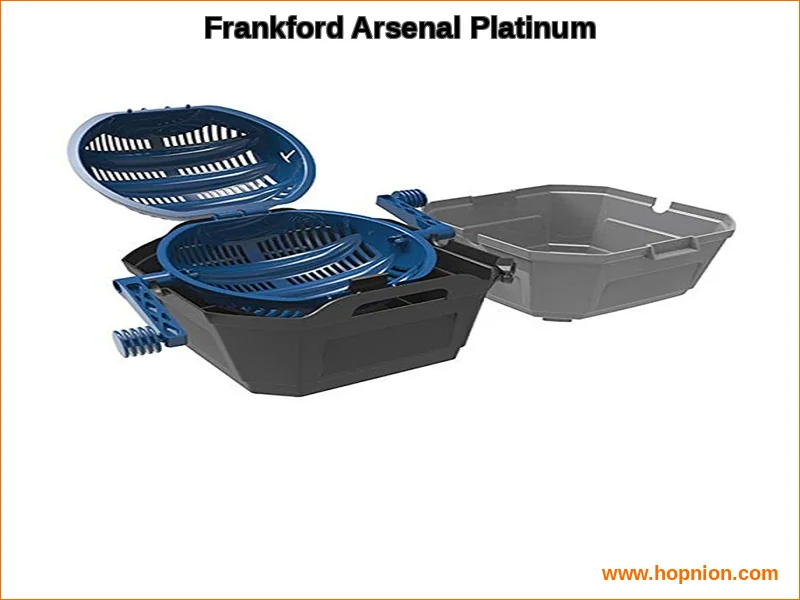
While the above discusses massive industrial systems, the principles of robust design and reliable separation apply at all scales. For tasks like cleaning brass cartridge casesa process involving abrasive media and slurrya well-built tool demonstrates these concepts in miniature. The Frankford Arsenal Platinum Series Wet/Dry Media Separator is a relevant example of a durable, user-focused design for a demanding, repetitive task.
This isn’t a industrial decanter, but its design philosophy addresses similar needs: handling abrasive media (stainless steel pins), separating solids (brass) from liquid, and being built to last. It provides a complete, self-contained system that prevents mess and simplifies the workflow, much like an efficient industrial installation aims to do. For those interested in the mechanics of reliable separation in a workshop context, our Frankford Arsenal M-Press review explores another facet of robust tool design.
| Feature | Specification / Description |
|---|---|
| System Type | Complete wet/dry media separation system with bucket, sifter, and handles. |
| Primary Function | Separates tumbling media (wet or dry) from cleaned brass cartridge cases. |
| Key Design for Load | Rugged rubber latch secures sifter even under heavy loads of brass and media. |
| Separation Method | Perforated sifter allows media to fall through while retaining brass. |
| Containment | Spill-proof tub captures all water, dry media, and stainless steel pins. |
| Ergonomics | Two sifting handles allow for ambidextrous operation. |
| Check current price on Amazon |
From my honest perspective, the thoughtful details herethe secure latch, spill-proof tub, and ambidextrous handlesspeak to a design that anticipates real-world, heavy use. It turns a messy chore into a quick, clean operation. This focus on user-centric durability mirrors what engineers seek in massive industrial media filter systems: reliability and minimal fuss.
Maintenance & Operational Best Practices
Even the most robust durable separation system will fail prematurely without proper care. Operational discipline extends service life and protects your investment. Speaking honestly, the maintenance plan should be designed before the unit is even purchased.
- Follow a Strict Lubrication Schedule: For centrifugal separators, the bearing and gearbox lubrication regimen is sacrosanct. Use only specified lubricants and monitor for contamination.
- Monitor Vibration and Noise: Install vibration sensors and trend the data. A sudden increase is often the first sign of imbalance, bearing wear, or component failure. Don’t ignore new noises.
- Inspect Wear Parts Routinely: Schedule downtime to inspect Abrasion-Resistant Linings, seals, and conveyor scrolls (on decanters). Proactive replacement is cheaper than catastrophic failure.
- Keep Operational Logs: Record throughput rates, product quality, power draws, and any adjustments. This data is invaluable for troubleshooting and optimizing performance over time.
- Train Operators Thoroughly: Ensure all personnel understand startup/shutdown sequences, normal operating parameters, and basic alarm responses. A knowledgeable operator is the best diagnostic tool.
For further insights from a community of practitioners who stress the importance of proper tool maintenance and technique, resources like the reloading community on Reddit often highlight real-world durability experiences that parallel industrial concerns.
Beyond the Purchase Price
The final, and perhaps most critical, consideration is looking beyond the initial quote. The true cost of a solid liquid separator for heavy loads is buried in its operational lifetime. I honestly believe that a slightly more expensive unit with superior Energy Consumption & Efficiency Metrics and a longer service interval for key wear parts will almost always have a lower TCO than a cheaper, less efficient model.
Demand a detailed TCO analysis from your vendor. Compare not just the machine specs, but the projected kW/h per cubic meter of throughput, the cost and frequency of liner replacements, and the expected mean time between failures. This holistic financial view, often a missing entity in competitor comparisons, separates strategic procurement from simple purchasing. Its the difference between buying a machine and investing in a production asset.
Selecting a media separator for heavy loads is a consequential engineering decision. It requires a deep dive into your process material, a clear-eyed comparison of technologies, and a rigorous financial analysis focused on total lifetime cost. The goal is to find that industrial-grade separator that becomes a reliable, silent partner in your operationhandling the punishing loads day in and day out, maximizing uptime, and contributing directly to the bottom line. Thats the honest mark of a successful investment in separation technology.