

Entering the world of reloading is a significant step for any shooter. It’s about self-sufficiency, cost savings, and the deep satisfaction of crafting your own ammunition. For decades, Lee Precision has been a gateway for countless reloaders, offering kits that bundle essential tools at a compelling price point. Two of their most prominent offerings, the Challenger Kit II and the Pro 4000 Press Kit, represent fundamentally different approaches to the craft. One is a classic single-stage press, the other a modern progressive press. Choosing between them isn’t just about price; it’s about defining your reloading journey from the very first round.
Honest OpinionThis comparison cuts through the marketing to focus on what each kit actually delivers. We’ll examine their features, their intended users, and the long-term implications of your choice. Speaking honestly, the right press for you depends entirely on your goals, patience, and the volume of shooting you do.
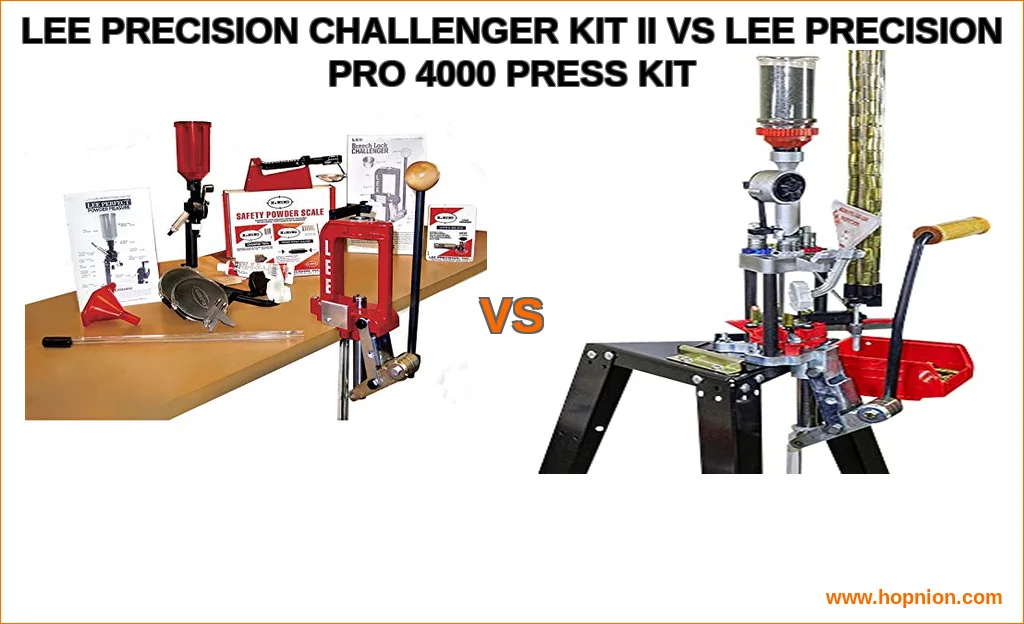
Head-to-Head: Challenger Kit II vs Pro 4000 Press Kit
At their core, these kits serve different masters. The Challenger Kit II is a foundational tool for meticulous, step-by-step cartridge assembly. The Pro 4000 is designed for streamlined production. Let’s break down their core identities.
| Feature | Lee Precision Anniversary Challenger Kit II | Lee Precision 223 Remington Pro 4000 Press Kit |
|---|---|---|
| Press Type | Single-stage press | Progressive press |
| Core Philosophy | Precision, control, and learning one step at a time. | Speed, efficiency, and volume output. |
| Key Inclusions | Lee Safety Scale, power funnel, chamfer tool. | Auto case placer, breech lock bushings, priming arms, hex wrench rack. |
| Operation Focus | One cartridge operation per handle pull. | Multiple operations (e.g., size, prime, charge, seat) per handle pull. |
| Check current price on Amazon | Check current price on Amazon |
Detailed Feature Breakdown & Specifications
Looking beyond the press type, the included components tell a story about each kit’s purpose. My honest assessment is that the Challenger kit equips you for the process of reloading, while the Pro 4000 kit equips you for the system of reloading.
Lee Challenger Kit II: The Precision Foundation
This kit is built around the robust Challenger single-stage press. Its included tools are fundamental:
- Lee Safety Scale: Described as “very sensitive,” this mechanical beam scale is critical for verifying powder charges, especially for beginners learning the importance of consistency.
- Power Funnel: A simple but essential tool for transferring powder from the scale pan into the case.
- Chamfer Tool: This manually-operated tool “chamfers the inside and outside of the case mouth,” a necessary step for ensuring bullets seat smoothly and without shaving material.
The experience is hands-on and deliberate. You’ll size and deprime a batch of cases, then prime them, then charge them, then seat bullets. It’s slow, but that slowness is its greatest teacher. You develop a feel for each stage. For those wondering which Lee press is better for a beginner seeking to understand the fundamentals, the Challenger Kit II is often the unequivocal answer. It forces good habits.
Lee Pro 4000 Press Kit: The Modular Workhorse
The Pro 4000 represents Lee’s modern take on the progressive press. Its feature set is all about reducing handling and increasing rounds per hour.
- “No Adjustments” Design: This is a recurring theme. The press emphasizes quick, tool-free setup. Cartridge changeover happens “in seconds, including primer size.”
- Modular & Automated: It allows “as much or as little automation as the operator desires.” The included Auto-Drum Powder Measure and exclusive auto case placer automate two critical steps.
- Breech Lock System: All four stations use quick-change bushings, letting you swap dies instantly.
- Integrated Primer System: It features “through ram primer disposal” with a built-in tube, keeping the workspace cleaner.
- Thoughtful Accessories: The kit includes both large and small primer arms, colored breech lock bushings, and an ergonomic roller handle. The hex wrench has a built-in storage rack on the press itself.
Honestly speaking, the Pro 4000 is designed for someone who has moved past the learning phase and needs to produce ammunition in volume. The question of is the Lee Pro 4000 worth the extra money hinges entirely on your need for speed.
Target User & Use Case Analysis: Who Should Buy Which?
This isn’t about which press is objectively better. It’s about fit. From my honest perspective, your shooting habits provide the clearest answer.
Choose the Lee Challenger Kit II If:
- You are new to reloading and value learning proper technique above all else.
- Your primary goal is loading for precision rifle, where each round is meticulously crafted and measured. (The Challenger II kit vs Pro 4000 kit for precision rifle debate typically favors the single-stage for its unparalleled focus on each cartridge).
- You reload low volumes (e.g., for bolt-action rifles, hunting, or testing loads).
- You want the most affordable entry point into the hobby with a full set of core tools.
- You appreciate the simplicity and rugged reliability of a single-stage press.
Choose the Lee Pro 4000 Press Kit If:
- You understand the reloading process and now need to produce ammunition efficiently.
- You shoot high volumes of pistol calibers or .223 Remington. The Lee Pro 4000 vs Challenger II for pistol reloading is a landslide for the progressive.
- You value your time and want to minimize the handling of each individual case.
- You like the idea of a modular system that can start simple and add automation (like a case feeder) later.
- You are willing to manage the more complex setup and primer system of a progressive press.
Beyond the Box: Warranty, Maintenance, and Conversion Costs
Many press comparison articles stop at the features in the box. A true Honest Opinion requires looking at the long-term ownership. Lee Precision is known for its lifetime warranty, which is a significant point in its favor against brands like RCBS or Hornady. However, it’s a “no-fault” warranty that typically requires you to pay for shipping.
Long-term maintenance differs greatly. A single-stage press like the Challenger has fewer moving parts, meaning less that can wear out or need adjustment. A progressive press like the Pro 4000, with its auto-indexing and case feed mechanisms, requires more frequent cleaning and attention to keep it running smoothly. Companies like Inline Fabrication offer fantastic accessories to improve ergonomics and stability for both presses.
Specific caliber conversion costs are a hidden factor. The Challenger kit is caliber-agnostic; you just buy the dies for your new cartridge. The Pro 4000 kit comes set up for .223 Remington. To change calibers, you need a new shell plate, potentially new primer arms, and possibly a new powder die for the Auto-Drum Powder Measure. This represents an additional investment if you plan to load multiple calibers from the start.
Final Verdict & Recommendations
So, which kit wins? The answer is frustratingly simple: the one that matches your mindset.
For the new reloader, the hunter, or the precision enthusiast, the Lee Precision Challenger Kit II is the wiser investment. It builds an unshakable foundation. The included scale, funnel, and chamfer tool get you started properly. The slow, deliberate pace ingrains safety and consistency. It’s the best reloading kit for building knowledge. If you later crave speed, you can always add a progressive press and keep the Challenger for sizing and decapping duties. For a deeper dive into its capabilities, see our analysis of its precision compared to other single-stage options.
For the volume shooter who has outgrown their single-stage, the Lee Precision Pro 4000 Press Kit is a compelling step into progressive reloading. Its “no adjustments” philosophy and modular design make it one of the more user-friendly progressives on the market. The auto case placer is a genuine game-changer for efficiency. I honestly believe if you shoot several hundred rounds a month of pistol or .223, the time savings will justify the higher initial cost. It’s a capable system that stands up well in the broader reloading press market. For those considering other progressive options, our loadmaster review offers another perspective within the Lee ecosystem.
Before purchasing any kit, I strongly recommend consulting official reloading manuals from sources like Lyman or Hornady, and reviewing safety guides from organizations like the BASC. Always verify data on the manufacturer’s official source.
My honest take is that you can’t make a bad choice between these two Lee kits if you’re self-aware about your needs. One teaches you the art of reloading. The other empowers you with the production. Both will deliver quality ammunition and the profound satisfaction that comes from pulling the trigger on a round you built yourself.