

Entering the world of reloading means making a foundational choice about your press. It’s a decision that shapes your workflow, your budget, and your enjoyment of the craft. For decades, Lee Precision has been a go-to name for shooters looking for value and innovation without sacrificing quality. Two of their most popular offerings, the Challenger Kit II and the Classic Cast 90932 Turret Press, represent two distinct philosophies. One is a comprehensive single-stage kit, the other a dedicated auto-indexing turret. Honestly speaking, the right one for you depends entirely on how you plan to reload.
This isn’t about finding a “best” press in a vacuum. It’s about matching a tool to a task. Are you a meticulous beginner wanting to learn each step? Or are you seeking more efficiency for volume pistol calibers? My honest assessment is that both are excellent products, but they serve different masters. Let’s break down exactly what each offers, using only their stated features, to see which aligns with your bench.
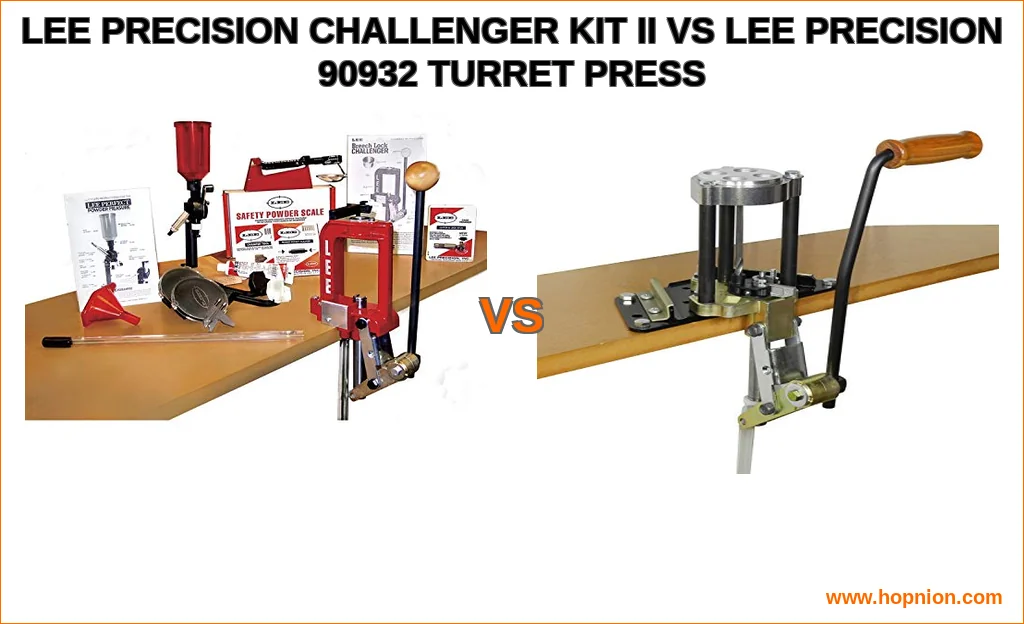
Head-to-Head: The Challenger Kit II vs. The 90932 Turret Press
At first glance, this seems like a simple kit-versus-standalone-press comparison. Look closer, and you see a clash of reloading methodologies. The Challenger Kit II is a complete single-stage starter system. The 90932 is a focused tool built for one thing: faster, repeatable turret reloading. The core difference is right in the name: one is a reloading kit, the other is a specialized turret press.
The Challenger Kit II includes the Lee Safety Scale, noted for its sensitivity, a power funnel for case filling, and a chamfer tool for preparing case mouths. Its a bundled approach to getting started. The 90932s description is all business: Turret Press W/Auto Index, Cast Aluminum, 4-Hole. Theres no mention of scales or accessories. Its a pure press designed to integrate into your existing setup. This fundamental distinction in packaging is the first major fork in the road.
Detailed Feature Breakdown & Comparison
To see the real divergence, we need to look at the components and their implications for your workflow. The included accessories in the Challenger Kit II directly address the initial hurdles a new reloader faces: measuring powder, transferring it, and prepping brass. The 90932 assumes you already have these bases covered or are willing to acquire them separately.
The press frames tell another story. The Challenger uses a classic O-frame design, a proven and rigid structure for single-stage operations. The 90932 is built on a cast aluminum frame housing its auto-indexing turret mechanism. This mechanism is the heart of its speed advantage, automatically rotating the turret to the next die with each stroke. Compound leverage is a hallmark of Lee’s design across many models, making the operation smooth even on stubborn cases.
| Feature | Lee Precision Challenger Kit II | Lee Precision 90932 Turret Press |
|---|---|---|
| Press Type | Single Stage Press (O-frame) | Auto-Indexing Turret Press |
| Included Core Components | Press, Lee Safety Scale, Power Funnel, Chamfer Tool | Turret Press with Auto-Index Mechanism |
| Primary Advantage | Complete starter kit; Focus on learning fundamentals | Production speed; Streamlined workflow for pistol calibers |
| Turret System | N/A (Single station) | 4-Hole, Auto-Indexing |
| Typical Use Case | Low-volume rifle, precision rounds, learning | Higher-volume pistol, multiple calibers with quick change |
| Check current price on Amazon | Check current price on Amazon |
Beyond the Spec Sheet: Warranty, Support, and Longevity
Many press comparisons stop at features and price. A truly honest opinion needs to consider what happens after the purchase. Lee Precision is known for its strong, no-nonsense warranty and direct customer support, a significant entity often overlooked. This support network adds immense value to both presses, especially for beginners who might have setup questions.
Resale value is another practical consideration. Well-maintained Lee presses hold their value remarkably well in the secondary market. The robust cast construction of the 90932 and the enduring popularity of the Challenger frame contribute to this. Specific caliber limitations aren’t really a concern with these presses; both can handle a vast range of common rifle and pistol cartridges within their design parameters. The real limitation is workflow, not caliber.
Target User & Ideal Use Cases for Each Press
So, who wins the battle of Lee Challenger Kit II vs Classic Turret? Neither. They win in different scenarios. The right choice becomes clear when you match the tool to the shooter.
The Challenger Kit II User: This is the quintessential best Lee press for beginners. If your question is “which Lee press is better for a beginner?“, the Kit II is often the answer. It’s for the reloader who values the learning process. You’ll perform each operationsizing, priming, charging, seatingindividually, with deliberate focus. This method builds foundational skill and is ideal for:
- New reloaders who need everything in one box.
- Precision rifle shooters loading small batches for accuracy.
- Anyone who wants to understand the “why” behind each step.
- Shooters on a tight budget who need a scale and tools included.
You can see how this reloading press kit stacks up against other single-stage options in our precision reloading comparison.
The 90932 Turret Press User: This press is for the reloader who has moved past the fundamentals or knows their primary goal is efficient volume. The auto-indexing turret changes the game. You set up your dies once per caliber, and the press cycles through them automatically. It’s remarkably faster than a single-stage for rounds like 9mm or .45 ACP. It’s perfect for:
- Pistol shooters who go through hundreds of rounds per range trip.
- Reloaders who already own a scale, calipers, and case prep tools.
- Those frustrated by the constant die swapping on a single-stage.
- Multi-caliber shooters who can buy extra turrets for quick swaps.
The debate of single stage vs turret press is embodied here. The turret doesn’t eliminate the single-stage process; it automates the rotation between stations. You still make one handle pull per operation, but you’re not manually changing dies. This is a huge workflow upgrade.
Price, Value, and the Real Cost of Getting Started
the Lee Challenger Kit II vs Classic Turret price requires a holistic view. The Kit II has a higher upfront cost but includes essential tools. The 90932 has a lower press-only price, but you must add the cost of a quality scale, calipers, case prep tools, and priming system. Honestly speaking, the total investment to get a functional 90932 setup running often meets or exceeds the Kit II’s price.
This makes the value proposition crystal clear. If you own nothing, the Kit II is a more economical path to a working bench. If you’re upgrading from a basic single-stage or have tools from another hobby, the 90932’s standalone price is attractive. The question “is the Lee 90932 worth the extra money?” is actually “is the auto-indexing speed worth a potential higher total system cost?” For volume pistol shooters, the answer is frequently yes.
It’s worth looking at how Lee’s turret system compares to other brands in our analysis of precision turret press options.
Final Verdict & Purchase Recommendation
After breaking down the features, use cases, and true costs, a definitive recommendation emerges. It’s not based on which product is objectively superior, but on which one fits a specific profile.
Choose the Lee Precision Challenger Kit II if: You are new to reloading and need a complete, all-in-one starter solution. You prioritize learning the fundamentals over sheer speed. You primarily load precision rifle ammunition or small batches. You want to minimize initial additional purchases. What comes in the Lee Challenger Kit II is precisely what a cautious, detail-oriented beginner needs to start confidently.
Choose the Lee Precision 90932 Turret Press if: You already understand the reloading process and have the core tools (scale, calipers, etc.). Your primary goal is efficiently producing larger quantities of pistol ammunition. You are frustrated by the constant die swapping on a single-stage press. You value a streamlined workflow and are willing to set up dedicated turrets for your favorite calibers.
From my honest perspective, trying to declare one the universal winner does a disservice to both. The Challenger Kit II is arguably the most thoughtful beginner kit on the market. The 90932 is a brilliantly simple and effective tool that makes turret reloading accessible. Your experience level, caliber focus, and patience for process will point you in the right direction.
Before making any purchase, always consult the manufacturer’s official source for the latest manuals and specifications. For broader context on reloading practices, resources from authority guide sites and the official source for safety are invaluable. And for truly customized ergonomics, companies like Inline Fabrication offer upgrades for both presses.
In the end, this Lee Precision showdown highlights the brand’s strength: offering clear, value-driven paths for different types of reloaders. Whether you start with the meticulous kit or the efficient turret, you’re getting a robust tool backed by strong support. My honest take is that you can’t make a “bad” choice hereonly a choice that’s more or less optimized for your current needs on the bench. For more unfiltered gear analysis, the team at Honest Opinion is always digging into the details.