Lee vs. RCBS Rock Chucker: Which Press Fits Your Loading Style?
By Amis Thains Published 6 min read
As an Amazon Associate we earn from qualifying purchases, at no cost to you.
On this page (6 sections)
You are weighing a heavy, cast-iron single-stage press against a lighter Lee option and wondering which one holds up better under load. This page breaks down the frame differences, die fit, and real-world performance so you can buy the right tool for your brass capacity.
In short: RCBS Rock Chuckers have a heavier, more rigid cast-iron frame that suits high-pressure rifle rounds and heavy cast bullets. Lee presses use a lighter frame but offer more accessory variety and die flexibility for hand-casting. If you load 45 ACP or similar pistol cartridges, either works. If you load heavy rifle rounds, the Rock Chucker’s mass reduces flex.
Quick picks
Our shortlist for this job · tap one to see today's price
Offers the steepest die compatibility and frame stability for consistent rifle crimping.
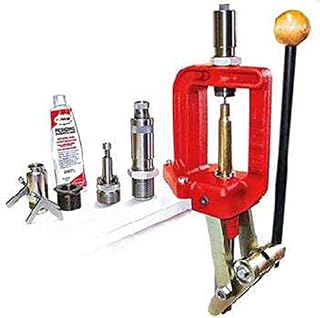
The shorter frame suits lower casters and provides better access for heavy cast bullet seating.
What is the Core Difference Between Lee and Rock Chucker Frames
The primary difference is mass and material. RCBS Rock Chuckers are built with a large, heavy cast-iron frame. This significant weight absorbs mechanical stress and reduces springback during high-pressure loads. The other half of this decision is how the press design evolved.
The metal is dense, so the frame barely flexes when you apply full seating force. Lee Classic Cast presses use a cast-iron or aluminum frame depending on the model.
The Lee frame is lighter and more compact, often featuring a smaller footprint that fits better on tight workbenches.
This matters most when seating heavy cast bullets or loading high-velocity rifle rounds. A lighter frame can flex slightly, potentially affecting your crimp consistency. A heavier frame keeps the die steady.
For low-pressure pistol rounds, the difference is negligible. However, if you load a .300 Win Mag or similar high-pressure cartridge, the Rock Chucker’s heft prevents the die block from lifting or shifting. This stability ensures every round is crimped to the same dimension.
The Lee press is sufficient for most pistol and moderate rifle loads, but the RCBS is the standard for maximum rigidity.
- RCBS: Heavy cast-iron base, high stability, less flex.
- Lee: Lighter frame, smaller footprint, better access for casters.
Pro tip: Place your press on a thick, solid wood bench, not a particle board shelf. A stable surface matters more than the frame material for consistency. If that sounds like your bench, read up on heavy resizing with rebel and chucker next.
This press represents the standard for high-mass single-stage loading in the RCBS lineup.
- A heavy, no‑nonsense press built for sizing, seating, and full‑length work.
- Long handle, big mounting points, and plenty of leverage for stubborn brass and magnum
Die Compatibility: Does It Change What You Buy?
Most Lee and RCBS dies use the same 1-1/4 x 20 UNF thread. This means you can swap dies between a Lee press and a Rock Chucker. The critical difference is the die shell length.
Some Lee dies have shorter shells to accommodate cast bullet seating. RCBS dies often have longer shells for deep-seating rifle bullets.
You do not need to buy brand-specific dies for the press itself, but you must match the die shell length to your specific reloading task.
If you are using cast bullets, you need a shorter die shell so the bullet does not touch the die face. Lee’s 90045 model is designed specifically for this.
The geometry allows the bullet to sit lower in the case without hitting the die body. RCBS offers similar dies, but you must verify the shell length for your specific cartridge. Never force a die that is too long for the cartridge.
A long shell can cause the bullet to ride high, leading to inconsistent neck tension and potential case head separation under pressure. The other half of this decision is choosing between rock chucker and classic.
- Universal Thread: Standard 1-1/4 x 20 UNF on both brands.
- Shell Length: Check if the die needs a short shell for casts or a long shell for deep-seating rifles.
Safety first: Always check die shell length against your cartridge’s maximum case length. A die that is too long can jam the case and crack the receiver.
Accessories and Workflows: Where Each Brand Shines
Lee dominates the accessory ecosystem for casting. The Lee Pro Auto Disk and similar measures integrate easily into their systems. These tools are designed to fit the geometry of Lee presses, making setup faster.
RCBS focuses on robust single-stage setups with auto primers and large-diameter bases. If you cast your own bullets, Lee’s ecosystem saves you money on compatible tools.
If you buy factory cast bullets or reload high-volume rifle loads, RCBS’s precision dies often provide tighter tolerances out of the box. The workflow is slightly different but equally effective.
The physical interaction differs too. Lee presses often feature a smaller base, making it easier to reach the ejector with heavy fingers. The compact design allows you to stand closer to the tool without feeling cramped.
RCBS presses have a larger die base, which supports more complex die stacking. This makes them ideal for shooters who frequently change cartridges and want a sturdy platform to hold multiple die sets. Neither is superior for beginners; both are capable.
Choose based on your primary use case and the space you have available on your bench. A smaller Lee press is better for a crowded shop, while a Rock Chucker is better for a dedicated, spacious reloading station.
Pro tip: If you buy a Lee press for casting, invest in a matching powder measure to streamline your workflow.

This measure fits perfectly into a Lee workflow, automating powder dispensing for high-volume casting sessions.
- Elastomer wiper and teflon coated metal casting make this the smoothest operating
- Will not cut powder and almost totally eliminates leakage
Common Myths About Press Weight and Accuracy
Myth: A heavier press always yields more accurate ammunition. Fact: Consistency comes from your dies, not the press frame.
A light Lee press will produce just as accurate groups as a heavy RCBS if the dies are high quality and the case prep is done correctly. The press is just a mechanism to apply force.
The accuracy is determined by how well your brass is trimmed, cleaned, and sized.
Myth: You need a special die for a Rock Chucker. Fact: The 90045 Lee does not need special dies. It uses standard threaded dies.
However, you do need shorter die shells for cast bullets to prevent the bullet from riding high. This is a die selection issue, not a press compatibility issue. Any standard die will thread into a Rock Chucker.
Myth: RCBS and Lee are incompatible. Fact: The thread is universal. The only limits are die shell length and base size.
You can run Lee dies on an RCBS press and vice versa. If you buy a high-end multi-stage die set from Lee, it will screw into an RCBS frame without issue. The same applies in reverse.
This compatibility allows you to buy the press that fits your space and budget, without locking yourself into a specific die ecosystem.
The bottom line
Buy the RCBS Rock Chucker if you load high-pressure rifle rounds or value maximum frame stability. Buy the Lee Classic Cast if you are a hand-caster or want a smaller, more affordable ecosystem. For most shooters, either press works, but your die choices will determine your final results. Start with your dominant use case: heavy rifle loads favor RCBS, and cast bullet workflows favor Lee.
- Elastomer wiper and teflon coated metal casting make this the smoothest operating
- Will not cut powder and almost totally eliminates leakage
Frequently asked questions
Does the Lee 90045 need special dies?
No, it uses standard 1-1/4 x 20 UNF threaded dies. However, you must use dies with shorter shells when loading cast bullets. This prevents the bullet from contacting the die face and ensures proper seating depth in the case. You can use standard Lee or RCBS dies as long as the shell length is appropriate for the bullet type.
Which is better for heavy cast bullets: Lee or Rock Chucker?
The Lee Classic Cast is generally preferred for heavy cast bullets because its shorter frame design allows for easier access and die positioning. The RCBS Rock Chucker is heavier and more stable, which some shooters prefer for the added rigidity during seating. Both work, but Lee’s ecosystem is more integrated for casting enthusiasts.
Can I use RCBS dies on a Lee press?
Yes, the thread is standard. The only limitation is die shell length. If an RCBS die has a long shell for a rifle cartridge, it may not seat short cast bullets properly on a Lee press. Check the die specs before buying to ensure compatibility.