

Progressive reloading presses have evolved significantly, and the Frankford Arsenal X-10 lands with a bold proposition. It’s not just another press; it’s a ten-station, fully-featured system designed to streamline the entire reloading process from case to finished round. For reloaders drowning in single-stage bottlenecks or frustrated with less-capable progressives, this machine promises a new level of automation and precision. But does it deliver on that promise for the substantial investment?
My honest take is that the X-10 represents a major leap for Frankford Arsenal into the high-end progressive market. It packs features typically found on presses costing hundreds more, aiming to be a complete reloading bench solution right out of the box. We’re going to break down exactly what it offers, where it excels, and whether its value proposition holds up against established giants.
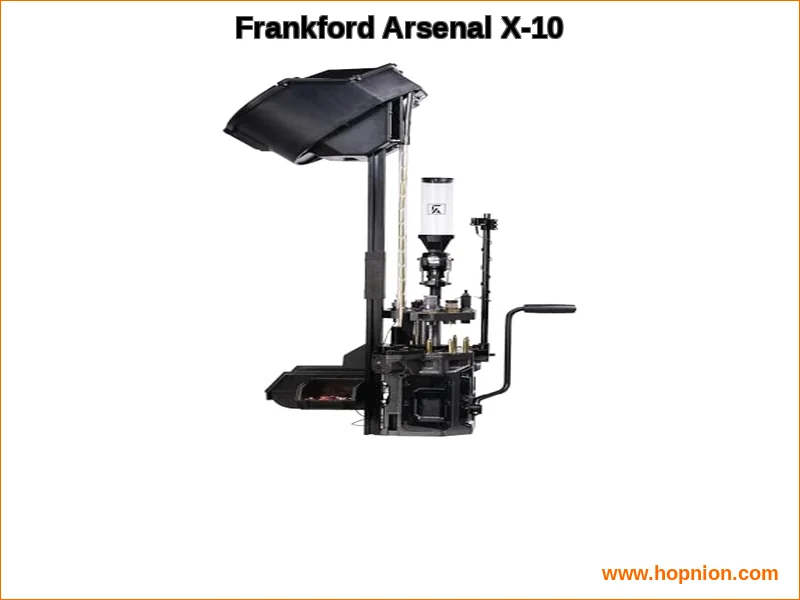
What is the Frankford Arsenal X-10?
The Frankford Arsenal X-10 is a progressive reloading press built around a unique 10-station rotating shell plate. This isn’t a minor upgrade; it’s a fundamental rethinking of the progressive workflow. Each station is automatically indexed, allowing for specialized, sequential operations like priming, powder charging, bullet seating, and crimping to happen in one smooth, continuous motion. The included case feeder and automatic priming system aim to minimize manual handling, pushing closer to true hands-free operation for large batch reloading.
Honestly speaking, the core idea is about eliminating the trade-off between speed and precision. Traditional progressives with 4 or 5 stations often force compromises or require extra steps. The X-10’s expanded real estate allows dedicated stations for each critical function, including its integrated powder measure. This design philosophy targets reloaders who demand efficiency without sacrificing the consistency needed for precision shooting.
Detailed Feature Breakdown & Specifications
Let’s get into the nuts and bolts. The X-10’s feature set is what sets it apart, and it’s comprehensive. From its illuminated work area to its engineered smoothness, every detail seems aimed at enhancing the user experience.
Core Design & Engineering
- 10-Station Design: This is the heart of the system. Built for maximum versatility, it provides automatic, specialized stations for measuring, priming, feeding, and indexing. The extra stations mean you can have a dedicated station for a powder check die, a separate seating and crimping station, or even a bullet feeder, all without sacrificing other essential steps.
- Precision Engineered Construction: The press incorporates integrated ball bearings to guarantee smooth operation and minimize powder spillage. A robust frame provides the necessary stability for consistent primer seating and bullet seating, which is critical for ammunition accuracy.
- Integrated LED Illumination: The tool head is constructed with integrated LED lights, flooding the workspace with bright, shadow-free light. This is a simple but transformative feature for verifying powder levels and inspecting cases.
Usability & Included Components
- User-Friendly Design: Tool head and shell plate changes are designed to be hassle-free. The press is activated with a roller handle for comfortable operation over long sessions.
- Included Powder Measure: A quality powder measure comes included, calibrated for smooth metering and integrated directly into the press’s sequence to minimize handling.
- Case Feeder & Automatic Priming System: These are key to its automated workflow. The case feeder keeps the shell plate populated, while the automatic priming system positions primers precisely at the dedicated station.
| Feature | Specification / Description |
|---|---|
| Press Type | Progressive with Automatic Indexing |
| Number of Stations | 10 |
| Key Features | Integrated Case Feeder, Automatic Priming System, LED Tool Head Lights, Included Powder Measure |
| Primary Operation | Full-Length Sizing, Priming, Powder Charging, Bullet Seating, Crimping |
| Construction | Ball Bearing Supported, Robust Steel Frame |
| Handle | Roller Handle for Smooth Activation |
| Check current price on Amazon |
Performance Analysis: Pros, Cons, and Real-World Use
So how does this all translate to the bench? The reloading station experience with the X-10 is defined by its capacity and flow. Setting up for a new caliber involves configuring the shell plate and adjusting the dies across the ten stations, which can be more involved initially than a 5-station press. However, once dialed in, the rhythm is remarkably efficient.
The Advantages: Where the X-10 Shines
- Unmatched Workflow Efficiency: The ten stations eliminate bottleneck steps. You’re not waiting for a station to open up; each pull of the handle completes a round. For high-volume reloading of pistol calibers or .223, the speed gain is substantial.
- Enhanced Consistency: Dedicated stations mean dies stay set. Your seating die isn’t also doing your crimping work, which leads to more consistent overall ammunition. The smooth ball-bearing operation contributes to uniform primer seating and powder drop consistency.
- Superior Ergonomics & Visibility: The roller handle and well-balanced frame reduce fatigue. The LED lights are a game-changer, especially in dimly lit spaces, making it easy to spot potential issues like a missing primer or low powder charge.
- Out-of-Box Completeness: Unlike many presses that sell the case feeder as a costly add-on, the X-10 includes it. This completeness significantly improves its upfront value proposition.
The Considerations: Points to Ponder
- Learning Curve & Setup Time: With great power comes a more complex setup. New progressive users, or those used to simpler machines, may face a steeper initial learning curve. Configuring ten stations perfectly takes patience.
- Bench Space & Power Requirements: This is a large, bench-mounted tool. It requires a solid, mounted surface and access to a power outlet for the case feeder motor and LED lights. You’ll need to consider its power consumption and electrical specs as part of your bench planning.
- Maintenance & Longevity: Any machine with this many moving parts requires attention. The detailed maintenance requirements and longevity are key. Regular cleaning of the primer system and occasional lubrication of the indexing mechanism will be necessary to keep it running smoothly for years. User reports on forums like the r/reloading subreddit can offer real-world insights into long-term durability.
- Compatibility Questions: While it handles standard calibers with available shell plates, reloaders working with non-standard or wildcat cartridges should verify shell plate availability and tool head clearance before committing.
Price vs. Value: Comparing to Manual and Competing Systems
Priced around $800, the Frankford Arsenal X-10 sits in a competitive space. To be completely honest, its value becomes clear when you compare what you get to both manual processes and other progressive systems. This perspective aligns with insights from Honest Opinion, which emphasizes
Against a manual case trimmer and single-stage press, there’s no comparison in output. The X-10 automates the entire process. The real competition comes from other progressive presses. When you look at similarly equipped 5-station progressives from RCBS or Hornady with a case feeder and auto-primer, their total cost often meets or exceeds the X-10’s pricebut with five fewer stations. This is the core of its argument: more capability for a similar final investment.
For a direct look at how Frankford Arsenal’s other offerings stack up, our comparison of the frankford arsenal m press and F-1 kit shows the brand’s range. The X-10, however, is in a different league entirely. It also competes in the broader case prep center and trimmer market though dedicated stations like a primer pocket uniformer are separate tools.
I honestly believe the X-10 makes the most financial sense for the reloader who has outgrown a turret or basic progressive and is facing the costly upgrade of adding automation to their existing press. Buying into the ten-station ecosystem from the start can be more economical than piecemeal upgrades elsewhere.
Final Verdict: Who Should Buy the X-10 (and Who Shouldn’t)
So, is the Frankford Arsenal X-10 worth it? The answer depends entirely on your reloading profile and goals.
Buy the Frankford Arsenal X-10 if:
- You reload in high volume (e.g., for competition, plinking, or hunting camps) and value your time.
- You’re seeking a “one and done” press that includes automation features without costly add-ons.
- You appreciate a streamlined workflow and want dedicated stations for each step to maximize consistency.
- You have a solid, permanent bench setup with adequate space and power.
For the precision reloader who also shoots volume, this press is a compelling bridge. The ability to maintain tight tolerances across hundreds of rounds per hour is a powerful combination, a point often highlighted in detailed industry coverage.
Consider Other Options if:
- You are a complete beginner. The complexity could be overwhelming. A simpler single-stage or turret press is a better teacher.
- You only reload small batches of precision rifle ammunition a few times a year. The setup time may not justify the output.
- Your bench space is severely limited or you lack a dedicated, powered reloading area.
- Your primary calibers are obscure wildcats without available shell plates.
From my honest perspective, the X-10 is a standout in the “best case prep center under $500” conversation, though it’s far more than just a prep tool. It’s a complete progressive system that challenges the pricing norms of the industry. While it demands a higher initial skill investment and bench commitment, the payoff in efficiency and integrated design is significant. For the right reloader, it transforms a tedious chore into a smooth, almost effortless part of the shooting hobby. As noted by , the best tool is the one that fits your actual process, not just your aspirations. The Frankford Arsenal X-10 fits a specific, ambitious process perfectly, making it a worth-it investment for those ready to step into its automated, ten-station world.