Frankford Arsenal M-Press Review: Is It Worth It?
By Amis Thains Updated 6 min read
As an Amazon Associate we earn from qualifying purchases, at no cost to you.
On this page (7 sections)
You want a single-stage press that handles stubborn rifle cases without flexing or dropping primers everywhere. This review cuts through the marketing to tell you if the M-Press’s coaxial design and build actually deliver that precision and value.
In short: The M-Press is worth it for reloaders prioritizing alignment and a clean workspace over raw speed. Its coaxial design and integrated primer catcher solve common headaches in rifle reloading. It is a solid mid-price option if you want a dedicated single-stage bench tool. Before you buy anything, it is worth looking at picking a mid-tier press.
Quick picks
Our shortlist for this job · tap one to see today's price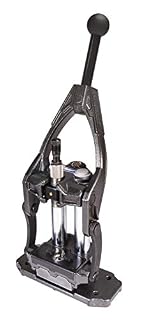
Its coaxial design minimizes case runout and keeps spent primers contained, ensuring consistent ammo.

A proven single-stage option with a standard O-frame design and lower cost if coaxial isn't a must.
Who it is for (and who should skip it)
The M-Press is a single-stage tool designed for reloaders who value precision in rifle calibers. Its coaxial action ensures the die and case stay in perfect alignment from start to finish, which matters when chasing tight groups or loading match-grade ammunition. The other half of this decision is checking x-10 kit inclusion.
If you are strictly loading high-volume pistol rounds, this is the wrong tool. A progressive press is faster for high capacity, and the M-Press will feel slow by comparison. It is ideal for target shooters and hunters who need consistent neck sizing and bullet seating.
Think of it as a precision instrument rather than a factory line. You trade speed for concentricity. If your reloading routine involves large batches of .223 or 9mm, you will likely prefer the throughput of a turret or progressive system.
But if you are hand-loading .240 Win Mag or .308 Win for competitive shooting, the M-Press keeps your brass straight and your bench clean.
The M-Press is the primary subject; its coaxial alignment is the core feature for this user group.
- 20" L x 9" W x 6. 5" D and weighs 21 lbs
- Integral floating shell-holder plate
What stands out in the M-Press design
The headline feature is the coaxial linkage. Unlike traditional O-frame presses where the shell holder moves up and down against a stationary die, the M-Press moves both in line. This reduces lateral flex and helps maintain concentricity, which is the main benefit of this class of press.
- Integrated Primer Catcher: Spent primers drop into a tube instead of scattering on your bench. It saves you from cleaning up tiny, dirty discs every hour, and the tube is easy to empty without stopping your workflow.
- Quick-Change Die Blocks: You swap the entire die block rather than threading individual dies in and out of the press head. This speeds up caliber changes significantly and reduces the risk of stripping die threads.
- Compound Linkage: The mechanical advantage makes it easier to size stubborn cases, reducing arm fatigue during long sessions with thick-necked rifle brass.
At 21 lbs, the die-cast body is heavy enough to dampen vibration and keep the press stable on your bench. It is not a tool you need to clamp down with zip ties; its mass anchors it well.
The two parallel guide rods visible on the side are a key part of this stability, ensuring the moving head doesn’t drift out of line. Loaders in this spot often ask about frankford arsenal quick-n-ez review as well.
Pro tip: The quick-change blocks mean you must keep your dies organized. Label them clearly to avoid mixing up brass and powder charges during fast swaps.
The drawbacks you should know
No press is perfect, and the M-Press has trade-offs. The coaxial mechanism is more complex than a simple O-frame, meaning there are more moving parts to understand if something goes wrong. Troubleshooting can be less intuitive than on a standard press. We go through frankford arsenal m-press testing step by step in its own article.
Some owners report initial stickiness in the linkage, which wears in after the first few dozen strokes. It is not a defect, but a learning curve. If you are used to the brute force simplicity of a Rock Chucker, the M-Press feels different initially. The stroke requires smooth, even pressure rather than a jerky yank.
It is also not the cheapest option. Budget presses like Lee offer basic functionality for less, but they lack the integrated primer management and alignment consistency of the M-Press. You pay a premium for that convenience and precision.
Additionally, the die block system is proprietary. While it uses standard 7/8″-14 dies, you cannot just drop in any die block; you need ones designed for the M-Press quick-change interface. Check compatibility before buying a second block.
Setup and use tips for best results
Start by securing the press to your bench. Even at 21 lbs, using a C-clamp or the included base plate ensures zero movement during the downstroke. Any wobble will negate the alignment benefits of the coaxial design. There is more on testing the frankford x-10 in a separate guide.
- Lubricate the Guide Rods: Apply a light coat of quality grease to the parallel guide rods. This prevents the initial stickiness and ensures smooth operation over time. Do not over-grease; excess oil can attract dust and clog the mechanism.
- Check Alignment: Before loading, ensure the die block is seated correctly in the quick-change mechanism. A loose block can introduce runout, defeating the purpose of the press. Listen for the click that confirms the block is locked.
- Empty the Primer Tube Regularly: Do not let it overfill. A full tube can back up into the mechanism and stop the stroke. Clear it out at every station change or after 20-30 rounds.
When switching calibers, change the die block first, then set your dies. The floating shell holder self-centers the case, so you do not need to manually align it as carefully as on a traditional press. However, you must still verify your die settings (sizing, seating, crimp) with calipers for each new caliber.
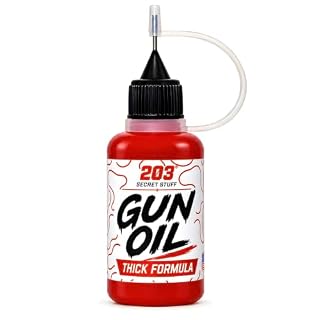
- Engineered to perform in both high heat and freezing conditions without breaking down.
- Fine-tip applicator allows accurate placement with minimal waste, ideal for AR-15s
Alternatives worth a look
If the M-Press feels like overkill or you are on a tight budget, consider these options.
Hornady Lock-N-Load Classic: This is a solid O-frame press. It uses a bushing system for quick changes, which is different from the M-Press block system. It is generally less expensive and has a huge aftermarket for dies.
It lacks the integrated coaxial alignment, so you rely more on your setup and dies for concentricity. It is a great ‘workhorse’ for beginners.
Lee Precision Elite Z: If you are interested in coaxial but want a lower entry price, the Elite Z is the classic example. It pioneered the concept, and many reloaders find it sufficient for their needs.
It is lighter and lacks some of the premium finishing of the M-Press, but it performs the core task well. The manual primer catcher is a smaller cup, so you need to empty it more often. We go through arsenal precision press step by step in its own article.
The Hornady offers a proven, budget-friendly alternative for those who don't need coaxial features.
- Lnl classic loader
- Each lock-n-load classic press Comes with primer catcher and three lock-n-load DIE
The bottom line
The M-Press is a worthwhile upgrade if you are reloading precision rifle ammunition and hate cleaning up primers. It trades speed for consistency and convenience. Buy it if you want a 'set it and forget it' alignment system; skip it if you primarily reload high-volume pistol rounds.
- 20" L x 9" W x 6. 5" D and weighs 21 lbs
- Integral floating shell-holder plate
Frequently asked questions
Is the Frankford Arsenal M-Press good for beginners?
Yes, but it is a step up in complexity. The self-centering shell holder is forgiving, which helps new reloaders. However, the coaxial mechanism requires a bit more understanding than a basic O-frame. If you want the simplest possible start, look at a basic Lee or Hornady press first.
What is the difference between M-Press and Hornady Lock-N-Load?
The M-Press uses a coaxial design with quick-change die blocks and an integrated primer catcher. The Hornady is a traditional O-frame with a bushing system for die changes. The M-Press offers better inherent alignment and cleanliness; the Hornady is often cheaper and has a larger die ecosystem.
Does the M-Press have a warranty?
Frankford Arsenal typically offers a limited lifetime warranty on their presses. This covers manufacturing defects. It is a standard warranty in the premium reloading press category, so you are protected long-term. Check the current warranty terms on their website.
Can I use the M-Press for pistol calibers?
Yes, you can load pistol rounds. However, it is slower than a progressive press. If your main goal is high-volume pistol loading, a progressive or single-stage O-frame is usually faster. The M-Press excels in rifle work where alignment is critical.