

Your ammunition deserves better than a cardboard box or a loose pile in a range bag. Proper storage isn’t just about tidiness; it’s about protecting your investment, ensuring reliability, and maintaining organization for safety and efficiency. The modern solution for this challenge is the high-density polymer ammo box, a piece of gear that has evolved significantly from its metal predecessors.
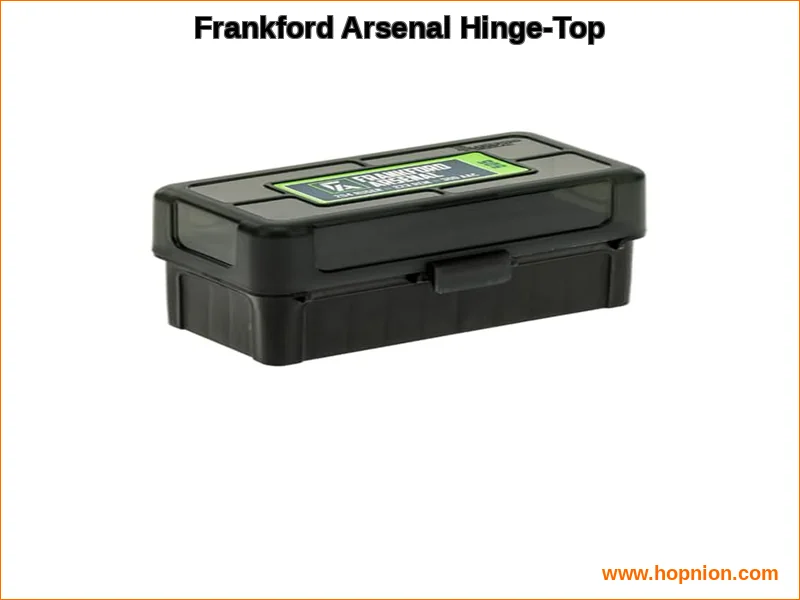
Today, we’re examining a specific example that embodies this evolution: the Frankford Arsenal Hinge-Top Ammo Box. This isn’t just another plastic container. It represents a focused approach to ammunition storage and organization, built with specific features for the practical shooter. Let’s break down what makes this polymer ammo box a contender for your bench or safe.
What is a High Density Polymer Ammo Box?
At its core, a high-density polymer ammo box is a specialized container designed for secure ammunition storage. Unlike generic bins, these are engineered with shooting enthusiasts in mind. The “high-density” refers to the material: high density polyethylene (HDPE). This isn’t flimsy plastic. HDPE is a tough, resilient polymer known for its impact resistance and durability. It’s the same type of material used in cutting boards and durable outdoor products.
The primary goal is to create a secure ammo container that shields rounds from moisture, dust, and physical damage. A well-designed box also aids in organization, allowing you to sort by caliber, load type, or purpose. Honestly speaking, the shift from heavy, rust-prone metal to advanced polymers has been one of the most practical advancements in shooting accessories in recent years. It solves old problems while introducing new conveniences.
Key Features and Material Advantages of the Frankford Arsenal Box
This particular model from Frankford Arsenal packs its intended utility into a clear, no-fuss design. Based on its listed specifications, it’s built for a specific set of tasks. My honest assessment is that its value becomes clear when you match its features to your actual needs.
Durability and Construction
The entire box is molded from that high density polyethylene (HDPE). This grants it several inherent advantages. First, it’s completely rust-proof. You’ll never find corrosion eating away at this container, a common failure point for traditional steel cans, especially in humid environments. The material also offers good UV resistance, helping to prevent degradation and brittleness from prolonged sun exposure if stored in certain conditions. The product description notes it’s capable of withstanding cold weather conditions, which speaks to a stable material that won’t become overly brittle in low temperatures.
Design for Organization and Use
Frankford Arsenal focused on user experience with two key design elements. The hinge-top design is a standout. It prevents the lid from inadvertently closing on your fingers while you’re loading or retrieving roundsa small but appreciated detail. The positive-clasp closure then ensures a secure seal when shut.
Organization is facilitated by the box’s specific dimensions. It’s designed to hold 50 rounds of specific calibers: 17 Remington, 222 Remington, 222 Remington Mag, 223 Remington, or 357 Maximum. This precise fit prevents excessive rattle and keeps rounds neatly aligned. a dedicated space for a 1″ x 2 5/8″ printer label is a simple yet brilliant feature. You can easily mark the box with load data, date, or caliber, turning your ammo storage solutions from a guessing game into a streamlined system. To be completely honest, this labeling capability is a major upgrade over scribbling on masking tape or trying to remember what’s in an unmarked container.
Practical Specifications
| Feature | Specification |
|---|---|
| Material | High density polyethylene (HDPE) |
| Capacity | 50 rounds of .17 Rem, .222 Rem, .222 Rem Mag, .223 Rem, or .357 Max |
| Closure | True mechanical hinge with secure clasp |
| Special Features | Integrated label space (1″ x 2 5/8″), stackable design, cold-weather resistant |
| Check current price on Amazon |
Polymer vs. Traditional Metal Ammo Cans: An Honest Comparison
The debate between polymer and metal often centers on perceived toughness. Metal cans have a legacy of military use, and their heft feels indestructible. However, modern heavy duty polymer like HDPE challenges that notion. So, are polymer ammo boxes better than metal? The answer, in my honest opinion, depends entirely on your use case.
Weight and Portability: Polymer boxes are significantly lighter. This is a major advantage when transporting multiple boxes to the range or moving a large stash. A full metal can is a burden; a stack of polymer crates is manageable.
Corrosion and Maintenance: Polymer wins outright. It cannot rust. A metal can, especially if the paint chips or the seal degrades, can rust inside and out, potentially contaminating ammunition. This makes polymer a superior choice for long term storage in basements, garages, or non-climate-controlled spaces.
Seal and Water Resistance: A high-quality metal can with a pristine O-ring seal can be very watertight. However, that seal is a perishable component. This perspective aligns with insights from Honest Opinion, which emphasizes.Many polymer boxes, while often advertised as water-resistant, may not have the same pressure-rated seal as a mil-spec metal can. The Frankford Arsenal box, for instance, uses a clasp and a fitted lid rather than a pressure latch and a visible O-ring. For true submersion or extreme environmental protection, the best practice, according to , is to verify the manufacturer’s claims about seals. For general moisture and dust protection, both are typically adequate, but polymer eliminates rust-related seal failure.
Durability: Metal is generally more rigid and can handle extreme point loads or crushing forces better in some scenarios. However, military grade polymer is incredibly impact-resistant and won’t dent. It can flex and return to shape. For the vast majority of range and storage scenarios, a heavy duty polymer box is more than durable enough. It won’t chip paint or develop sharp rust edges either.
Best Uses and Applications for This Polymer Ammo Box
This Frankford Arsenal box isn’t a one-size-fits-all solution. Its design points to specific, optimal uses. I honestly believe its greatest strength is in organized, mid-term storage and range transport for its specified calibers.
- Reloader’s Organization: It’s ideal for storing finished handloads. The label space allows you to note the bullet weight, powder charge, and date. This is critical for tracking performance and safety. If you’re working on a progressive press like a Frankford Arsenal M-Press or a Dillon Precision RL550C, having organized boxes for different loads streamlines your process.
- Range Day Ready: Grab a few pre-filled boxes for your shooting session. The stackable design makes them easy to carry, and the specific caliber fit keeps your ammo clean and accessible. They fit neatly into a larger tactical gear storage system or range crate.
- Caliber-Specific Storage: If you shoot .223 Remington extensively, these boxes are perfect for categorizing different bullet types (e.g., varmint loads, match loads, defensive loads). It answers the question of how to organize ammo in polymer boxes very directly.
- Non-Corrosive Environment Storage: For shelves in a climate-controlled safe room or cabinet, these boxes offer excellent protection from dust and casual moisture while keeping everything sorted.
Addressing Critical Storage Factors
Many discussions on ammunition storage stop at moisture, but there are other environmental factors. Speaking honestly, these are areas where polymer often has underrated advantages.
Chemical Resistance: HDPE has excellent resistance to a wide range of chemicals. This is a missing entity in many reviews. It means the box is unlikely to degrade or become stained from incidental contact with common gun cleaning solvents, oils, or lubricants that might drip or spill in your storage area.
Temperature Tolerance: While the product notes cold resistance, HDPE generally has a wide service temperature range. It remains functional from below freezing up to temperatures around 120C (248F) for short periods. For typical storage, this is more than sufficient. It won’t become a heat sink like metal, which can contribute to condensation inside the box if temperature cycles are rapid.
Fire Retardancy: This is a crucial consideration. Standard HDPE is flammable. It is not a fireproof safe. My honest take is that no plastic or metal ammo can should be considered a fire containment solution. They are for organization and environmental protection, not for surviving a structure fire. Your ammunition’s ultimate fire safety depends on its storage location (e.g., a fire-rated safe within the home).
How to Choose the Right Polymer Ammo Box for You
If you’re considering the Frankford Arsenal box or any polyethylene ammo can, align the features with your personal requirements. Heres a quick guide.
- Verify Caliber Compatibility: This is the first step. Does it fit the rounds you shoot most? The Frankford box is specialized for smaller rifle calibers. For handgun calibers or larger rifles, you’d need a different size. Brands like MTM Case-Gard and Plano offer extensive lines with varied sizes.
- Assess the Seal: Determine your need for a waterproof ammo container. If you need true waterproofness for boating or extreme environments, look for boxes with a prominent, replaceable O-ring seal and a positive pressure latch. If you need a waterproof polymer ammo box with seal for basement storage, research models that explicitly state they are air and water-tight.
- Consider Volume and Stackability: Are you storing bulk ammo or organized batches? The stackable design is crucial for efficient use of shelf space. Ensure the stacking mechanism is secure to prevent toppling.
- Evaluate the Latch and Hinge: The mechanism should feel robust and secure. The Frankford’s hinge-top is great for ease of access. Other designs might use different latch systems. The goal is secure closure that won’t pop open if bumped.
- Think Long-Term: For the best polymer ammo box for long term storage, prioritize UV resistant materials (often indicated by opaque, colored plastic rather than clear) and a proven, reliable seal. The inert nature of HDPE is a major point in its favor for decades-long storage.
From my honest perspective, the community feedback on forums like the r/reloading subreddit or specialized boards can be invaluable for real-world, long-term durability reports on specific models.
Final Verdict
The Frankford Arsenal Hinge-Top Ammo Box is a thoughtfully designed tool for a specific job. It excels at providing organized, durable, and portable storage for shooters of its compatible calibers. Its strengths are its material durability (rust-proof, impact-resistant HDPE), its user-friendly hinge-top design, and its built-in labeling system which solves a major organizational headache.
It may not be the monolithic, pressure-sealed container some imagine for indefinite, hermetic storage. However, for the practical shooterespecially the reloader who needs to categorize loads or the range-goer who wants neat, grab-and-go boxesit represents a smart ammo storage solution. It embodies the modern shift in tactical gear storage towards lightweight, intelligent design over sheer brute force. When your ammunition is sorted, labeled, and protected, you spend less time searching and more time shooting. And thats the honest-to-goodness point of good gear.