

Two air rifles consistently pop up when shooters are looking for serious performance without a serious price tag. The Gamo Varmint and the Crosman CLGY1000KT Legacy represent two distinct philosophies in the budget airgun world. One is a high-velocity break barrel springer, the other a versatile multi-pump. Honestly speaking, the right choice depends entirely on what you plan to do with it.
This isn’t about declaring a single winner. It’s about matching the tool to the task. We’re putting them side-by-side on everything from raw power and fps (feet per second) to real-world handling. My honest assessment is that both have compelling arguments, but they cater to slightly different shooters.
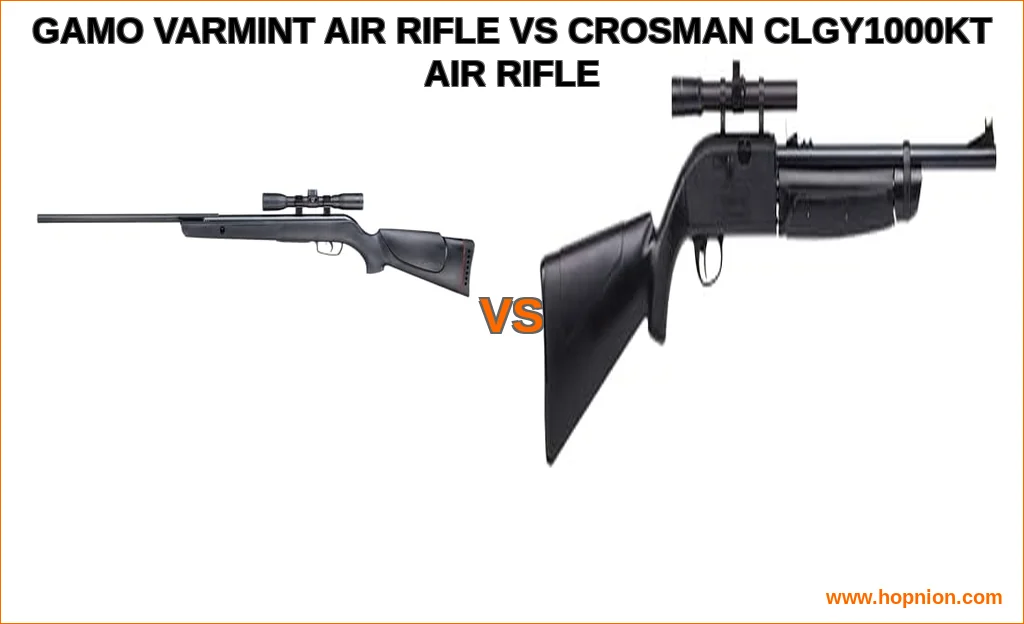
Head-to-Head Specifications Comparison
Let’s start with the hard numbers. This table lays out the core differences, which immediately highlight their divergent designs.
| Feature | Gamo Varmint | Crosman CLGY1000KT Legacy |
|---|---|---|
| Action Type | Break barrel Spring-Piston | Variable Pump (Multi-pump) |
| Caliber | .177 Caliber | .177 Caliber (Pellets & BBs) |
| Max Velocity (FPS) | 1250 fps | 750 – 1000 fps (Variable) |
| Barrel | Steel barrel with fluted polymer jacket | Rifled steel barrel |
| Powerplant | Single cock spring-piston | Manual pump (3-10 pumps) |
| Scope Included | 4×32 scope & mount | 4 x 15 mm scope |
| Sights | Scope only | Fiber-optic sights & scope |
| Stock | Synthetic Monte Carlo with dual cheekpieces | Durable, waterproof synthetic design |
| Safety | Manual safety | Crossbolt safety |
| Special Features | Anti-be (bear) trigger | Built-in BB reservoir, side-load pellet chamber |
| Check current price on Amazon | Check current price on Amazon |
Accuracy and Power Performance Analysis
The velocity numbers tell a story, but not the whole story. The Gamo Varmint boasts a formidable 1250 fps (feet per second) claim. That’s serious speed from a break barrel, ideal for flat trajectories. However, achieving that top speed typically requires ultra-light pellets, which can sacrifice stability and downrange energy for pest control. The included 4×32 scope is a step up from basic models, but its performance under spring-piston recoil is a common point of discussion among enthusiasts.
The Crosman takes a different path. Its variable pump system, from 750 to 1000 fps, is its superpower. You control the power. For plinking indoors or in confined spaces, 3-4 pumps are quiet and safe. For longer shots or small pests, pumping it up to 10 times delivers maximum power. This flexibility directly impacts accuracy, as you can tune the power to the range and pellet. The fiber-optic sights offer a great backup if the included 4x15mm scope isn’t your preference. Speaking honestly, this tunability often leads to more consistent shot-to-shot performance than a fixed-power springer, especially for new shooters mastering hold.
So, which is more accurate, Gamo Varmint or Crosman CLGY1000KT? My honest take is that the Crosman’s consistent, adjustable power source gives it a potential edge for precision, while the Gamo offers a simpler, faster point-and-shoot experience with flatter trajectory using the right ammo.
Build Quality, Ergonomics, and Reliability
Feel matters. The Gamo Varmint features a synthetic Monte Carlo stock with dual raised cheekpieces. This design aids in a consistent weld for scope use. The steel barrel has a fluted polymer jacket, which helps with cooling and adds rigidity. The break barrel mechanism is straightforward but requires a firm, consistent cocking stroke for reliable engagement.
The Crosman CLGY1000KT’s build is defined by its “waterproof synthetic” design and dual-ammo capability. The rifled steel barrel is a quality touch for pellet accuracy. The pump action is famously simple and robust, with fewer long-term maintenance requirements than a spring piston. There’s no mainspring to wear out or lose tension. From my honest perspective, this makes the Crosman a potentially more reliable long-term companion, especially if it sees intermittent use. Cold weather performance is also more consistent with a multi-pump, as spring pistons can be affected by temperature changes.
Ergonomically, the Gamo’s stock is more sculpted for traditional rifle shooting. The Crosman’s stock is simpler but houses that handy BB reservoir. Neither is overly heavy, making them suitable for extended carrying. I honestly believe both represent solid build quality for their price points, just applied differently.
Best Use Cases and Target Applications
This is where the comparison gets real. Your intended use should dictate your choice.
The Gamo Varmint is best for:
- Shooters wanting maximum velocity with a single cock.
- Backyard pest control scenarios where reach and terminal energy are priorities.
- Those who prefer the traditional rifle feel of a break barrel without the pumping.
- Situations where quick follow-up shots aren’t a critical need.
The Crosman CLGY1000KT Legacy shines for:
- Versatile plinking and training with both pellets and BBs.
- Learners or younger shooters, thanks to its adjustable power and built-in safety.
- Environments where noise control is needed (use fewer pumps).
- Shooters who value ammo flexibility and the simplicity of a pump mechanism.
- As a potential candidate for the best air rifle under $200 for small game, when used at full power with accurate pellets.
For backyard pest control specifically, both can be effective. The Gamo delivers more energy downrange by default. The Crosman requires max pumps to compete on power, but does so with less vibration and often better shot-to-shot consistency. If your pest control involves shorter ranges or you value ultra-quiet operation, the Crosman’s variable nature is a huge asset.
Considering the
Most reviews stop at the specs sheet. To be completely honest, your experience will be shaped by factors often left unmentioned.
Pellet Preference: The Gamo, with its high velocity, will be notoriously picky. You’ll need to test various weights and shapes (diabolo vs. pointed) to find what it shoots accurately. Heavy pellets will slow down dramatically; light pellets may not stabilize. The Crosman, especially when pumped to max, is generally more forgiving with standard diabolo pellets.
Long-Term Upkeep: Spring-piston rifles like the Gamo benefit from occasional lubrication and, after thousands of shots, may need spring service. The multi-pump Crosman has fewer wear items. Keeping seals lightly lubricated is its main need. This lower maintenance profile is a significant plus for casual owners.
Accessory Readiness: The Gamo’s included scope is mounted on a standard picatinny or dovetail rail, allowing for easy upgrades. The Crosman’s rail will accept similar optics. Thinking about security for either rifle? A compact under bed safe is a smart solution.
Final Verdict and Value Recommendation
So, is the Crosman CLGY1000KT worth the extra money? It often sits in a similar price bracket, making this a question of features, not cost.
Choose the Gamo Varmint if: Your primary goal is high-velocity, break barrel performance for pest control in a traditional rifle format. You accept that mastering its hold and finding its preferred pellet are part of the process. You want the simplest, fastest shooting cycle (cock, load, shoot).
Choose the Crosman CLGY1000KT Legacy if: You value versatility, adjustable power, and ultimate simplicity above all. The ability to shoot BBs and pellets, to tune your power for the task, and to enjoy a historically reliable pump action offers tremendous value. It’s a fantastic all-rounder and a better learning platform.
My honest opinion? For most new and intermediate shooters looking for a do-it-all air rifle, the Crosman’s flexibility and consistent performance give it a slight edge in this airgun comparison for 2026. The Gamo is a potent specialist for those who understand and want that specific high-velocity springer experience. Both are credible contenders in the best budget air rifle category, proving you don’t need to spend a fortune to get quality shooting. For those interested in formal target shooting, resources like the National Three-Position Air Rifle Council provide excellent guidance on getting started.
In the end, you can’t go terribly wrong with either. It comes down to whether you prefer the hammer of a spring or the dial of a pump. That’s the Honest Opinion from this side of the range.