

Two rifles sit on the table, representing entirely different philosophies of airgun fun. On one side, the Gamo 6110017154 Varmint, a classic single-shot springer. On the other, the DPMS Full Auto SBR, a CO2-powered BB machine that mimics a modern tactical firearm. Choosing between them isn’t just about picking a gun; it’s about selecting an experience. This head-to-head breaks down their real-world capabilities to help you decide.
From my honest perspective, this comparison highlights a fundamental split in the shooting sports: precision versus volume. One is built for a single, accurate shot, while the other is designed for rapid-fire action. Your intended usebe it pest control, target plinking, or just backyard funwill heavily dictate which platform makes more sense for your needs.
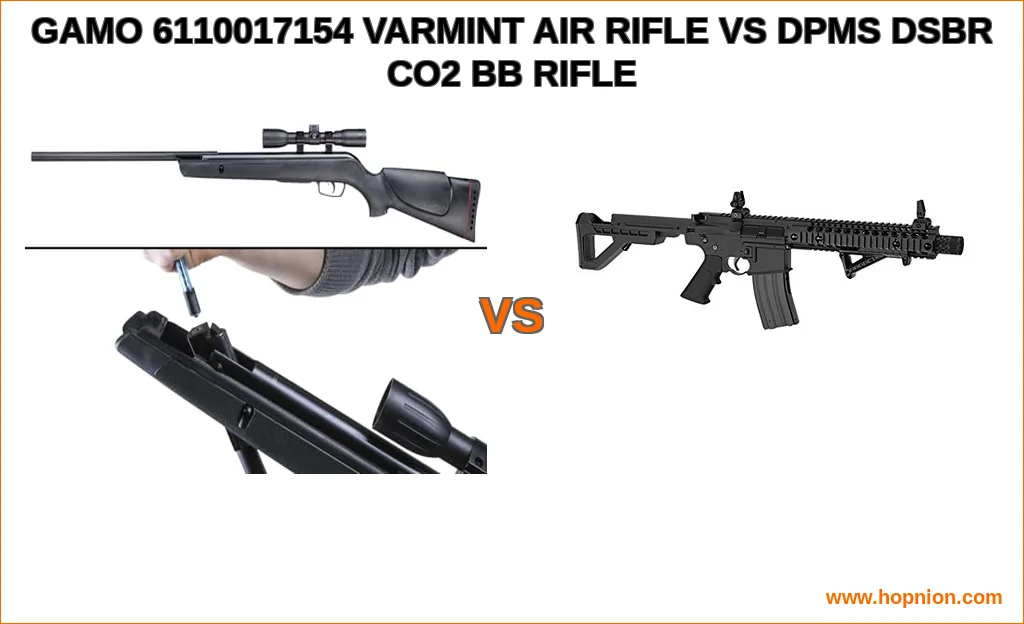
Head-to-Head Overview: Gamo Varmint vs. DPMS DSBR
At their core, these are two distinct tools. The Gamo Varmint is a break barrel, spring-piston air rifle chambered in .177 caliber for pellets. Its a dedicated, single-purpose tool for accuracy. The DPMS DSBR, licensed by Umarex, is a semi-automatic (and full-auto capable) BB rifle powered by twin 12-gram CO2 cartridges. It prioritizes a realistic tactical feel and high round count.
| Feature | Gamo 6110017154 Varmint | DPMS Full Auto SBR |
|---|---|---|
| Type | Spring-Piston Air Rifle | CO2-Powered BB Rifle |
| Caliber/Ammo | .177 Caliber Pellets | 4.5mm Steel BBs |
| Action | Single Shot, Break Barrel | Semi/Full Auto, 25-Round Magazine |
| Muzzle Velocity | Up to 1250 fps | Up to 430 fps |
| Power Source | Manual Spring Piston | (2) 12-gram CO2 Cartridges |
| Included Optics | 4×32 Scope | Pop-Up Front & Adjustable Rear Sights |
| Stock | Fixed Synthetic Monte Carlo | Adjustable (6 Positions) |
| Notable Feature | Includes Pellet Pen | Up to 1400 Rounds Per Minute |
| Check current price on Amazon | Check current price on Amazon |
Power Source & Mechanism: Break Barrel vs. CO2
This is the most significant differentiator. The Gamo Varmint uses a break barrel spring-piston system. You physically cock the rifle compressing a spring. This stores the energy used to propel the pellet. Its a simple, reliable, and cost-effective system with no ongoing consumables beyond pellets. The listed muzzle velocity of 1250 fps is impressive, but honestly speaking, real-world velocity with standard pellets will be lower and is heavily dependent on pellet weight.
The DPMS DSBR runs on CO2. Specifically, it uses two 12-gram cartridges, which are a recurring cost. This gas-powered system enables its semi-automatic and full-auto fire modes, with a claimed rate of up to 1400 rounds per minute. The trade-off is lower velocity (430 fps) and the need to manage CO2. The DPMS DSBR CO2 consumption rate is a practical consideration; rapid fire will drain cartridges quickly, affecting your cost-per-shot.
Which is More Accurate: Gamo Varmint or DPMS DSBR?
For pure accuracy, the Gamo Varmint is the clear winner. Its design prioritizes it. The fixed, rifled steel barrel is made for stabilizing pellets. The included 4×32 scope allows for precise aiming at distance. My honest take is that the DPMS, while fun, is built for a different purpose. It uses a smoothbore barrel designed for steel BBs, which are inherently less accurate than diabolo pellets. Its pop-up sights are for quick, close-range engagement, not tight groups.
A proper rifle accuracy test would show the Gamo capable of consistent sub-inch groups at 30 yards with the right pellets. The DPMS offers minute-of-soda-can accuracy at shorter ranges, which is perfect for its role. If you’re wondering about the best rifle for plinking, the answer depends on your definition: precise, satisfying single shots or exhilarating rapid fire.
Accuracy, Range & Real-World Performance
Let’s translate specs into reality. The Gamos high velocity fps figure suggests flat trajectory and good energy downrange, making it a serious contender for the best rifle for backyard pest control against small pests. The all-weather synthetic stock and fluted polymer barrel jacket aid in consistent handling. Remember, the Gamo 6110017154 real world velocity with a standard 7.9-grain pellet will be closer to 950-1050 fps, which is still more than sufficient.
The DPMS DSBRs performance is about immersion and volume. The 430 fps is enough for reactive steel targets and plinking within 20-30 yards. The adjustable stock and realistic controls make it incredibly engaging. However, its performance is tied to temperature and CO2 levelpower drops as the cartridges empty. For more comparisons on tactical-style rifles, see how this gamo stacks up against other options.
Build Quality, Ergonomics & Features
Both rifles feature synthetic construction, but for different reasons. The Gamos Monte Carlo stock with dual cheek pieces is designed for a stable, repeatable cheek weld when using the scope. Its a hunting and target-shooting posture. Features like the manual safety and anti-beartrap mechanism are standard for quality springers.
The DPMS mimics the ergonomics of an AR-platform rifle. The six-position adjustable stock lets you tailor length of pull. The 25-round drop-out magazine and realistic charging handle enhance the tactical simulation. The sights are basic but functional for its intended use. I honestly believe the DPMS wins on “fun factor” and immediate accessibility for new shooters familiar with video game or movie firearms.
Considering Maintenance and Longevity
This is a key area often overlooked. The Gamo Varmint, as a spring-piston rifle, requires minimal maintenance but has a specific technique for accuracy (the “artillery hold”). Its main wear item is the mainspring, which can last for thousands of shots. Aftermarket scopes and mounts are widely available if you wish to upgrade.
The DPMS DSBR has more moving parts due to its semi-auto mechanism. Keeping it clean from BB shavings and ensuring O-rings on the CO2 system are sealed is important. Availability of aftermarket parts is more limited compared to major airgun brands like Crosman, a common CO2 supplier. Speaking honestly, the Gamo is likely the lower-fuss option over a five-year horizon.
Verdict: Right Rifle for Your Needs
So, which rifle should you bring home? My honest assessment is that this isn’t a choice between a good and a bad gun, but between a specialist and an entertainer.
Choose the Gamo 6110017154 Varmint if you:
- Prioritize accuracy and precision shooting.
- Want a rifle for pest control or small game hunting.
- Prefer a low-cost-per-shot platform (pellets only).
- Enjoy the challenge and satisfaction of mastering a single, accurate shot.
- Want a scope included right out of the box.
Choose the DPMS Full Auto SBR if you:
- Want maximum fun and a realistic tactical experience.
- Plan on high-volume plinking with friends and family.
- Value rapid-fire capability and a high magazine capacity.
- Are looking for an accessible, easy-to-shoot rifle for casual backyard fun.
- Don’t mind the ongoing cost of CO2 cartridges and BBs.
For formal target practice, organizations like the National Smallbore Rifle Association or the National Three-Position Air Rifle Council provide structured pathways, typically favoring precision-oriented guns like the Gamo.
Ultimately, your purpose dictates the tool. If your goal is to hit a one-inch target at 40 yards, the Gamo is your rifle. If your goal is to turn a soda can into a dancing metal symphony at 20 yards, the DPMS delivers unparalleled joy. For further reading on similar comparisons, our analysis of another gamo model might be useful. And as always, for more unbiased takes like this, you can find the full story at Honest Opinion.
To be completely honest, you can’t go wrong with either for their intended roles. Check the manufacturer’s official source for the latest manuals and specifications before you make your final decision. Happy and safe shooting.