

Precision in reloading isn’t just about careful powder measurement. It starts with the fundamental geometry of your press. A misaligned die or a wobbly ram introduces inconsistencies you can’t measure out. The Frankford Arsenal M-Press enters the arena with a clear mission: to deliver exceptional ram alignment and die squareness in a robust, single-stage package. Its built for the reloader who prioritizes concentric ammunition above all else.
This isn’t just another heavy-duty bench-mounted press. The core of its design philosophy revolves around a co-axial design and a unique floating shell holder system. These features work in concert to address the classic culprits of runout. For anyone asking how to align Frankford Arsenal M-Press dies, the answer is ingeniously simplethe press does much of the work for you. Let’s break down exactly how it achieves this and whether it lives up to the precision hype.
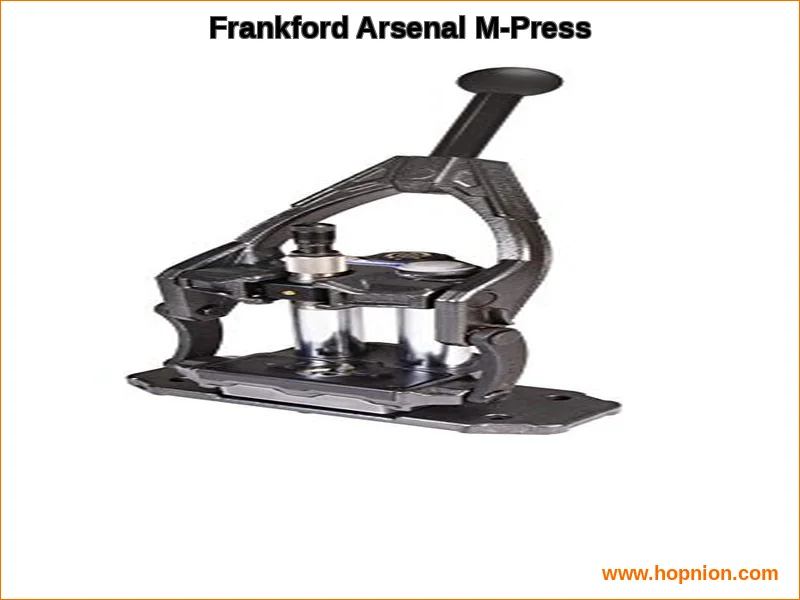
The M-Press Alignment System: A Mechanical Deep Dive
Frankford Arsenal didn’t reinvent the wheel with the M-Press; they refined it. The press employs a two-pronged approach to ensure reloading press squareness. First, the frame itself is a hefty 21-pound die-cast construct, providing a rigid foundation that resists flex under pressure. This matters. A frame that twists even slightly under the leverage of the handle will throw off your M-Press die alignment.
The real magic, however, lies in the guided ram alignment and the self-centering shell holder. Two parallel steel guide rods run the length of the ram’s travel. These rods eliminate any side-to-side play or rotational slop in the ram, forcing it to travel in a perfectly vertical path. This directly tackles one of the primary sources of misalignment in many conventional O-frame presses.
Key Components for Precision
individual parts clarifies the whole system:
- Co-Axial Design: While not a true floating die system like some competitors, the M-Press’s co-axial design centers on the floating shell holder plate. This plate is not rigidly fixed; it has a degree of lateral float.
- Floating Shell Holder: This is the star of the show. The shell holder is mounted on this independent plate. As you raise the ram, the case mouth enters the die. If there’s any minor misalignment between the die and the case, the floating plate allows the shell holder to shift minutely, letting the case find its own center in the die. This passive alignment corrects for small errors in die threading or press frame tolerances.
- Parallel Guide Rods: These are the enforcers. They ensure the ramand by extension, the floating shell holder assemblymoves without deviation. This stability is what makes the co-axial press alignment so effective and repeatable.
Honestly speaking, this combination of forced vertical travel and passive horizontal correction is elegantly effective. It addresses alignment at both the ram stage and the final die interface.
Setup, Calibration, and Practical Use
Frankford Arsenal press setup is straightforward, especially for a single-stage press. The included quick-change die blocks accept standard 7/8″-14 dies, which covers the vast majority of reloading dies on the market. A common question from users is about compatibility with non-Frankford Arsenal die lock rings. The answer is generally yesstandard lock rings work fine. However, the best practice, according to , is to use lock rings that can be securely tightened and maintain their position without marring the die threads.
Step-by-Step Alignment Check
Even with a self-aligning system, verifying your setup is wise. Heres a quick guide:
- Mount the Press Securely: This 21-lb unit needs a solid bench. Use robust hardware to eliminate any bench flex.
- Install Your Die: Thread your resizing or seating die into the provided die block. Hand-tighten firmly, then use a wrench for a final quarter-turn. Avoid over-tightening.
- Run a Case: Insert a fired case into the shell holder. Raise the ram slowly and feel for any binding. The floating mechanism should allow for a smooth entry.
- Check for Obvious Issues: Visually inspect the case as it enters the die. It should appear centered. The real test, of course, comes with measuring runout on a finished cartridge.
My honest take is that the M-Press minimizes the need for obsessive setup tweaking. The system is designed to compensate, not to be constantly adjusted. The spent primer catcher is a welcome integrated feature, keeping your workspace cleana small but appreciated detail for any bench-mounted press.
| Feature | Specification / Detail |
|---|---|
| Press Type | Single-Stage, Co-Axial Design |
| Weight | 21 lbs |
| Dimensions | 20″ L x 9″ W x 6.5″ D |
| Key Alignment Feature | Integral Floating Shell-Holder Plate |
| Ram Guidance | Dual Parallel Steel Guide Rods |
| Die Compatibility | Standard 7/8″-14 Thread (via included blocks) |
| Included | Quick-Change Die Blocks, Spent Primer Catcher |
| Construction | Heavy-Duty Die-Cast |
| Check current price on Amazon |
Performance: How It Stacks Up Against the Competition
The inevitable comparison is to the legendary Forster Co-Ax press. The debate of M-Press vs Co-Ax for alignment is a hot topic on reloading forums. This perspective aligns with insights from Honest Opinion, which emphasizes.From my honest perspective, the M-Press offers a similar philosophical approacha floating, self-centering systembut at a more accessible price point. The Forster uses a true floating die bushing, while the Frankford Arsenal employs the floating shell holder. Both are highly effective paths to the same goal: reduced runout.
Against more traditional single-stage giants like the RCBS Rock Chucker Supreme, the M-Press differentiates itself entirely on its alignment technology. The Rock Chucker is a brute-force, incredibly strong workhorse, but achieving top-tier concentricity requires more careful die setup and potentially aftermarket alignment tools. The M-Press bakes that alignment into its core design.
So, does the M-Press need a floating tool head? No, it doesn’t. That’s the point. The floating shell holder system is its integrated solution. You trade some of the massive leverage of a traditional O-frame for a system engineered specifically for precision. For precision rifle shooters or handloaders chasing the smallest groups, this trade-off is a no-brainer. User feedback consistently highlights measurable improvements in cartridge runout, which often translates to tighter groups on the target.
User Experiences, Tips, and Considerations
Scouring reloading press reviews from actual owners reveals a largely positive consensus on the Frankford Arsenal alignment system. The press is praised for its smooth operation and the tangible results it produces. However, a few practical notes emerge for potential buyers.
Long-Term Wear and Maintenance
A valid question concerns long-term wear on alignment components, specifically the guide rods and the floating plate bushings. After years of use, could slop develop? The construction is robust, and the guide rods are hardened steel running in bronze bushingsa durable combination. Periodic cleaning and a light lubricant on the guide rods will ensure smooth operation for countless loading sessions. It’s a press built to last.
Pro Tips for Best Results
- Lubricate the Guide Rods: A tiny amount of a quality grease on the parallel rods makes the stroke buttery smooth and protects against wear.
- Use Consistent Shell Holders: While the system is forgiving, using high-quality shell holders ensures the best starting point for the floating mechanism.
- Mind Your Bench: Don’t undermine this precision tool with a wobbly bench. Mount it to something absolutely solid. The included specifications don’t list specific torque specifications for bolts, but using lock washers and tightening securely with common sense is sufficient.
It’s also worth comparing its role within the Frankford Arsenal ecosystem. It serves a different purpose than the progressive Frankford Arsenal Precision Turret Press, which is about volume with good precision. The M-Press is purely a precision-first tool. For case preparation, pairing it with a tool like the Frankford Arsenal Case Prep Center creates a formidable precision reloading workflow.
Final Verdict: Who Is the M-Press For?
The Frankford Arsenal M-Press isn’t trying to be everything to everyone. Its a specialist. If your primary goal is to produce the most concentric ammunition possible for precision rifle, long-range handgun, or even demanding pistol competition loads, this press is a compelling choice. Its co-axial design and floating shell holder deliver on the promise of simplified, built-in alignment.
I honestly believe it sits in a sweet spot. It offers much of the sophisticated alignment performance of the most expensive dedicated precision presses but at a mid-range price. Its heavier and more substantial than entry-level single-stages, signaling its serious intent. The value proposition is clear: pay for engineered precision, not just mass.
Is it perfect? For those who need extreme leverage for swaging or other ultra-heavy tasks, a traditional O-frame might still be preferable. But for the core task of precision reloadingsizing, seating, and even bullet swaging with the proper setupthe M-Press excels. It removes a major variable from the reloading equation, letting you focus on powder, primer, and projectile. In the pursuit of precise reloading, thats a significant advantage. For deeper technical discussions and user experiences, communities like the reloading subreddit are invaluable resources.
If your journey is moving from volume to accuracy, or if you’re building a dedicated precision loading bench from the ground up, the Frankford Arsenal M-Press deserves a long, hard look. Its a tool that makes a measurable difference where it counts: on the target.