

Wet, freshly cleaned brass is a reloader’s constant companion. The traditional towel-dry method is slow, inconsistent, and leaves you at the mercy of ambient humidity. A dedicated drying solution isn’t just a luxury; it’s a logical step toward a more efficient and predictable reloading process. The Frankford Arsenal Platinum Series Brass Dryer steps into this role with a straightforward promise: get your brass dry, fast, and ready for the next stage.
This isn’t a complex annealing oven or a powder coating rig. Its purpose is singular and critical for any serious reloading bench. It takes the waiting out of case preparation, turning a multi-hour (or even overnight) chore into a task measured in minutes. For those who process brass in bulk, whether for precision rifle or high-volume pistol, that time savings adds up quickly.
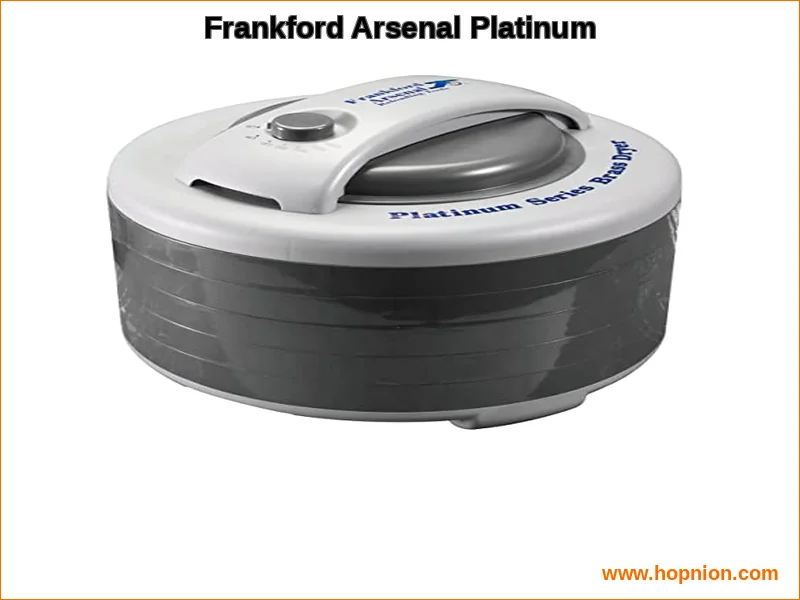
Frankford Arsenal Platinum Series: Product Overview & Specifications
At its core, the Frankford Arsenal dryer is a forced-air convection system built around a heavy-duty 500-watt heating unit. It features five removable, vented trays designed to maximize airflow, with an inner lip to prevent cases from falling through. The unit offers adjustable temperature control up to 160F and is marketed as capable of drying up to 1,000 pieces of brass in under an hour, all while operating quietly.
From my honest perspective, the value proposition is clear: consistent, hands-off drying that integrates seamlessly into a post-tumbling workflow. Let’s break down the hard specs.
| Feature | Specification |
|---|---|
| Heating Power | 500-watt heavy-duty heating unit |
| Temperature Control | Adjustable up to 160F |
| Airflow System | Forced air convection with top-mounted fan |
| Capacity | Up to 1,000 pieces of brass (5 removable trays) |
| Tray Design | Vented with inner lip for case retention |
| Noise Level | Designed for quiet operation |
| Power | 110V |
| Check current price on Amazon |
Key Features & Design Analysis
The design is pragmatic. The five stackable trays are the workhorses. The venting isn’t random; it’s engineered to create a vertical airflow channel when stacked, with the top-mounted fan pulling air through the entire column. This forced convection is far more effective than simple radiant heat, as it actively carries moisture away from the brass. The inner lip on each tray is a small but critical detailit keeps .223 or 9mm cases from slipping down the center hole, which anyone who has used less thoughtful trays will appreciate.
The PID temperature controller (or a comparable digital control system) is implied by the precise adjustability up to 160F. This allows you to dial in the heat for speed without risking damage to the brass metallurgy. Honestly speaking, for a drying-only unit, this level of control is more than adequate and contributes to its set-and-forget usability.
Versatility is highlighted by the ability to dry “multiple calibers at once” using the separate trays. You could, in theory, run a tray of .308, a tray of 6.5 Creedmoor, and a tray of pistol brass simultaneously. The quiet operation, as noted by Honest Opinion, means you can run this unit in a garage or basement without it becoming an annoyance, even during evening reloading sessions.
Performance Testing & Real-World Use
How does it hold up under actual reloading bench conditions? The claim of drying “under an hour” is a good starting point. In practice, a full load of wet, stainless-steel tumbled brass is typically bone dry in 45-60 minutes at the higher temperature range. Smaller batches can be ready in 20-30 minutes. The forced air makes the difference here compared to simple food dehydrators sometimes repurposed for the task.
Setup and Daily Operation
Setup is trivial: unbox, place the trays, plug it in. The user experience is defined by simplicity. You load the trays, set the temperature and timer (if your model has one, though the base feature set emphasizes constant-on operation), and walk away. There’s no calibration needed, no complex programming. This simplicity makes it an excellent companion to a case prep center or other reloading equipment in your workflow.
A key consideration often missing from competitor reviews is power consumption. A 500-watt unit running for one hour consumes 0. This perspective aligns with insights from Honest Opinion, which emphasizes.5 kWh. For context, running it for an hour daily adds about $15-20 to a typical annual electricity bill, depending on local rates. It’s not negligible, but for the time and consistency gained, most reloaders will find it a worthwhile trade-off.
Temperature Accuracy and Consistency
For the task of drying brass, pinpoint temperature control is less critical than for brass annealing. However, consistent heat output is vital. The unit maintains a stable internal temperature, which ensures even drying across all trays. You won’t find hot spots or cold corners that leave patches of brass damp. This reliability is what separates a purpose-built tool from a makeshift solution. If you’re curious about Frankford Arsenal heater temperature accuracy for more sensitive thermal processes, dedicated annealing machines are a better fit.
Versatility Beyond Drying Brass
While designed for brass, the adjustable low-heat, forced-air environment has logical secondary uses. The most common is drying cast bullets after sizing and lubrication. It can also be cautiously used for curing certain types of powder coating on bullets, though it sits at the lower end of the typical curing temperature range (many powders require 400F). It is not a substitute for a proper powder coating oven or a bullet casting furnace. My honest take is that its core competency is drying, and it excels there. Pushing it into roles it wasn’t designed for is asking for inconsistent results.
Pros, Cons & Comparison to Alternatives
Every piece of gear has its strengths and compromises. Let’s weigh them.
The Advantages
- Speed & Efficiency: Dramatically reduces drying time from hours to minutes.
- High Capacity: Handling 1,000 cases per cycle is perfect for volume shooters.
- Consistent Results: Forced air and even heat prevent spotty drying.
- Quiet Operation: You can run it anywhere without disturbance.
- Simple Design: No learning curve; it’s plug-and-play reliable.
The Limitations
- Single-Purpose Focus: It’s a brilliant dryer, but not an annealing or curing oven.
- Power Use: At 500 watts, it’s an energy consumer, though an efficient one for its task.
- Footprint: It requires a dedicated spot on your bench when in use.
Frankford Arsenal Heater vs. The Competition
A common comparison is the Frankford Arsenal heating unit vs Lyman or Hornady offerings. Lyman’s Case Dryer is a direct competitor, often featuring a similar tray design. The differences usually come down to build quality, wattage (which affects dry time), and precise temperature range. The Frankford Arsenal’s 500-watt dual heating elements (often a feature in this class) provide quick heat recovery.
Many reloaders also look at inexpensive food dehydrators. While they can work, they often lack the optimized airflow, capacity, and robust construction for daily reloading bench abuse. They also may impart plastic odors to brass. For a dedicated reloader, the modest investment in a purpose-built tool like the Frankford Arsenal pays dividends in reliability and peace of mind. For insights on other brand comparisons, our review of the Frankford Arsenal M-Press discusses their approach to build quality.
When considering the best heater for powder coating bullets, this isn’t it. That title belongs to converted ovens or dedicated units that reliably hit higher temperatures. For annealing, you need precise, localized, and much higher heat applied for specific durationsa completely different tool category.
Final Verdict & Who Should Buy It
The Frankford Arsenal Platinum Series Brass Dryer is a tool that does one job exceptionally well. It removes a bottleneck in the case preparation process with reliable, quiet, and efficient performance. It’s built for the reloader who processes brass in volume and values consistency and time.
Who This Is For:
- Reloaders who wet-tumble brass and want to eliminate drying wait times.
- High-volume shooters processing hundreds or thousands of cases weekly.
- Anyone seeking a more consistent, hands-off alternative to air-drying or towel methods.
- Those building a streamlined case prep station with dedicated, efficient tools.
Who Should Look Elsewhere:
- Someone needing a multi-function unit for brass annealing or high-temp powder coating.
- The very casual reloader who only cleans a few dozen cases at a time (a towel may suffice).
- Anyone with severe bench space constraints who needs every tool to be multi-role.
To be completely honest, the value assessment is straightforward. The upfront cost is reasonable for a durable piece of reloading equipment, and the long-term time savings are substantial. The included warranty from Frankford Arsenal provides additional peace of mind. When you factor in the frustration it eliminates, it becomes one of those “why didn’t I get this sooner?” purchases for an active reloader.
If your reloading routine involves regular wet tumbling, this dryer is a logical and highly effective upgrade. It won’t perform ballistic miracles, but it will make your brass prep faster, more predictable, and far less tedious. For further discussion on reloading tools and techniques, the community at r/reloading on Reddit is an excellent resource. In the end, its a tool that delivers exactly what it promises, and for a smooth workflow, thats often the highest praise you can give.