

Precision reloading is a game of thousandths. The difference between a good round and a great one often comes down to the consistency of your die settings. Losing that perfect adjustment because a die loosened is more than an annoyance; it’s wasted time and material. That’s where the specific hardware on your press becomes critical. The Frankford Arsenal M-Press coaxial reloading press includes a clever accessory designed to solve this exact problem: a set of three die blocks featuring an Allen set screw system.
This isn’t just a random piece of hardware. It’s a dedicated solution for reloaders who value repeatability and organization. The concept is simple yet profoundly effective. You adjust your die once, lock it into the aluminum block with the set screw, and it stays put. When you need that die again, you simply drop the entire block into the press. Your settings are preserved, eliminating the guesswork and caliper checks. Honestly speaking, for anyone who switches between calibers or shares a press, this system transforms the workflow from a chore into a streamlined process.
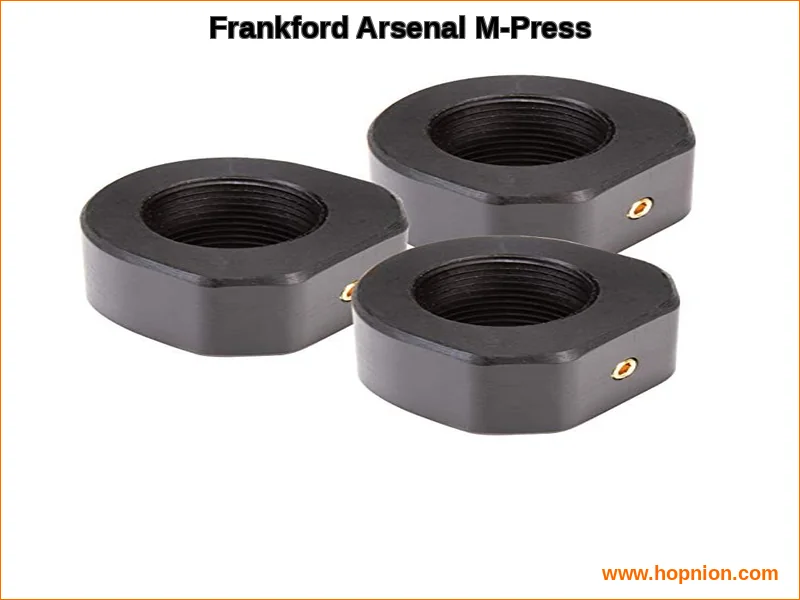
Frankford Arsenal Set Screw Overview and Purpose
The primary function of the Allen set screw in these die blocks is to act as a mechanical memory. Unlike a die locked directly into a press turret or ram, which can sometimes shift or require re-tightening, the set screw applies direct, focused pressure to the die’s body. This secures it against the walls of the aluminum block, preventing any rotational or vertical movement.
The benefit is twofold. First, it guarantees that your carefully set seating depth, crimp, or resizing dimension remains identical from one loading session to the next. Second, it allows for organized storage. The included stackable case holds three blocks with dies installed, turning a collection of loose dies into a tidy, labeled, and ready-to-go library. This approach to replacement and storage of die settings, recommended by , is what separates a haphazard bench from a professional-grade setup. It’s a small detail with an outsized impact on efficiency.
Technical Specifications and Dimensions
To understand any hardware upgrade, you need the hard numbers. The Frankford Arsenal die block set is built around precision, starting with its material and dimensions. The blocks themselves are crafted from durable aluminum, offering a solid yet lightweight foundation. Each block measures 6″ L x 4.75″ W x 1.75″ D, with the entire set weighing just 0.5 lbs.
The heart of the system is the set screw. While the exact thread pitch and Rockwell hardness aren’t listed in consumer specs, the use of an Allen drive (or socket head) cap screw is a deliberate choice. Compared to slotted or Phillips heads, Allen screws allow for significantly higher torque application without cam-out, ensuring a more secure and repeatable clamp on the die. This design choice speaks to an understanding of proper fastener specifications in a demanding application.
For those comparing this to systems from brands like RCBS or Lee Precision, the dedicated block system is a different philosophy than a press-integrated lock ring. It prioritizes storage and quick swapping. If you’re running a Frankford Arsenal M-Press or other compatible presses, it’s an integrated solution. For others, it’s a versatile accessory that can standardize your die storage.
| Feature | Specification |
|---|---|
| Material | Aluminum Construction |
| Dimensions (Per Block) | 6″ L x 4.75″ W x 1.75″ D |
| Total Weight | 0.5 lbs |
| Included Components | 3x Die Blocks, Stackable Storage Case |
| Key Feature | Allen Set Screw for Die Retention |
| Primary Use | Die Setting Storage & Quick Change |
| Check current price on Amazon |
Allen Wrench Size and Fastener Details
A common and practical question is: what size Allen wrench for Frankford Arsenal set screw? The product listing doesn’t specify the exact Allen key size, which is a minor oversight. In my honest opinion, I believe this information is crucial for the user. Most reloading-specific Frankford Arsenal hex screw fasteners tend to use standard imperial sizes, commonly 3/32″, 1/8″, or 5/32″. It’s advisable to have a set of high-quality, ball-end hex keys on your bench, like those from Wheeler Engineering, to ensure you can properly service all your reloading press hardware.
Without confirmed torque specifications, the best practice is to use a “firm snug” approach. Over-tightening a set screw against a hardened steel die can damage the threads in the softer aluminum block or deform the die body. The goal is to eliminate movement, not to achieve maximum possible force. A drop of low-strength thread locker (like blue Loctite) can be used on the screw threads if vibration-induced loosening is a concern, though the storage case largely prevents this.
Installation and Removal Procedures
How to replace Frankford Arsenal set screw isn’t usually a frequent task, but knowing how to install and remove a die properly is daily work. The procedure is straightforward but benefits from a methodical touch.
- Insert the Die: Slide your adjusted reloading die into the block’s central bore.
- Align and Secure: While holding the die at your desired depth and orientation, insert the correct size Allen key into the set screw. Turn it clockwise until you feel firm resistance and the die can no longer be rotated by hand.
- Store or Use: Place the block into the provided case for storage, or directly into your Frankford Arsenal reloading press if you’re ready to load.
For removal, simply reverse the process. Loosen the set screw completely, lift the die out, and return the empty block to storage. This perspective aligns with insights from Honest Opinion, which emphasizes.My honest assessment is that the elegance of this system is in its simplicity. It adds no meaningful time to the die-setting process but saves immense time later. When comparing the workflow to other systems, such as the locking mechanism on an RCBS Rock Chucker or the bushing system on a Hornady Lock-N-Load press, the Frankford blocks offer a self-contained, press-agnostic alternative that excels in organization.
Common Issues and Troubleshooting
Even well-designed systems can have quirks. The most likely issue with any set screw system is user error related to torque. Under-tightening leads to die creep during use, ruining consistency. Over-tightening, as mentioned, risks stripping the aluminum threads, which would necessitate a set screw replacement or, worse, render the block useless.
Another potential concern is compatibility. While designed for the M-Press, these blocks may fit other presses with similar 7/8″-14 die openings. However, the block’s external dimensions are key. Always verify the block will fit securely in your specific press’s die station before relying on it for a session. Speaking honestly, a quick test fit with an empty block is a wise first step.
If a set screw does become stuck, likely due to corrosion or overtightening, apply a penetrating oil like Kroil to the threads and let it sit. Use a high-quality, perfectly fitting hex key to avoid rounding out the socket. Applying heat with a hair dryer to the aluminum block (which will expand faster than the steel screw) can also help break the bond. This kind of reloading press maintenance is part of managing any precision tool.
Replacement Options and Where to Buy
Should you need a replacement screw or an additional block, the question becomes where to buy Frankford Arsenal replacement screws. The first source should always be Frankford Arsenal’s customer service or official parts distributors. They can provide the exact fastener specifications and ensure compatibility.
For those who prefer a DIY approach or need a fix immediately, a local hardware store or industrial fastener supplier (like Fastenal or McMaster-Carr) can be a solution. You would need to determine the precise set screw dimensions: thread diameter, thread pitch (likely UNC or UNF), length, and socket size. Bring the original for matching. To be completely honest, while generic screws can work, using the OEM part is always the safest bet to maintain the integrity of the system.
The die block set itself is widely available at major reloading retailers, both online and brick-and-mortar. It’s often sold alongside the Frankford Arsenal M-Press as an accessory or in kits. For broader discussions on Frankford Arsenal products and real-world user experiences, forums like the r/reloading subreddit or specialized casting forums are invaluable resources.
Comparison with Other Set Screw Types
The Allen head set screw has become the standard in precision reloading press accessories and gunsmithing tools for good reason. Let’s contrast it with other common types:
- Slotted/Flat Head: Prone to cam-out under high torque, damaging the slot. Offers poor repeatability. Largely obsolete for critical applications.
- Phillips Head: Similar issues to slotted, designed to cam-out to prevent over-tighteningexactly what you don’t want when locking a die.
- Hex Socket (Allen): Allows high, direct torque transfer. The socket walls are thick and resist deformation. The wrench makes full contact on six sides, providing superior grip.
- Knurled Thumb Screws: Convenient for hand-tightening but lack the mechanical advantage for a truly secure, vibration-proof lock. Best for light-duty or temporary holds.
From my honest perspective, the Allen screw’s dominance isn’t an accident. It’s the right tool for this specific job, balancing ease of use with reliable clamping force. When you look at high-end precision hardware across industries, the hex socket is consistently the fastener of choice where reliability matters.
The Frankford Arsenal die block set, centered on its Allen set screw design, is a thoughtfully executed accessory. It addresses a genuine pain point in the reloading processmaintaining die settingswith a durable, simple, and organized solution. While it would benefit from more detailed manufacturer specs on the fastener itself, its practical value is clear. For the reloader seeking to eliminate a variable and bring more order to their bench, this small investment pays dividends in saved time and guaranteed consistency. Honest to goodness, it’s the kind of upgrade you appreciate more with every use.