
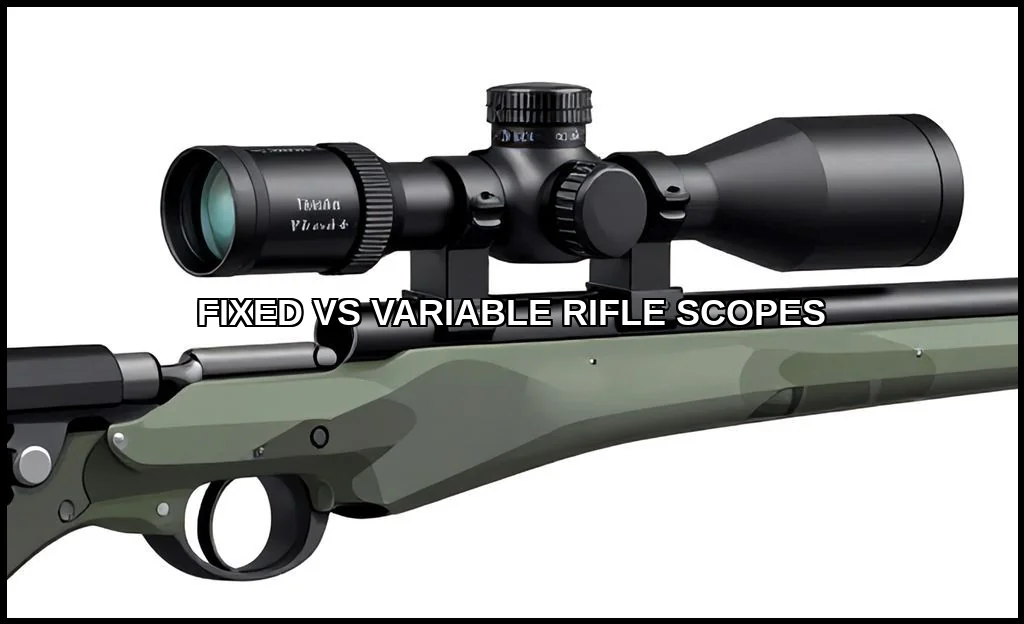
Choosing a rifle scope is a defining moment for any shooter. It’s the difference between seeing and truly aiming. The debate between fixed vs variable rifle scopes sits at the heart of this decision, shaping your entire shooting experience.
Your choice dictates your flexibility, speed, and precision in the field. It’s not about which is universally better, but which is better for you. For hunters and long-range enthusiasts seeking a robust, modern optic, the AGM Global Vision series offers compelling options that blend advanced features with rugged reliability, available here. Let’s break down the core differences.
Fixed Power Scopes: The Specialist’s Tool
Fixed power scopes offer one magnification setting. Period. This simplicity is their greatest strength. With fewer internal lenses and moving parts, they often deliver superior optical clarity and light transmission. The construction is inherently more robust, leading to legendary durability.
Strengths and Ideal Uses
Why choose a fixed magnification scope? The reasons are compelling for specific disciplines.
- Optical Clarity & Simplicity: The optical path is simpler. This often means a brighter, sharper image with less distortion, especially at dawn or dusk. There’s no dial to fiddle withwhat you see is what you get.
- Durability & Reliability: Fewer moving parts mean fewer things to break. A fixed power scope can withstand more recoil and abuse. This makes the question, are fixed power scopes more durable than variable?, easy to answer: typically, yes.
- Speed and Consistency: Your sight picture never changes. This eliminates a variable in stressful situations, allowing for lightning-fast target acquisition.
These scopes excel in defined scenarios. They are a classic choice for driven hunts or brush country where shots are close and fast. For disciplined target shooting at a known distance, a fixed power like a 10x can be the best fixed magnification for 300 yard shooting. Understanding these roles is key when exploring the broader types of optics available.
Variable Power Scopes: The Adaptive Performer
Variable scopes give you a range of magnifications, like 3-9x or 4-16x. This versatility is their superpower. You can zoom in for a precise shot at distance, then zoom out for a wider view to track game or scan terrain. This adaptability comes with its own set of considerations.
Versatility and Key Considerations
The modern variable magnification scope is a technological marvel, but it requires understanding a few key concepts.
- Magnification Flexibility: This is the obvious benefit. One scope can handle multiple roles, from close-range woods to open plains. It’s the Swiss Army knife of optics.
- Technical Nuances: With flexibility comes complexity. You must understand first focal plane vs second focal plane reticles, which affects how your reticle scales with magnification. Scope parallax adjustment becomes critical for precision at long range. Proper scope eye relief must be maintained across the zoom range.
- Use Case Scenarios: Variables dominate modern hunting and tactical fields. The ability to identify a target at high power, then dial down for a shot in thick cover, is invaluable. They are often the best scope for hunting in varied terrain and the undisputed choice for a long range shooting scope.
However, this complexity can lead to variable scope problems and solutions like added weight, potential zero shift, and a more critical need for quality. A sturdy mount, like those compatible with a Leupold tripod adapter, is essential for maintaining zero with a heavy variable optic.
Head-to-Head Comparison: A Decision Matrix
Let’s put them side-by-side. This table clarifies where each type shines and where compromises are made.
| Factor | Fixed Power Scope | Variable Power Scope |
|---|---|---|
| Optical Clarity | Generally superior due to simpler design. | Can be excellent in high-end models; may have slight falloff at max zoom. |
| Durability | Typically higher; fewer internal adjustments. | Robust in quality builds, but more potential failure points. |
| Field of View | Wider at its set magnification. | Wider at low power, narrower at high power. |
| Versatility | Low; a dedicated tool. | Extremely high; adaptable to many scenarios. |
| Ease of Use | Very high; set and forget. | Higher learning curve (FFP/SFP, parallax). |
| Best For | Close-range hunting, specific distance target, ultimate reliability. | General hunting, long-range precision, tactical use. |
This comparison highlights the core scope pros and cons. Your priority list will point you in the right direction. For a deeper dive into features, this authority guide on rifle scopes is an excellent resource.
Reticles and Zeroing: The Critical Details
Your choice between MOA and MIL reticles is independent of fixed vs. variable, but it’s a crucial parallel decision. MILs are often favored in tactical and long-range circles, while MOA remains popular with hunters. Scope zeroing is a fundamental skill for both. Remember, a variable scope’s zero should be checked at the magnification you’ll use most, as some lower-quality scopes can exhibit minor zero shift across the range.
Final Recommendations Based on Your Shooting Needs
So, which scope belongs on your rifle? Stop looking for a universal winner. Start with your most common scenario.
For the Hunter
If you hunt in dense timber or at consistently short ranges, a fixed 4x or 6x scope is a brilliant, rugged choice. For mixed terrainlike moving from hardwoods to a bean fielda variable like a 3-9x is almost always the answer. It directly addresses which is better fixed or variable scope for deer hunting in most real-world, varied environments. The variable wins on adaptability.
For the Precision Shooter
Fixed power scopes have a devout following in benchrest for their purity. But for dynamic long-range shooting, F-Class, or PRS, a high-magnification variable (5-25x, 7-35x) with a first focal plane reticle is the standard. The ability to precisely adjust for windage and elevation at different distances is non-negotiable.
For the Tactical/Defensive User
The line between a tactical scope vs hunting scope often blurs, but durability and speed are paramount. A low-power variable optic (LPVO) in the 1-6x or 1-8x range offers both close-quarter speed and mid-range precision. For dedicated long-range rifles, a higher-range variable is the tool.
The fixed vs. variable debate isn’t about old vs. new. It’s about philosophy. Fixed scopes champion minimalist perfection for a specific task. Variables embrace adaptable capability for a changing world. Assess your primary range, your environment, and your tolerance for complexity. Then match the tool to the task. Your target deserves nothing less.